

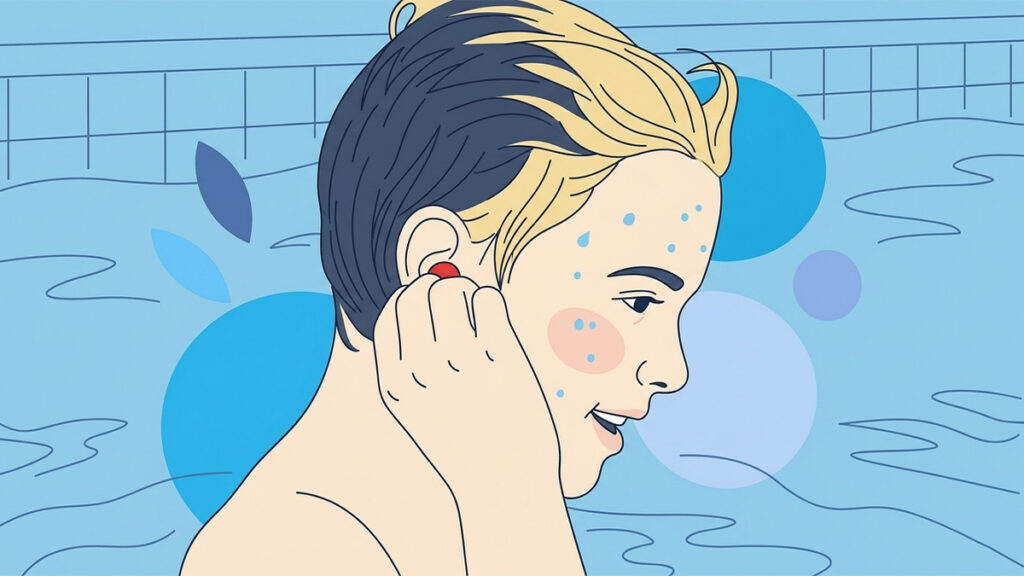
Summer in Melbourne often means long days by the pool, swimming lessons, and family trips to the beaches around Port Phillip Bay. For many children, swimming is a big part of school holidays and after school activities. With all that time in the water, it is very common for parents to notice sore ears, blocked ears, or changes in hearing.
At Melbourne ENT in St Kilda East, Victoria, the specialist team regularly sees children who develop ear trouble during or after the warmer months. Ear infections and irritation are not only uncomfortable, they can affect sleep, mood, hearing, and sometimes school or kindy participation. The good news is that many of these problems can be reduced with a few simple strategies that fit easily into family life.
This detailed guide covers ear plugs, drying ears properly, and early warning signs of ear trouble in children who swim. It is written for parents and caregivers across Melbourne and surrounding areas who want practical, evidence informed advice. It also highlights how the ENT surgeons at Melbourne ENT, including Dr Stephen Kleid and Dr Simon Braham, can help when problems keep coming back or become more complex.
Why Children Who Swim Are More Prone To Ear Problems
✓ Summer In Melbourne And Water-Based Activities
When the temperature rises in Melbourne, it is very natural for families to head to local pools, aquatic centres, and beaches. Many children attend intensive holiday swimming programs, join swim squads, or spend long afternoons in the backyard pool or under the sprinkler. The combination of frequent water exposure, chlorinated pools, and variable water quality can create the ideal environment for moisture to sit in the ear canal.
Children are often in and out of the water many times in a single day. Their ears may not have time to dry completely, especially if they are wearing swim caps, goggles with straps, or other gear that can trap moisture around the ear area. Over time, this constant dampness can irritate the delicate skin lining the ear canal and make it easier for infection to develop.
✓ Common Ear Issues Linked With Swimming
The most well known problem linked with frequent swimming is swimmer’s ear. The medical term for this is otitis externa. It refers to inflammation and infection of the outer ear canal, the tunnel that runs from the entrance of the ear through to the ear drum. The canal can become red, swollen, and very painful. Even gentle movement of the outer ear can hurt, and children may refuse to let parents touch the ear at all.
Middle ear infections, known as otitis media, are also very common in children. These are usually related to colds and blocked Eustachian tubes, but they can appear around the same time as heavy swimming periods. Parents may simply notice that their child has difficulty hearing, complains of pain, or wakes at night in distress. Because these issues can interfere with hearing and comfort, they are a frequent source of worry for families in Melbourne and regional Victoria.
✓ Children Who May Be At Higher Risk
Some children are more likely than others to develop ear problems during swimming season. Children who swim several times a week, such as those in training squads or competitive programs, will naturally have more water exposure. Kids who attend intensive swimming blocks during school holidays may suddenly go from very little swimming to daily sessions, and their ears do not always adapt quickly.
Children with grommets, a history of middle ear infections, or a known perforated ear drum can also be more vulnerable. The same is true for children with eczema or sensitive skin around the ears, because already irritated skin is more likely to become inflamed when it stays moist. Some children simply have narrower ear canals, which makes it easier for water and debris to become trapped. Allergies and hayfever can contribute to swelling and blockage around the nose and Eustachian tube, which in turn affects ear pressure and drainage.
Parents do not need to work all of this out on their own. A GP or ENT specialist, such as Dr Stephen Kleid or Dr Simon Braham at Melbourne ENT, can assess a child’s risk factors and help design a sensible approach to swimming, prevention, and treatment that suits that child’s lifestyle.
Understanding How Water Affects A Child’s Ear
✓ A Quick Look At Ear Anatomy In Parent-Friendly Language
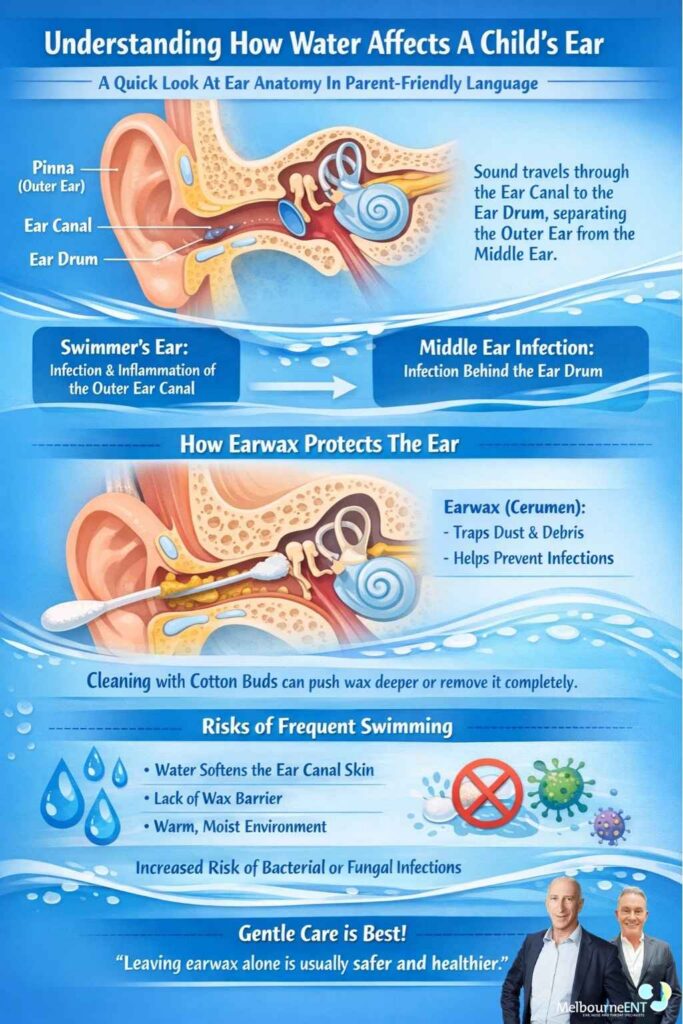
To understand why swimming can cause trouble, it helps to think briefly about how a child’s ear is structured. The part you can see on the side of the head is the outer ear, or pinna. Sound travels down the ear canal, a narrow passage lined with very thin skin, until it reaches the ear drum. The ear drum separates the outer ear from the middle ear, which is an air filled space behind the drum that contains tiny hearing bones.
Swimmer’s ear involves the outer ear canal. When it becomes inflamed, the canal can swell and feel blocked, and moving the outer ear usually causes pain. Middle ear infections affect the area behind the ear drum and often cause deeper, throbbing pain, sometimes with fever and irritability. Both can occur in children who swim frequently, and sometimes they can happen close together, which can make things confusing for parents trying to work out what is going on.
✓ How Earwax Protects The Ear
Earwax, or cerumen, often has a bad reputation, but it actually plays an important protective role. A normal amount of wax helps trap dust and debris and has properties that discourage bacterial and fungal growth. When children or adults clean their ears with cotton buds or other objects, the wax is often pushed deeper into the canal or removed completely. This leaves the skin less protected and can create small scratches that make infection more likely.
When a child swims often, water can soften and swell the outer layer of the ear canal skin. If the normal wax barrier has been removed, that softened skin is more exposed. Bacteria or fungi have an easier time taking hold, especially in a warm, moist environment. For this reason, gentle care and drying is far more helpful than aggressive cleaning. Parents are usually reassured to hear that leaving earwax alone is not only safe in most children, it is beneficial.
Ear Plugs For Children Who Love The Water
✓ When Ear Plugs May Be Helpful
Ear plugs are common in the swimming world and can be very useful, but they are not necessary for every child. Many children swim happily without them and never develop problems. The decision to use ear plugs should be based on the child’s history and the advice of their GP or ENT specialist.
For some groups, ear plugs can be particularly helpful. Children with grommets or a known perforated ear drum are often advised to limit the amount of water that enters the middle ear space. In these cases, an ENT surgeon may recommend specific ear plugs for swimming, combined with other precautions such as supervised drying routines. Children with recurrent swimmer’s ear, where the ear canal becomes infected repeatedly during summer, may also benefit from ear plugs to reduce the amount of water and irritants reaching that vulnerable skin.
Children in high volume aquatic activities, including swim squads, water polo, or diving, may spend hours in the pool each week. For them, even if they have not yet had problems, plugs can be considered as part of a broader prevention plan. Discussing this with a specialist at Melbourne ENT can help parents weigh up the advantages and disadvantages for their individual child and family routine.
✓ Types Of Ear Plugs For Children
There are several different styles of ear plugs available. Soft, mouldable silicone plugs are popular for younger children. These are usually shaped by hand and gently pressed over the entrance to the ear canal so they form a seal without going deep inside. They can be comfortable and relatively easy to use, but they need to be replaced regularly and carefully positioned to be effective.
Pre shaped reusable plugs are another option, often made from soft rubber or silicone. They come in different sizes, and it is important to find a size that fits securely without causing discomfort. These plugs are typically more suitable for older children who are able to cooperate with insertion and removal and who are less likely to pull them out mid swim.
For children who swim frequently, or those with a strong medical reason to keep water out of the ears, custom moulded ear plugs may be recommended. These are made by taking an impression of the child’s ear canal and outer ear, creating a plug that follows the unique shape of that ear. Custom plugs can be more comfortable and secure, and they often provide a better seal. They are usually organised through an audiology or ENT clinic and discussed in detail so parents understand how to use and care for them.
✓ Safe Use Of Ear Plugs
Whatever type of ear plug is chosen, safe use is critical. Parents should teach children to wash and dry their hands before handling plugs so that dirt is not introduced into the ear. Plugs should be inserted gently and never forced. If a child reports pain or strong discomfort when the plug is placed, it should be removed and the fit reassessed. Persistent pain is a reason to pause water activities and seek medical advice from a GP or ENT specialist.
Reusable plugs should be cleaned as instructed by the manufacturer and allowed to dry fully between uses. Plugs that have become cracked, misshapen, or discoloured should be replaced. It is important to remember that ear plugs are only one part of ear care and do not completely remove the need for sensible drying and early attention to symptoms. At Melbourne ENT, Dr Stephen Kleid and Dr Simon Braham can guide parents on whether ear plugs are suitable, which type may be best, and how to incorporate them into a broader plan for safe swimming and good ear health.
How To Dry Your Child’s Ears Properly After Swimming
✓ Simple Drying Routine After The Pool, Bath, Or Beach
Drying the ears carefully after water exposure is one of the most effective and gentle ways to protect a child’s ears. After swimming or bathing, parents can start by drying the area around the ears with a soft towel. The idea is to pat, not rub, so the delicate skin is not irritated. The child can then tilt their head slowly to one side and then the other, allowing gravity to help any water that is sitting just inside the canal move outwards.
Gently moving the outer ear can also help. By carefully pulling the ear slightly back and up, the canal becomes a little straighter and water can escape more easily. This should never be uncomfortable. If the child complains of pain when the ear is moved in this way, this may be an early sign of swimmer’s ear and is a reason to consider a medical review rather than more vigorous drying attempts.
✓ Using Air Rather Than Objects
For older children and teenagers, a hair dryer can be a helpful tool if used correctly. The key is to always use the cool or lowest warm setting and to hold the dryer at arm’s length, so the air that reaches the ear is gentle, not hot or forceful. The dryer should never be pointed directly into the ear canal, and an adult should supervise. A short period of gentle airflow is often enough to evaporate remaining moisture without risking burns or trauma.
The principle is to use air, not objects, to assist with drying. The ear canal is designed to look after itself if it is not scratched, poked, or stripped of its natural wax. Supporting that process with careful towel drying, head tilts, and safe use of airflow can greatly reduce the chance of lingering dampness that favours infection.
✓ What To Avoid
Parents are often surprised to learn how harmful cotton buds and other small objects can be. It can be tempting to use a cotton bud to try to dry or clean the inside of a child’s ear, especially if water seems to be trapped, but this usually pushes wax and water deeper into the canal. It can also create tiny scratches that bacteria can enter. Hairpins, pencils, fingers, and other improvised tools cause the same problem and should never be placed into the ear.
If a child complains of blockage, pain, or a change in hearing, it is much safer to arrange a review with a GP or ENT specialist than to try to fix the problem at home with objects. At Melbourne ENT, specialist equipment is available to safely examine and, if needed, clean the ear canal while the child is as comfortable and still as possible.
✓ Special Instructions For Children With Grommets Or Ear Surgery
Children who have had grommets or other ear surgery, whether in the public system through hospitals such as Royal Melbourne Hospital or the Royal Victorian Eye and Ear Hospital, or in the private sector, often receive a specific set of instructions about water exposure. These instructions should always take priority, because they are tailored to the child’s procedure and stage of recovery.
In some cases, short showers and surface splashing are permitted, but diving and deep submersion are limited for a period. Some children are advised to use ear plugs for certain activities or to avoid getting soapy water in the ears. If parents are unsure or the original instructions have been misplaced, a follow up with the treating surgeon or a review at Melbourne ENT can be very helpful. Dr Stephen Kleid and Dr Simon Braham often see children after grommet surgery or other ear operations to review healing and help parents plan an appropriate return to swimming, with clear guidance on drying routines and precautions.
Early warning signs of ear trouble parents should watch for
✓ Early Signs Of Swimmer’s Ear
The earliest signs of swimmer’s ear are often subtle, which is why it is important for parents to be alert during the summer swimming season. A child may say the ear feels itchy or a bit sore after time in the pool. They might rub or fiddle with the ear more than usual. The discomfort may come and go at first, only becoming more constant if the underlying irritation is not addressed.
Another early symptom is a feeling of fullness or blockage in the ear, as if water is still trapped even after drying. The child may tilt their head or shake it, trying to dislodge the sensation. Pain that worsens when the outer ear is gently pulled or pressed, for example when putting on a hat or lying on the affected side, is a very typical sign that the outer ear canal is inflamed. Attention at this stage can sometimes prevent the problem from becoming more severe.
✓ Signs Of More Established Ear Infection
If the infection progresses, symptoms generally become more obvious. Pain tends to increase and may be described as throbbing or sharp. Children often complain more at night when they are quieter and less distracted. Some children develop a watery, yellow, or pus like discharge from the ear. This can be alarming for parents, but it is a sign that fluid is draining from the inflamed canal.
The skin around the ear opening may look red and swollen. Hearing can become muffled, especially on the affected side, and children may ask for the television or tablet volume to be turned up. They might also speak more loudly than usual. These changes reflect the way swelling and fluid can partially block sound from reaching the ear drum. At this stage, it is important to seek medical assessment rather than simply waiting for things to settle.
✓ When Middle Ear Infections May Be Involved
Middle ear infections can occur at any time of year, but they often cluster around periods when children have colds or are exposed to viruses at school or childcare. In the context of a lot of swimming, it can be difficult to distinguish whether pain is coming from the outer or middle ear without a proper examination.
Parents may notice that a child with a middle ear infection has a fever, is irritable, or seems off balance. Younger children might tug at the ear, cry more than usual, or refuse to lie flat. If fluid builds up behind the ear drum, pressure can increase. Occasionally the ear drum can perforate, leading to a sudden release of pressure and a discharge of fluid or blood from the ear. While this often brings some pain relief, it is a sign that prompt medical review is needed.
✓ Red Flags That Need Urgent Medical Attention
There are some symptoms that should always prompt urgent medical care. Severe ear pain combined with a high fever and a child who looks very unwell or lethargic is a concern. Swelling or redness that spreads around or behind the ear, particularly if the ear starts to protrude more than usual, can indicate a deeper infection. Children with diabetes or a weakened immune system who develop intense ear pain, especially pain that is worse at night, should also be assessed urgently.
In these situations, parents should not wait for a routine appointment. Attending an emergency department or calling 000 if they are very worried is the safest course of action. Early treatment can prevent complications and protect both hearing and general health.
When To See A GP And When To See An ENT Specialist
✓ When Your Local GP Is The First Step
For many children, the local GP is the best first point of contact. If a child has mild pain, early itchiness, or a sense of blockage that does not improve within a day, a GP can examine the ear, confirm whether there is an infection, and start appropriate treatment. They can also provide guidance on pain relief and short term swimming restrictions that are sensible for that child.
GPs are experienced in managing uncomplicated ear infections and can monitor progress over a few days. Parents are usually advised to return if symptoms are not improving within a specific timeframe, if pain worsens, or if new symptoms such as discharge or fever develop. In many cases, the infection resolves with ear drops and simple measures, and the child can gradually return to swimming once the infection has cleared and the doctor is satisfied that it is safe.
✓ When A Referral To Melbourne ENT May Be Helpful
There are several situations where a referral to an ENT specialist at Melbourne ENT is particularly useful. If a child experiences swimmer’s ear every summer, or has ear infections that seem to flare with every block of swimming lessons, this pattern of recurrence may need a more detailed assessment. It is important to check that there are no underlying structural issues, persistent middle ear fluid, or skin conditions that make the canal more prone to infection.
If a child has ongoing ear pain, discharge, or hearing changes despite one or more courses of treatment, specialist review can help clarify the diagnosis and adjust the management plan. Children with suspected hearing loss, speech delay, or balance problems should also be assessed in more detail, as persistent ear disease can affect development if not addressed.
Children who have grommets or a history of ear surgery and then develop new symptoms may require careful examination by an ENT surgeon. At Melbourne ENT, Dr Stephen Kleid and Dr Simon Braham regularly work with GPs across Melbourne and Victoria to assess these more complex or persistent cases, using specialised equipment and close follow up to support the child and family.
✓ Benefits Of Seeing An ENT And Head & Neck Surgeon
ENT and Head & Neck Surgeons are specifically trained to diagnose and manage conditions affecting the ear, nose, throat, and related structures. In the context of swimming related ear problems, they can carry out a very detailed examination of the ear canal and ear drum using magnification and light. This allows them to see subtle changes that may not be obvious in a standard examination.
If the ear canal is blocked with wax or debris, an ENT specialist can perform microsuction or other cleaning techniques in a controlled and safe way, without the use of water syringing that can sometimes worsen infection. They can also arrange hearing tests with audiologists to assess whether a child’s hearing has been affected.
Perhaps most importantly, an ENT specialist can give tailored advice about swimming, ear plugs, drying routines, and early warning signs that is specific to the child’s condition and lifestyle. For children in Melbourne who love the water, this personalised approach can help them stay active while reducing the risk of repeated ear trouble.
How Melbourne ENT assesses And Manages Ear Problems In Children
✓ What to expect at your child’s appointment

Families who attend Melbourne ENT in St Kilda East can expect a calm, professional environment focused on making children feel as comfortable as possible. At the first appointment, the surgeon will take a detailed history. This usually includes questions about the child’s symptoms, how often they swim, what kind of pools or beaches they use, and whether they have had ear problems or surgery in the past.
Dr Stephen Kleid and Dr Simon Braham will then examine the child’s ears using appropriate equipment. This may involve an otoscope or a microscope to get a clear view of the ear canal and ear drum. If the canal is very inflamed or blocked, gentle cleaning may be performed to allow proper assessment. Throughout the appointment, the surgeon will explain what they are seeing and what it means in plain, parent friendly language, with plenty of time for questions.
✓ Treatment Options Tailored To Each Child
Treatment is always planned around the needs of the individual child. For many cases of swimmer’s ear, this involves topical ear drops, pain relief, and a period of reduced water exposure while the infection settles. Clear advice is given on how long to keep the ear dry and when it is likely to be safe to return to swimming.
If middle ear problems or persistent fluid are identified, the surgeon may discuss options such as further monitoring, hearing tests, or in some cases grommet surgery, particularly if hearing and speech are being affected. This is never rushed. Parents are given time to ask questions, think about the information, and consider the benefits and risks. The focus is on careful, evidence based decision making that takes account of the child’s overall wellbeing.
✓ Medicare Coverage And Rebates For Ear Surgery And Care In Australia
In Australia, Medicare plays an important role in helping families access specialist ear care. When a child is referred to Melbourne ENT by a GP or another specialist, a portion of the consultation fee is usually rebated by Medicare, which can reduce the overall cost of seeing an ENT surgeon.
If surgery such as grommet insertion or other ear procedures is recommended, Medicare typically provides a rebate for the surgeon’s fee and part of the anaesthetic and hospital costs, especially when the procedure is listed on the Medicare Benefits Schedule. The exact out of pocket cost will depend on factors such as the type of surgery, the hospital used, and any private health insurance the family may have.
The team at Melbourne ENT can provide general information about Medicare item numbers and rebates that are commonly applicable to ear surgery and can help families understand what questions to ask their health fund or hospital. It is important to note that while Medicare reduces the overall cost burden, there may still be gaps, and these are discussed transparently before any procedure is scheduled so that parents can make informed decisions.
✓ Supporting Long Term Ear Health And Safe Swimming
Beyond treating the immediate problem, Melbourne ENT places strong emphasis on supporting long term ear health. After an infection has settled, the surgeon will often work with the family to create a practical plan that fits the child’s lifestyle. This might include recommendations for or against ear plugs, detailed guidance on drying routines, and clear advice on what early symptoms should prompt a review in future summers.
For children who are heavily involved in swimming, regular check ups can be arranged to monitor ear health over time. The goal is to help children keep doing the activities they enjoy, while minimising the impact of ear problems on hearing, comfort, and participation in school or sport. Families across Melbourne and regional Victoria often value this combination of specialist expertise and a balanced, child centred approach.
Addressing Common Parental Concerns About Ear Health And Swimming
“Will My Child Have To Stop Swimming?”
One of the first questions many parents ask is whether their child will need to stop swimming altogether. In most cases, the answer is no. While a short break from swimming is often recommended during an active infection, particularly when the ear is painful or discharging, the longer term goal is usually to return the child to the water in a safe and supported way.
An ENT specialist can help parents understand what is causing the ear problems and what needs to change. Sometimes that might mean using ear plugs for certain activities, adjusting the frequency or type of swimming, or paying closer attention to drying routines and early symptoms. By putting these strategies in place, many children can continue to enjoy the pool and beach without repeated setbacks.
“Could Ear Infections Affect My Child’s Hearing Or Development?”
Another common concern is the impact of ear infections on hearing and development. Repeated ear problems can temporarily reduce hearing, particularly if fluid is present in the middle ear or the ear canal is blocked. If this continues for long periods, it can sometimes affect speech, language, and learning, especially in younger children who are still developing these skills.
The reassuring part is that with early assessment and appropriate treatment, these risks can usually be managed. At Melbourne ENT, hearing tests can be arranged where needed, and treatment plans can be designed to reduce the time that hearing is affected. If there are any concerns about school performance or speech development, the ENT surgeon can communicate with teachers, speech pathologists, and other professionals to make sure the child is supported from all sides.
“What If My Child Is Anxious About Seeing A Specialist?”
It is very normal for children to feel nervous about medical appointments. Some are worried that an ear examination will hurt, especially if the ear is already sore. Others may simply feel shy or unsure in a new environment. The team at Melbourne ENT understands these worries and makes an effort to explain each step in age appropriate language.
Parents are encouraged to stay with their child throughout the consultation. The surgeons take their time, use gentle techniques, and pause if a child needs a moment. When children feel that they are being listened to and that procedures will be explained before they happen, their anxiety often decreases. Building this trust can make future visits easier and encourages children to speak up earlier if they notice symptoms, which is very helpful for long term ear health.

FAQs About Summer Ear Health For Children Who Swim
How do I tell the difference between water simply trapped in the ear and an early ear infection after swimming?
Trapped water usually feels like a sloshing or blocked sensation that improves with tilting the head and gentle drying. The ear is not usually very tender to light touch. An early infection often brings increasing discomfort, itchiness that does not settle, and pain when the outer ear is gently moved or pressed. If the feeling of blockage or soreness is still present the next day, or if your child avoids having the ear touched, it is sensible to see your GP or an ENT specialist.
My child hates ear plugs. Are there other ways to protect their ears without starting a battle every swim session?
Some children never get used to plugs and forcing the issue can make them more anxious about water. In these cases, a focus on shorter swim times, careful drying after every session, and early attention to any itch or pain can still be very effective. A snug swim cap can sometimes keep splashes out of the canal entrance. For children who continue to have problems, an appointment at Melbourne ENT can help you weigh up different strategies and find a plan that fits your child’s personality and swimming habits.
Could the type of pool or beach my child swims in make a difference to their ear health?
Yes, the environment does matter. Poorly maintained pools, heavily chlorinated water, and water with a lot of debris can all irritate the ear canal. Some children find that they are more comfortable in certain local pools or at particular beaches around Melbourne than others. If you notice that problems always follow visits to one venue, it may be worth discussing this with staff at the pool, choosing different times when the water is less crowded, or favouring locations where your child’s ears have been more settled in the past.
Is it a problem if my child uses noise cancelling headphones or earbuds soon after swimming?
Placing headphones or earbuds into the ear canal soon after swimming can trap moisture and warmth against the skin, which may encourage irritation and infection. If your child uses these devices regularly, it is safer to wait until the ears feel completely dry and comfortable. Encourage a routine where they swim, dry their ears, have a break, and only then put on headphones. If they already have a history of swimmer’s ear, discuss their listening habits with your GP or an ENT specialist such as those at Melbourne ENT.
My child’s ear smells odd after swimming, but there is no obvious pain. Is that something I should worry about?
A noticeable odour from the ear can be an early sign of infection even before strong pain develops. Sometimes there may be a small amount of discharge that dries quickly and is easy to miss. While it does not always mean a serious problem, it is worth having it checked, especially if the smell persists, the ear looks damp, or your child has had recent ear infections. Early review often means simpler treatment and a quicker return to normal swimming routines.
Can frequent swimming affect a child who already wears hearing aids or has known hearing loss?
Children who use hearing aids may be more sensitive to moisture around the ear and in the canal. Damp skin and small amounts of trapped water can interact with the hearing aid mould and cause irritation. It is important to remove hearing aids before swimming and to make sure the ears and the device are completely dry before using them again. If you notice redness where the mould sits, more feedback from the device, or any new discomfort, an assessment with both your audiologist and an ENT specialist, such as Dr Stephen Kleid or Dr Simon Braham at Melbourne ENT, can be very helpful.
What if my child only complains of ear symptoms after long holiday blocks of swimming and is fine during the school term?
This pattern is very common. Intense holiday swimming can simply push a borderline ear problem into becoming noticeable. It may point to narrow canals, sensitive skin, or a tendency for wax and moisture to build up. Even if your child seems fine during the term, it is worth planning ahead before the next holiday. A pre season review with your GP or Melbourne ENT can identify any early issues, give you a tailored drying and ear plug strategy, and reduce the chance that the next holiday is interrupted by ear pain or emergency visits.
Medical References
- Preventing Swimmer’s Ear | Healthy Swimming – https://www.cdc.gov/healthy-swimming/prevention/preventing-swimmers-ear.html
- Summer Safety Tips | HeadStart.gov – https://headstart.gov/publication/summer-safety-tips
- Swimmer’s Ear (Otitis Externa): Symptoms & Care – https://my.clevelandclinic.org/health/diseases/8381-swimmers-ear-otitis-externa
- Swimmer’s ear – Symptoms & causes – https://www.mayoclinic.org/diseases-conditions/swimmers-ear/symptoms-causes/syc-20351682
- Otitis Externa – StatPearls – https://www.ncbi.nlm.nih.gov/books/NBK556055/
- Ear Infection Prevention PDF – https://www.cdc.gov/ear-infection/media/pdfs/Ear-Infection-508.pdf
- Swimmer’s Ear Facts PDF – https://stacks.cdc.gov/view/cdc/152326/cdc_152326_DS1.pdf
Key Takeaways And Next Steps For Parents
Supporting Your Child’s Ears This Summer
For families in Melbourne and surrounding areas, summer and swimming will always go together. With some planning, they do not need to go hand in hand with repeated ear infections. Children who spend a lot of time in the water are more prone to ear problems, but sensible strategies such as using ear plugs when recommended, drying ears properly after each swim, and paying attention to early warning signs can make a large difference.
Understanding how the ear works and how water affects it helps parents choose which measures are most important for their child. Encouraging gentle care rather than aggressive cleaning, supporting natural earwax, and avoiding objects in the ear are all simple steps that protect the delicate ear canal.
When To Arrange An Appointment
If your child complains of ear pain, itchiness, or a feeling of blockage that does not improve within a day, it is sensible to arrange a review with your GP. Any discharge from the ear, noticeable hearing changes, or repeated episodes linked with swimming are also signs that medical advice is needed. Early assessment often leads to quicker relief and fewer complications.
If ear problems keep coming back, are slow to settle, or occur in the setting of previous ear surgery or grommets, a referral to Melbourne ENT may be appropriate. Specialist assessment can clarify what is happening and provide a tailored plan to reduce the impact on your child’s health and activities, including their time in the pool or at the beach.
How To Contact Melbourne ENT
Parents who are concerned about their child’s ears or who would like specialist advice about swimming related ear problems can contact Melbourne ENT in St Kilda East to learn more about appointments with Dr Stephen Kleid or Dr Simon Braham. For details about clinic locations, referral requirements, and practical information, you can visit the website.
This article is intended as general information only. It does not replace personalised medical advice. If you have any concerns about your child’s ears, hearing, or general health, please seek advice from your GP or an ENT specialist.
Further Reading
- Read more about Otitis Media With Effusion (OME)
- Read more about Tinnitus Melbourne
- Read more about Ear Ache
- Read Melbourne ENT’s Blog on Middle Ear Aeration Methods: How Can They Help?
- Read Melbourne ENT’s Blog on How to Use Hydrogen Peroxide Ear Drops
- Read Melbourne ENT’s Blog on What is Otitis Externa? (Swimmer’s Ear)
Summer Ear Health Tips for Children Who Swim
Summer in Melbourne often means long days by the pool, swimming lessons, and family trips…
Flying This Summer? Protecting Your Ears And Sinuses From Barotrauma
Every summer, many people from Melbourne and across Victoria board flights for holidays, family visits…

Do you have Ear Pain when Flying? – Effects of Barotrauma
For many people in Melbourne and across Victoria, flying is a regular part of life….