


At Melbourne ENT, located in St Kilda East, Victoria, we offer expert care for a wide range of ear, nose, and throat conditions. Our clinic is led by highly qualified ENT and Head & Neck Surgeons, Dr Stephen Kleid and Dr Simon Braham, both Fellows of the Royal Australasian College of Surgeons (FRACS). With decades of combined experience, we are dedicated to providing patient-centred care that addresses both immediate symptoms and long-term wellness.
If you’re suffering from persistent sore throats, recurrent infections, or breathing disturbances due to tonsillitis, our team provides compassionate, evidence-based treatment tailored to your needs.
What Is Tonsillitis?
Tonsillitis refers to inflammation of the tonsils, which are two oval-shaped masses of lymphatic tissue located at the back of the throat. Their role is to help fight infection, but they can themselves become infected, typically due to viral or bacterial pathogens. When the tonsils become overwhelmed by infectious agents, they can swell, become painful, and cause a variety of systemic symptoms that interfere with daily life.
Tonsillitis can manifest in different forms. Acute tonsillitis involves a sudden onset of symptoms that usually resolve within a week to ten days. Recurrent tonsillitis is diagnosed when an individual experiences several acute episodes over a short span of time, typically multiple times within a year. Chronic tonsillitis, on the other hand, is marked by long-lasting inflammation and discomfort that may not fully resolve, even between episodes.
Common causes include viruses such as adenovirus, influenza virus, and Epstein-Barr virus, as well as bacteria like Group A Streptococcus. While mild cases often resolve with rest and conservative treatment, more severe or frequently recurring cases can significantly impact one’s quality of life and may require surgical intervention through a procedure known as a tonsillectomy.
Common Symptoms Of Tonsillitis
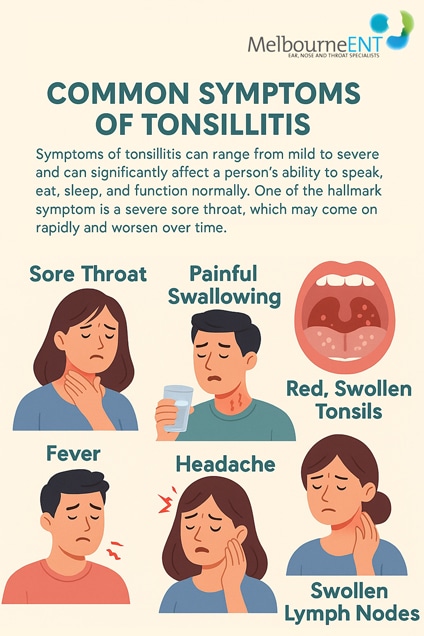
Symptoms of tonsillitis can range from mild to severe and can significantly affect a person’s ability to speak, eat, sleep, and function normally. One of the hallmark symptoms is a severe sore throat, which may come on rapidly and worsen over time. Swallowing may become painful and difficult, often leading to decreased fluid and food intake. The tonsils themselves may appear red, swollen, and coated with white or yellow patches, indicating the presence of pus.
Systemically, patients may develop a high fever, chills, and general fatigue. Headaches are common, and the lymph nodes in the neck often become tender and enlarged. These symptoms reflect the body’s immune response to the infection. In children, tonsillitis can also manifest as irritability, poor appetite, and difficulty sleeping.
Respiratory symptoms are especially prominent in cases where the swollen tonsils obstruct the airway. This can result in loud snoring, mouth breathing, and sleep disturbances. In severe cases, it may contribute to obstructive sleep apnoea, a condition characterised by repeated interruptions in breathing during sleep.
Who Is Affected By Tonsillitis?
Tonsillitis can affect individuals across all age groups, but certain populations are more susceptible due to anatomical, environmental, or immunological factors. Children between the ages of five and fifteen are the most commonly affected, particularly because of their frequent exposure to pathogens in school environments. Adolescents and young adults, especially those living in shared spaces like dormitories, are also at higher risk due to close contact and shared facilities.
Adults can experience tonsillitis as well, particularly those with a history of recurrent throat infections, allergies, or chronic sinus issues. Individuals with enlarged tonsils, either naturally or due to chronic inflammation, are more likely to suffer from repeated episodes. Environmental triggers such as air pollution, exposure to tobacco smoke, and seasonal allergies can exacerbate the condition. Furthermore, tonsillitis may be more severe or persistent in individuals with compromised immune systems or underlying respiratory conditions.
Diagnosis And Evaluation At Melbourne ENT
At Melbourne ENT, we begin each patient journey with a thorough and thoughtful evaluation to understand the full scope of the issue. Our first step is to conduct an in-depth consultation where we take a detailed medical history, including the frequency and duration of symptoms, previous treatments, and any related health concerns. Understanding the context of your symptoms is essential in guiding the diagnosis.
Following the consultation, a comprehensive physical examination is performed. This includes inspection of the throat for signs of inflammation, redness, and exudates on the tonsils. Palpation of the neck is also conducted to assess for swollen or tender lymph nodes, which are commonly associated with tonsillitis.
In certain cases, additional diagnostic tools may be employed. Throat swabs are often used to detect the presence of bacterial infections such as Group A Streptococcus. If necessary, fibreoptic nasal endoscopy may be performed to evaluate the nasal passages and assess any concurrent airway obstructions. Blood tests can help identify viral infections or determine the presence of systemic inflammation. If sleep apnoea is suspected, especially in paediatric patients, a sleep study may be recommended to assess breathing patterns during sleep.
Treatment Options For Tonsillitis
Treatment for tonsillitis is determined by the underlying cause, severity, and frequency of the condition. For mild and acute cases, medical management is often sufficient and highly effective. This typically involves the use of pain relievers such as paracetamol or ibuprofen to reduce inflammation and control fever. Adequate hydration, rest, and soothing measures like saltwater gargles can also help alleviate symptoms.
When a bacterial infection is confirmed, antibiotics such as penicillin or amoxicillin are prescribed to eradicate the infection. It is crucial to complete the full course of antibiotics even if symptoms improve, to prevent complications and antibiotic resistance.
In cases of chronic or recurrent tonsillitis, or when the condition significantly impacts quality of life, surgical intervention may be necessary. A tonsillectomy, which involves the removal of the tonsils, is a safe and commonly performed procedure. This surgery is typically done under general anaesthesia and may be completed as a day procedure or with an overnight stay, depending on the patient’s individual needs. Various surgical techniques are used to ensure minimal discomfort and rapid recovery, including bipolar cautery and cold dissection methods.
When Is Surgery Recommended?
Surgical removal of the tonsils, or tonsillectomy, is generally recommended when conservative treatments have failed to provide lasting relief, or when the patient experiences frequent and severe episodes that disrupt daily functioning. Medical guidelines often suggest considering surgery if a patient has experienced five or more significant episodes of tonsillitis in a single year. Other indicators include persistent difficulty swallowing, breathing problems, or chronic bad breath associated with tonsillar debris.
Tonsillectomy is also advised in cases where tonsillitis contributes to sleep-disordered breathing or obstructive sleep apnoea. In such scenarios, removing the tonsils can dramatically improve sleep quality, reduce daytime fatigue, and enhance overall wellbeing. The procedure is also warranted when complications like peritonsillar abscesses occur, as these can be painful and may require emergency drainage. At Melbourne ENT, our specialists thoroughly discuss all surgical indications with patients and ensure they feel informed and comfortable before proceeding with any intervention.
Recovery And Prognosis
Recovery from a tonsillectomy generally takes between one and two weeks, depending on the patient’s age, overall health, and adherence to post-operative care instructions. The first few days following surgery are often accompanied by throat pain, which may radiate to the ears. This discomfort is usually well-managed with prescribed analgesics. Maintaining hydration and consuming soft, cool foods such as yoghurt, ice cream, and soups can help reduce throat irritation and support healing.
Patients are typically advised to avoid strenuous activities and to stay home from school or work during the recovery period. Regular follow-up appointments are scheduled to monitor healing and address any concerns. In children, the improvement in sleep, energy levels, and school performance is often noticeable soon after recovery. Adults also report enhanced quality of life, reduced frequency of infections, and a significant decrease in the use of antibiotics or sick leave.
The long-term prognosis following a tonsillectomy is excellent. Most patients experience a marked reduction or complete resolution of throat infections. For those whose tonsillitis was contributing to snoring or sleep apnoea, the surgical outcome often includes better sleep quality and improved daytime function.
Risks Or Complications If Left Untreated
If tonsillitis is left untreated, especially when it becomes chronic or recurrent, several complications can arise. Repeated infections can lead to the overuse of antibiotics, increasing the risk of resistance and reducing their effectiveness for future infections. A serious complication known as a peritonsillar abscess, or quinsy, may develop, requiring emergency drainage and possibly hospitalisation.
In the long term, untreated tonsillitis can contribute to obstructive sleep apnoea, particularly in children, leading to behavioural issues, poor academic performance, and growth disturbances. Adults may experience fatigue, decreased productivity, and cardiovascular strain due to interrupted sleep. Persistent inflammation of the tonsils can also result in chronic halitosis (bad breath), difficulty swallowing, and discomfort when speaking or eating. Additionally, infections can spread to nearby structures, causing secondary problems such as sinusitis or middle ear infections.
Addressing tonsillitis in its early stages with professional care helps avoid these complications and ensures a faster, more comfortable return to health.
Why Choose Your Surgeon
At Melbourne ENT, our dedicated surgeons bring decades of experience and a patient-first philosophy to every consultation and procedure. Each patient is treated with individualised attention, and our approach combines advanced medical knowledge with a deep understanding of the personal impact ENT conditions can have.
Dr Stephen Kleid – ENT And Head & Neck Surgeon
Dr Kleid has been a senior figure in the ENT field for over 35 years, with a distinguished career that includes leadership roles such as Head of ENT at Royal Melbourne Hospital and senior tumour surgeon at Peter MacCallum Cancer Centre. His areas of special interest include the management of throat and mouth cancers, sleep apnoea, and recurrent infections. Known for his surgical precision and commitment to teaching, Dr Kleid is a highly respected voice in both the public and private health sectors.
Dr Simon Braham – ENT Surgeon
Dr Braham brings a comprehensive approach to ENT care, combining expertise in surgical treatment of nasal and throat disorders with a strong focus on patient wellbeing. With appointments at prominent institutions such as Royal Victorian Eye and Ear Hospital and Kyneton Hospital, he is well-versed in treating children and adults with ENT concerns. Dr Braham is particularly skilled in managing snoring, sleep apnoea, and paediatric tonsil conditions. His calm, empathetic manner and collaborative approach have earned him high praise from patients and peers alike.
“We tailor every treatment plan to the individual, ensuring not just resolution of symptoms but improvement in quality of life.” – Dr Simon Braham
FAQs About Tonsillitis
What does it mean if I still feel sick weeks after a bout of tonsillitis?
If symptoms linger for weeks, it may indicate chronic tonsillitis, a secondary infection, or a more complex condition such as glandular fever. A proper ENT assessment can help determine the cause and guide further management.
Can tonsillitis affect my voice or how I speak long-term?
While short-term voice changes are common during active infection, persistent voice issues could suggest ongoing inflammation or structural changes. These should be evaluated by an ENT specialist, especially if your voice does not return to normal after recovery.
Is it normal to experience ear pain when I have tonsillitis?
Yes, referred pain to the ears is common due to shared nerve pathways between the throat and ears. This does not usually indicate an ear infection, but if the pain persists, a thorough examination is recommended.
How do I know if my child’s snoring is caused by enlarged tonsils or something else?
Snoring in children can be linked to enlarged tonsils or adenoids. A detailed ENT evaluation, sometimes including an overnight sleep study, can identify the underlying cause and guide treatment.
Could untreated tonsillitis have an impact on my heart or other organs?
In rare cases, untreated bacterial tonsillitis can lead to complications like rheumatic fever, which may affect the heart. This is why completing antibiotic courses and seeking medical advice for recurrent infections is essential.
What should I do if I feel a lump in my neck alongside tonsillitis symptoms?
A swollen lymph node is a common response to infection. However, if the lump is large, painful, or persists beyond the illness, it should be evaluated to rule out abscesses or other conditions.
Is it possible for one tonsil to be more swollen or painful than the other, and why?
Yes, asymmetrical swelling can occur due to localized infection or abscess formation. If the asymmetry is pronounced or persistent, further investigation may be necessary to exclude other underlying issues.
Sources:
- Treatment of recurrent acute tonsillitis—a systematic review and practical recommendations
https://www.frontiersin.org/journals/surgery/articles/10.3389/fsurg.2023.1221932/full - Tonsillitis – StatPearls – NCBI Bookshelf
https://www.ncbi.nlm.nih.gov/books/NBK544342/ - Overview: Tonsillitis – InformedHealth.org – NCBI Bookshelf
https://www.ncbi.nlm.nih.gov/books/NBK401249/ - Tonsillitis and Tonsilloliths: Diagnosis and Management – American Academy of Family Physicians (AAFP)
https://www.aafp.org/pubs/afp/issues/2023/0100/tonsillitis-tonsilloliths.html - Tonsillitis and Peritonsillar Abscess – Medscape Reference
https://emedicine.medscape.com/article/871977-overview - Tonsillitis – Symptoms, diagnosis and treatment – BMJ Best Practice
https://bestpractice.bmj.com/topics/en-gb/598 - Chronic Tonsillitis – an overview | ScienceDirect Topics
https://www.sciencedirect.com/topics/medicine-and-dentistry/chronic-tonsillitis
Concerned About Tonsillitis?
If you or your child suffer from frequent sore throats, snoring, or suspected tonsillitis, our team at Melbourne ENT is ready to help. We offer detailed consultations, clear communication, and personalised treatment plans tailored to your specific health concerns. Our experienced ENT specialists, Dr Stephen Kleid and Dr Simon Braham, are committed to delivering high-quality care in a supportive environment. Early diagnosis and treatment of tonsillitis can lead to faster recovery, reduced complications, and better quality of life.
To schedule an appointment, contact Dr Stephen Kleid at (03) 9038 1630 or Dr Simon Braham at (03) 9038 1311. For more information, please visit related contents on this website.
Further Reading
- Read about Melbourne ENT’s Throat Concerns
- Read about Melbourne ENT’s Snoring – Sleep Apnoea
- Read about Melbourne ENT’s Swallowing Issues – Causes and Treatment Options for Dysphagia
- Read about Melbourne ENT’s Voice and Larynx Disorders
Why Choose Dr Kleid ?

Dr Stephen Kleid,
Melbourne ENT Surgeon
MED0001052799
Dr Stephen Kleid is an experienced ENT Surgeon (Otolaryngologist) based in Melbourne with a passion for Septo-rhinoplasty, Septoplasty and a strong interest in Rhinoplasty Revision.
Qualifications
- AHPRA (Medical Board)
- MB, BS; FRACS (Fellow of the Royal Australasian College of Surgeons)
- AAFPS – Member of the Australasian Academy of Facial Plastic Surgery
- AAFPRS – (International Member of the American Academy of Facial Plastic and Reconstructive Surgeons)
Dr Kleid’s Procedures
Why Choose Dr Braham ?

Dr Simon Braham,
Melbourne ENT Surgeon
MED0001144757
Dr Simon Braham MBBS (Hons) FRACS is an experienced Ear, Nose and Throat ENT Surgeon (Otolaryngologist) based in Melbourne, performing tonsil, grommet and sinus surgery for children & adults. He helps patients with breathing issues, snoring concerns and sleep disturbances.
Dr Braham’s Procedures
How can we help?
The Melbourne ENT Team takes pleasure in assisting you with any questions when considering a surgery procedure. Please call the St Kilda East clinic in Melbourne between 9am – 5 pm on Weekdays.
What Next?

Want more information about your Procedure?
- Please read our website and blogs to find out more about your procedure and concerns
- For more information about pricing and payment methods, please visit our page on Surgery Payment Options.
- Talk to our Patient Care Team from 9 am to 5 pm Monday to Friday

What to Bring to Your Consultation
- We encourage you to bring a friend or family member to accompany you, as they can provide an extra perspective and support throughout the process.
- It is important to take thorough notes and carefully review all the documents provided to you.

How to Book a Consultation
- A valid medical referral from your GP or Specialist is necessary to see a surgeon for a consultation.
- Check our pricing page
- Please contact us to book your consultation.