


At Melbourne ENT, based in St Kilda East, Victoria, we offer comprehensive care for a wide range of ENT conditions. Our highly qualified and experienced surgeons, Dr Stephen Kleid and Dr Simon Braham, are renowned for their meticulous approach and dedication to patient wellbeing. Nose bleeds, though often benign, can sometimes signal underlying issues requiring specialist attention. Whether occasional or recurrent, we are here to help with precise diagnosis, tailored treatment plans, and ongoing support. Our clinic is committed to offering high-quality ENT care using advanced medical technologies, ensuring you receive prompt and effective management in a supportive environment.
What is a Nose Bleed?
A nose bleed, medically termed epistaxis, occurs when the small blood vessels inside the nasal cavity rupture, causing bleeding from one or both nostrils. These blood vessels are fragile and can be easily damaged. There are two main types: anterior nose bleeds, which are the most common and typically originate from the front part of the nasal septum, and posterior nose bleeds, which occur deeper in the nasal cavity and tend to be more severe and challenging to manage.
Nose bleeds can be triggered by a range of factors such as dry air, trauma, infection, high blood pressure, the use of blood thinning medication and underlying structural abnormalities. Environmental conditions like low humidity or sudden temperature changes can dry out the nasal membranes, making them more susceptible to bleeding. Infections and allergies may cause inflammation and irritation, further increasing the risk. In some instances, they may affect airflow, cause discomfort or bleeding into the throat, and disrupt normal breathing or sinus drainage, potentially leading to further complications.
Common Symptoms of Nose Bleeds
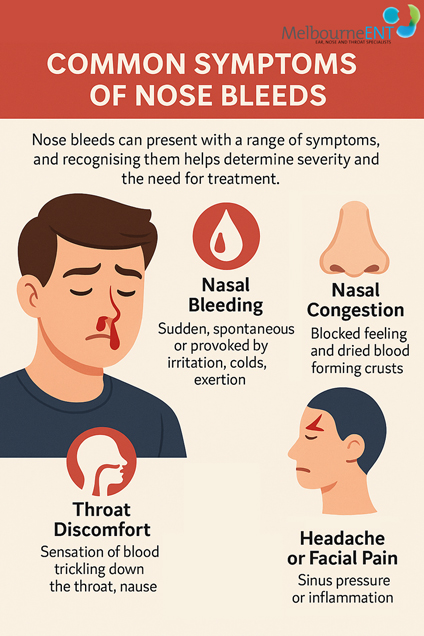
Nose bleeds can present with a range of symptoms, and recognising them helps determine severity and the need for treatment. Patients may notice sudden, spontaneous bleeding without any clear trigger, or episodes linked to nasal irritation, colds, or physical exertion. The sensation of blood trickling down the throat can cause discomfort and nausea, particularly if bleeding is prolonged. Nasal passages may feel congested or blocked, and dried blood can form crusts that further irritate the mucosa. Some individuals may experience headaches or facial pain, which can be associated with sinus pressure or related inflammation. Repeated or prolonged episodes may result in fatigue or dizziness, indicating a need for urgent care.
Who is Affected by Nose Bleeds?
Nose bleeds are common and can affect people across all age groups. Certain populations are at higher risk. Children, especially those with allergies or frequent colds, often develop nose bleeds due to habitual nose picking or minor trauma. In older adults, the blood vessels within the nasal passages become more fragile with age, and many take medications that increase bleeding risk. Individuals with chronic sinusitis or seasonal allergies may experience ongoing inflammation, making their nasal lining more prone to rupture. Environmental factors such as living in a dry or polluted climate can also heighten susceptibility, while people with deviated septum or enlarged turbinates may have persistent mechanical irritation that promotes bleeding. Additionally, those with systemic health conditions like hypertension, clotting disorders, or those undergoing anticoagulant therapy should be monitored closely for nose bleeds as these may be indicative of broader vascular or medication-related concerns.
Diagnosis and Evaluation at Melbourne ENT
At Melbourne ENT, we conduct a thorough diagnostic process to identify the source and cause of the nose bleed. During the initial consultation, our surgeons take the time to understand your symptoms, triggers, lifestyle factors, and medical history. A physical examination is performed to inspect the nasal cavity using specialised instruments to detect any obvious sources of bleeding or abnormalities.
When necessary, a nasal endoscopy may be conducted. This involves a slender, flexible camera being gently inserted into the nasal passage to allow a detailed view of internal structures. It’s a highly effective tool for identifying deeper causes of bleeding. For patients with persistent or complex cases, we may recommend imaging studies such as CT scans to assess the sinus anatomy and identify hidden sources of bleeding or structural problems. We also routinely evaluate blood pressure and review any medications that may impact clotting ability, ensuring a complete and safe diagnostic approach tailored to your individual needs.
Treatment Options for Nose Bleeds
Treatment at Melbourne ENT is personalised, addressing both immediate symptoms and underlying causes. For mild and anterior bleeds, conservative measures are often effective. This may include nasal cauterisation using chemical agents such as silver nitrate or thermal methods to seal the bleeding vessel. Topical ointments and saline sprays are prescribed to promote healing and keep nasal tissues moisturised, reducing the likelihood of recurrence.
We also address contributing medical issues, such as adjusting antihypertensive therapy or managing allergies that can lead to frequent inflammation. Lifestyle changes, such as increasing humidity levels in the home or avoiding nasal trauma, may also be advised. For more complex or recurrent cases, surgical intervention may be necessary. Nasal packing or the use of balloon tamponade devices can help control active bleeding.
For persistent or unusual blood noses it’s important to speak to your GP about possible underlying bleeding disorders or medications that could cause bleeding.
For patients with structural abnormalities, procedures such as septoplasty can correct a deviated nasal septum, restoring proper airflow and reducing friction against nasal tissues. In cases of posterior bleeding or vascular abnormalities, our surgeons may perform advanced endoscopic procedures to directly visualise and treat the affected vessels. These surgical options are minimally invasive and performed with precision to ensure the best outcomes with minimal recovery time.
When is Surgery Recommended?
Surgical intervention is considered when nose bleeds become recurrent, are not managed successfully through conservative methods, or are associated with structural deformities that contribute to the problem. If a patient has undergone repeated cauterisations without lasting results, or if the source of bleeding lies deeper within the nasal passages, then surgery becomes a more effective and long-term solution.
Septoplasty is a commonly performed procedure in these cases, where the nasal septum is straightened to improve airflow and decrease the risk of irritation to delicate blood vessels. In situations involving posterior bleeds, which tend to be more serious, endoscopic nasal surgery is often the best option. This approach allows for direct visualisation and precise treatment of the bleeding site with minimal discomfort and excellent recovery profiles. Our team carefully considers the patient’s overall health, symptom severity, and treatment history before recommending surgical options.
Recovery and Prognosis
Recovery from nose bleed treatment is generally quick, particularly with proper care. Most patients can return to their normal activities within a short period, especially when the treatment involves conservative management. After surgical interventions, a brief recovery period is expected, during which patients are advised to follow specific aftercare guidelines to promote healing and prevent recurrence.
Patients are typically instructed to avoid strenuous physical activity, refrain from nose blowing, and keep their nasal passages well-hydrated with saline sprays or ointments. Sleeping with the head elevated can help reduce pressure in the nasal vessels, further aiding recovery. Our team provides detailed aftercare instructions and remains available for follow-up to ensure that healing progresses smoothly.
Regular post-treatment evaluations help identify and manage any underlying causes, preventing future episodes. With the right approach, most patients experience long-term relief from recurrent nose bleeds and can enjoy an improved quality of life.
Risks or Complications if Left Untreated
Leaving recurrent or severe nose bleeds untreated can result in a variety of health complications. Persistent bleeding may lead to anaemia, especially if the episodes are frequent or heavy, and this can cause fatigue, shortness of breath, and general weakness. Nasal passages may become chronically irritated or obstructed by crusted blood, causing discomfort and even infections.
More concerning is the possibility of airway obstruction, particularly if large clots form or bleeding enters the throat. Recurrent bleeding may also obscure the presence of more serious underlying conditions such as tumours, vascular malformations, or systemic illnesses that require prompt treatment. Additionally, patients may eventually require emergency medical attention if nose bleeds become uncontrollable or cause significant blood loss. Seeking timely assessment and management from Melbourne ENT helps to prevent these complications and ensures better overall outcomes.
FAQs About Nose Bleeds
Can recurring nose bleeds be a sign of a more serious condition even if they seem mild?
Yes. Even mild but frequent nose bleeds can be a sign of underlying issues such as hypertension, clotting disorders, or nasal structural abnormalities. It’s important not to dismiss them, especially if they occur without a clear trigger.
Why do my nose bleeds always happen at the same time of day?
Some individuals experience nose bleeds in the early morning or at night due to changes in blood pressure, indoor air quality, or nasal dryness during sleep. A medical assessment can help identify contributing factors.
Could my use of nasal sprays or inhalers be causing my nose bleeds?
Yes. Overuse of certain decongestant sprays or inhaled corticosteroids can dry out or irritate the nasal lining, making it more prone to bleeding. Proper technique and moderation can reduce this risk.
Is there a connection between nose bleeds and sleep apnoea or snoring?
In some cases, yes. Snoring or sleep apnoea may be linked to nasal obstruction or dryness, both of which can contribute to nose bleeds. Addressing nasal airflow can help with both conditions.
Why does blood sometimes come out of my nose and my mouth at the same time?
This may occur when a posterior nose bleed causes blood to flow down the back of the throat. It can be alarming but is treatable. Medical evaluation is essential to determine the source and manage it properly.
Can nose bleeds affect my ability to smell or breathe long-term?
If left untreated, chronic nose bleeds due to structural issues or inflammation can lead to nasal congestion or scarring, which may impact breathing and, in rare cases, the sense of smell.
Should I be concerned if I get a nose bleed after sneezing or bending over?
This can indicate increased pressure in the nasal vessels or irritation in the lining. While not always serious, frequent episodes warrant assessment to rule out more persistent causes.
Sources:
- Frequency and severity of idiopathic epistaxis relative to time of day
https://www.nature.com/articles/s41598-024-81570-0 - Epistaxis: A prospective clinical study
https://gsconlinepress.com/journals/gscbps/sites/default/files/GSCBPS-2025-0123.pdf - Epistaxis: A Review
https://www.ijmrhs.com/medical-research/epistaxis-a-review-87873.html - Epistaxis – StatPearls – NCBI Bookshelf
https://www.ncbi.nlm.nih.gov/books/NBK435997/ - Epistaxis – ScienceDirect.com
https://www.sciencedirect.com/science/article/abs/pii/S0263931924000954 - Nosebleeds in Children | JAMA Otolaryngology–Head & Neck Surgery
https://jamanetwork.com/journals/jamaotolaryngology/fullarticle/2834977 - Exploring knowledge of first aid in epistaxis—25 years on | PLOS One
https://journals.plos.org/plosone/article?id=10.1371%2Fjournal.pone.0315092
Concerned About Nose Bleeds?
If you or a loved one are experiencing recurrent or unexplained nose bleeds, it’s time to seek expert care. Contact Melbourne ENT to arrange a comprehensive consultation with our leading ENT surgeons. We are here to provide expert insights, advanced diagnostics, and highly personalised treatments to help you manage and overcome nose bleeds effectively. Call us at (03) 9038 1630 / (03) 9038 1311 to book for consultation.
Let Melbourne ENT provide the specialised care and support you need to manage nose bleeds effectively and restore your comfort and peace of mind. We are committed to helping you breathe easier, feel better, and regain control over your health.
Further Reading
- Read about Melbourne ENT’s Nose Concerns and Conditions
- Read about Melbourne ENT’s Septal Hematoma Melbourne
- Read about Melbourne ENT’s Narrow Nostrils
- Read about Melbourne ENT’s Broken Nose Melbourne