

At Melbourne ENT in St Kilda East, we specialise in diagnosing and treating sinusitis with expert care and precision. Led by ENT surgeons Dr Stephen Kleid and Dr Simon Braham, our clinic provides comprehensive solutions for sinus-related conditions, helping patients across Melbourne find lasting relief from nasal obstruction, abnormal sense of smell, purulent discharge, pressure, and congestion. We address a wide range of ENT concerns and pride ourselves on offering personalised care with state-of-the-art diagnostic and surgical techniques.
Our goal is to restore normal breathing, eliminate infection, and improve the overall quality of life for every patient we treat.

What Is Sinusitis?
Sinusitis, also known as a sinus inflammation, is the inflammation of the tissue lining the sinuses. Healthy sinuses are air-filled cavities located in the skull, around the nose and eyes. When these spaces become blocked with swollen diseased tissue and filled with fluid, germs can grow and cause an infection. This inflammation interferes with the normal drainage of mucus and creates an environment where bacteria, viruses, or fungi can thrive.
The different classifications of sinusitis include acute, subacute, chronic, and recurrent, depending on the duration and frequency of the symptoms. Acute sinusitis typically resolves with conservative management, while chronic and recurrent forms may require further medical or surgical intervention. The condition is closely linked to nasal anatomy, immune health, and environmental exposures, making diagnosis and tailored treatment essential.
DOWNLOAD GUIDE
Considering Rhinoplasty surgery? Information is just one click away.

Common Symptoms Of Sinusitis
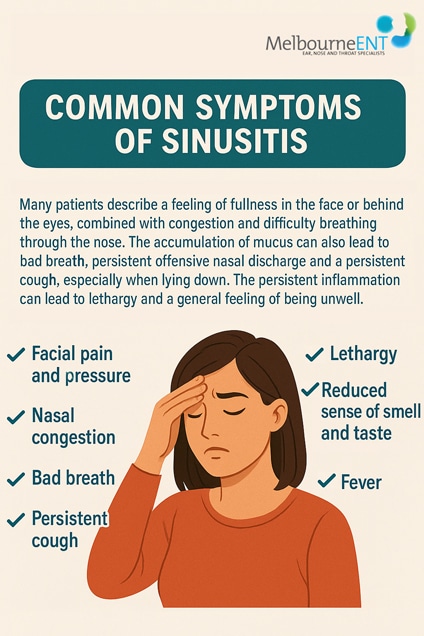
Symptoms may vary based on the type and severity of sinusitis. Recognising these symptoms is the first step toward effective treatment. Many patients describe a feeling of fullness in the face or behind the eyes, combined with congestion and difficulty breathing through the nose. The accumulation of mucus can also lead to bad breath, persistent offensive nasal discharge and a persistent cough, especially when lying down. The persistent inflammation can lead to lethargy and a general feeling of being unwell.
As the inflammation worsens, patients may experience a notable decline in their sense of smell and taste, which can impact appetite and enjoyment of food. The presence of fever, especially in children or during acute bacterial infections, often points to an active infection requiring medical attention. Understanding these symptoms helps guide our team in determining the appropriate course of treatment.
Who Is Affected By Sinusitis?
Sinusitis can affect anyone, but certain individuals are more prone to developing the condition. People with underlying allergies, asthma, or structural issues within the nose are at higher risk, as these conditions can disrupt normal airflow and mucus drainage. Children, particularly those attending daycare or school, are frequently exposed to viruses and may develop sinusitis following upper respiratory tract infections.
Adults who smoke or are exposed to second-hand smoke or pollutants are also at increased risk, as irritants can inflame the nasal passages. Additionally, those with weakened immune systems due to chronic illnesses, medications, or chemotherapy may be more susceptible to prolonged or complicated sinus infections. Identifying and addressing these risk factors is a key part of our personalised approach to care.
Diagnosis And Evaluation At Melbourne ENT
A thorough evaluation by Dr Kleid or Dr Braham ensures a precise diagnosis and an effective treatment plan. During your first appointment, we take time to listen to your symptoms, review your medical history, and perform a detailed examination of the nasal passages. Nasal endoscopy, which involves using a small camera to view inside the nose, allows us to identify structural problems, inflammation, and signs of infection that are not visible externally.
If symptoms persist or are severe, we may order a CT scan to get a comprehensive image of the sinus cavities. This helps us assess the extent of sinus blockage and determine whether surgical intervention is necessary and plan the operation. We may also consider allergy testing if environmental or seasonal allergies are suspected to be a contributing factor. By combining clinical expertise with advanced diagnostic tools, we ensure each patient receives an accurate diagnosis and a treatment plan tailored to their needs.
Treatment Options For Sinusitis
Our clinic provides both conservative and advanced treatment options. Many cases of acute sinusitis respond well to medical therapies. These include nasal saline irrigations, which help flush out mucus and allergens, and intranasal corticosteroids, which reduce inflammation and swelling. When bacterial infections are identified, a course of oral antibiotics may be prescribed to clear the infection.
For patients with underlying allergies, antihistamines and allergy, immunotherapy can play a significant role in managing symptoms and preventing recurrence. We also advise lifestyle changes such as using air purifiers, avoiding known allergens, and staying hydrated to support sinus health.
When medical treatments are insufficient or if structural issues are contributing to the condition, surgical options may be considered. Our team specialises in minimally invasive procedures known as Functional Endoscopic Sinus Surgery (FESS) which aim to restore normal sinus drainage with minimal discomfort. Septoplasty and turbinate reduction may also be performed to correct anatomical obstructions and improve nasal airflow.
When Is Surgery Recommended?
Surgical intervention may be necessary if symptoms of sinusitis persist for more than 12 weeks despite appropriate medical management. Patients who experience frequent infections that interfere with work, sleep, or daily function may also benefit from surgery. In these cases, imaging often reveals anatomical issues such as blocked sinus openings, nasal polyps, or significant septal deviations that prevent effective treatment through medication alone.
Our surgeons carefully evaluate the risks and benefits of surgical treatment for each patient and only recommend it when conservative therapies have proven ineffective. Surgery is designed to enhance natural sinus drainage and prevent future infections, offering long-term relief. Patients receive comprehensive pre- and post-operative care, and we remain available to monitor recovery and address any concerns that may arise.
Recovery And Prognosis
Recovery from sinus surgery is usually smooth and well-tolerated. Most patients are able to drive the next day, walk around and resume normal daily activities within a week or two, although strenuous activity should be avoided initially. Nasal packing is seldom required, and discomfort is typically manageable with over-the-counter pain relievers. It is normal to experience mild congestion and nasal discharge during the early stages of healing.
We provide detailed post-operative instructions and schedule follow-up appointments to ensure proper healing. Patients may be advised to use saline rinses and topical medications to maintain cleanliness and reduce swelling. With consistent follow-up and adherence to post-surgical care, the long-term outlook is excellent. Most patients report a dramatic improvement in breathing, sleep quality, and reduction in sinus infections, often transforming their overall wellbeing.
Risks Or Complications If Left Untreated
If sinusitis is not properly treated, it can lead to a range of complications. Chronic inflammation can result in persistent nasal obstruction, making it difficult to breathe and sleep comfortably. This can negatively impact daily productivity and lead to fatigue or irritability. In cases of untreated bacterial infections, the inflammation can spread to nearby structures such as the eyes, causing orbital cellulitis, or even to the brain, although such complications are rare.
Ongoing sinus inflammation can also promote the growth of nasal polyps and thicken sinus linings, making future treatment more difficult. The cumulative effect of untreated sinusitis can diminish a person’s quality of life and lead to ongoing reliance on medications or repeated courses of antibiotics. Prompt evaluation and appropriate treatment are essential in avoiding these complications and restoring sinus health.
Rarely untreated sinus inflammation can spread to the orbit of brain causing orbital abscess, meningitis or brain abscesses
Why Choose Your Surgeon
At Melbourne ENT, you are in expert hands. Both Dr Kleid and Dr Braham bring decades of surgical experience and patient-focused care. They are known for their dedication to achieving the best possible outcomes for their patients through evidence-based treatments and a holistic approach to ENT health.
Dr Stephen Kleid is a FRACS-qualified ENT and Head & Neck Surgeon with over three decades of clinical and surgical experience. He holds a senior surgical position at Peter MacCallum Cancer Centre and has held leadership roles at Royal Melbourne Hospital. His expertise spans sinus surgery, management of head and neck tumours, and complex revision rhinoplasty. Dr Kleid is also deeply involved in research and teaching, ensuring his knowledge remains at the forefront of ENT advancements.
Dr Simon Braham is a FRACS-trained ENT Surgeon with advanced training from Melbourne, New York, and Boston. He currently serves as a consultant ENT surgeon at the Royal Victorian Eye and Ear Hospital and brings extensive experience in sinus, paediatric, and nasal airway surgery. Patients appreciate his meticulous surgical technique, clear communication, and compassionate care.
Together, they ensure every patient receives high-quality, personalised care using the latest technologies and treatment protocols. Melbourne ENT is committed to delivering trusted, local care with a focus on lasting results and patient satisfaction.
FAQs About Sinusitis Surgery
How long is recovery?
Recovery typically spans one to six weeks depending on the extent of surgery and the patient’s adherence to aftercare. Most people feel significantly better within two weeks and return to normal activities shortly after.
Will my sense of smell return?
For many patients, yes. Loss of smell due to chronic inflammation often improves as the sinuses heal and function is restored. However, results vary depending on how long the impairment has lasted.
Is sinus surgery painful?
Discomfort is usually mild and well managed with pain relief. Patients may feel congested or blocked, but significant pain is uncommon.
Can sinus surgery fix snoring?
If nasal obstruction contributes to snoring or sleep apnoea, sinus surgery can lead to meaningful improvements in sleep quality and breathing.
Will it recur?
While surgery addresses the structural cause of sinusitis, maintenance is key. With proper post-operative care, lifestyle adjustments, and routine follow-up, recurrence is low and long-term success is achievable. Treating the underlying cause of the inflammation is the key to preventing recurrent disease
Why do I still feel pressure after surgery?
Post-operative inflammation and healing can cause lingering pressure for several weeks. This usually resolves with time and proper aftercare if the sinus were the cause of the pressure. It’s important to have discussed the differential diagnosis of headaches and facial pressure with your GP/neurologist prior to surgery.
Can weather or altitude affect my sinuses after surgery?
Some patients may remain sensitive to changes in barometric pressure or altitude, though most report these effects lessen significantly after healing. Your surgeon can advise on travel timing and symptom management.
Is it normal to have nasal crusting or dryness for months?
Yes, especially during the healing phase. Ongoing saline irrigation and occasional moisturising sprays can help alleviate this while the nasal lining regenerates.
Sources:
- Sinusitis – Ear, Nose, and Throat Disorders. MSD Manuals. https://www.msdmanuals.com/professional/ear-nose-and-throat-disorders/nose-and-paranasal-sinus-disorders/sinusitis
- Sphenoid Sinusitis in an Immunocompetent Patient. American Journal of Case Reports, 2025. https://amjcaserep.com/abstract/full/idArt/946501
- Diagnosis and management of chronic rhinosinusitis – CMAJ. Canadian Medical Association Journal, 2025. https://www.cmaj.ca/content/197/6/E148
- Acute Sinusitis – StatPearls – NCBI Bookshelf. National Center for Biotechnology Information (NCBI), 2015 (regularly updated). https://www.ncbi.nlm.nih.gov/books/NBK547701/
- Chronic Sinusitis – StatPearls – NCBI Bookshelf. NCBI Bookshelf, 2015 (updated content). https://www.ncbi.nlm.nih.gov/books/NBK441934/
- Sinusitis, Volume 9, Issue 1 (June 2025) – Collection of Articles. MDPI, 2025. https://www.mdpi.com/2673-351X/9/1
- Efficacy and safety of azithromycin in treating sinusitis patients. Annals of Medicine and Surgery, 2025. https://journals.lww.com/annals-of-medicine-and-surgery/fulltext/2025/04000/efficacy_and_safety_of_azithromycin_in_treating.63.aspx
Call To Action
If you’re struggling with persistent sinus symptoms, recurring infections, or difficulty breathing, help is available. Don’t let sinusitis continue to affect your comfort and well-being. Contact Melbourne ENT to schedule a consultation with Dr Kleid or Dr Braham and explore your treatment options.
Call us on (03) 9038 1630 or book online. You are also welcome to send us any prior imaging or referrals ahead of your visit to ensure a smooth consultation experience.
Melbourne ENT delivers world-class sinus care with compassion and precision. Let us help you breathe easier and reclaim your comfort and vitality.
Further Reading
- Read about Melbourne ENT’s ENT Concerns
- Read about Melbourne ENT’s Nose Concerns and Conditions
- Read about Melbourne ENT’s Chronic Rhinosinusitis Melbourne
- Read about Melbourne ENT’s Loss Of Smell Melbourne
- Read about Melbourne ENT’s Allergic Rhinitis Melbourne