


Rhinoplasty for women, often called Cosmetic Nose Surgery, is an operation to reshape the nose so it sits optimally with the rest of the face. For many women, the goal is not a completely different nose, but an adjusted, more balanced version of their own. Common aims include smoothing a hump, refining a bulky tip, narrowing a wide bridge, or gently lifting a drooping tip so that the nose no longer draws attention.
At Melbourne ENT in St Kilda East, Victoria, Cosmetic Nose Surgery is performed by specialist ear, nose and throat surgeons, Dr Stephen Kleid and Dr Simon Braham. Both are Fellows of the Royal Australasian College of Surgeons (FRACS) and have extensive experience in nasal and head and neck surgery. Their training covers both cosmetic and functional aspects of nasal surgery, which means they consider how the nose looks and how it works, not one at the expense of the other.
Rhinoplasty may be performed for cosmetic reasons, functional reasons, or a combination of both. Some women are mainly concerned about the appearance of their nose. Others have breathing difficulties from problems such as a deviated septum or previous trauma, and would like to address the shape at the same time if it is safe to do so. During your consultation, your surgeon will explain which parts of your proposed procedure are cosmetic, which are medically necessary, and what this means for your expectations and any possible rebates.
DOWNLOAD GUIDE
Considering Rhinoplasty surgery? Information is just one click away.

What Is Rhinoplasty For Women (Cosmetic Nose Surgery)
Simple Explanation
Rhinoplasty for women is an operation that reshapes the bones, cartilage, and soft tissues of the nose to adjust proportion, balance, and in some cases airflow. Through carefully placed incisions, the surgeon can address a bump or a deviated nose, refine the tip, adjust the length or rotation of the nose, in alignment with your existing facial features, rather than drawing attention away from them.
Cosmetic Vs Functional Goals
Cosmetic Nose Surgery focuses on the external appearance of the nose. Functional surgery focuses on internal structures that affect breathing, such as the nasal septum, turbinates, and nasal valves. In practice, many women have a mixture of issues. For example, a twisted nose can reflect both an external deviation and an internal septal problem. At Melbourne ENT, the surgeons assess the internal and external anatomy together and often plan a combined procedure so that form and function are addressed in a single operation where appropriate.
Are You a Candidate For Rhinoplasty For Women
✓ Common Cosmetic Concerns
Women commonly consider rhinoplasty when they feel their nose is out of proportion to the rest of their face. Concerns often include a dorsal hump that is obvious in profile, a drooping tip that worsens with smiling, a bulbous or boxy tip that lacks definition, or nostrils that appear wide or flared. Some patients feel their nose appears crooked after an injury or simply does not match the delicate features of the eyes, lips, or chin. When these concerns cause ongoing self consciousness, Cosmetic Nose Surgery may be discussed as a possible option.
✓ Functional And Structural Concerns
Not all rhinoplasty is purely cosmetic. Many women also have structural problems inside the nose, such as a deviated septum, enlarged turbinates, or valve collapse, that lead to difficulty breathing. Others have deformities following fractures, sporting injuries, or previous surgery. In these situations, a functional operation to improve airflow can sometimes be combined with cosmetic refinements, provided this is safe and realistic. A thorough assessment is essential to decide whether surgery can reasonably improve symptoms and what trade offs may exist.
✓ General Suitability
Suitable candidates for rhinoplasty for women are generally those whose nasal growth is complete, usually from the late teenage years onwards, who are in reasonable health and have stable medical conditions. Just as importantly, they have realistic expectations about what surgery can and cannot achieve. Rhinoplasty can improve shape and proportion, but it cannot guarantee perfection or solve broader personal or emotional issues. During consultation, your surgeon will discuss your motivations, your understanding of the procedure, and how you are likely to manage the recovery period so that any decision to proceed is considered and informed.
Possible Benefits Of Rhinoplasty For Women
✓ Cosmetic Benefits
Cosmetic Nose Surgery has the potential to create a nose that blends more naturally with your face. Refining the tip, smoothing the bridge, straightening a deviation, or narrowing the nostrils can help shift attention back to the eyes and overall expression, rather than the nose being the main feature you notice in photographs. The focus at Melbourne ENT is on natural, age appropriate changes that respect your existing facial characteristics and, where desired, your ethnic background, rather than on dramatic transformations or a one style suits all appearance.
✓ Functional And Breathing Benefits
When structural problems are present, rhinoplasty combined with septoplasty or turbinate surgery may improve airflow through the nose. Straighter internal passages, reduced obstruction, and better support for the nasal valves can make breathing more comfortable, particularly at night or during exercise. Not every patient will experience these benefits, and some may already breathe well before surgery, but where functional problems exist, they are taken seriously and discussed as part of the overall surgical plan.
✓ Quality Of Life And Confidence
For some women, feeling unhappy about their nose can have subtle but persistent effects on day to day life, from avoiding certain angles in photos to feeling uncomfortable when others focus on their face. When rhinoplasty provides a balanced and satisfactory result, patients may feel more at ease and less preoccupied with how their nose looks. It is important to note that experiences vary, and surgery cannot guarantee a particular emotional outcome. However, for the right person, Cosmetic Nose Surgery can be one part of feeling more comfortable in their own appearance.
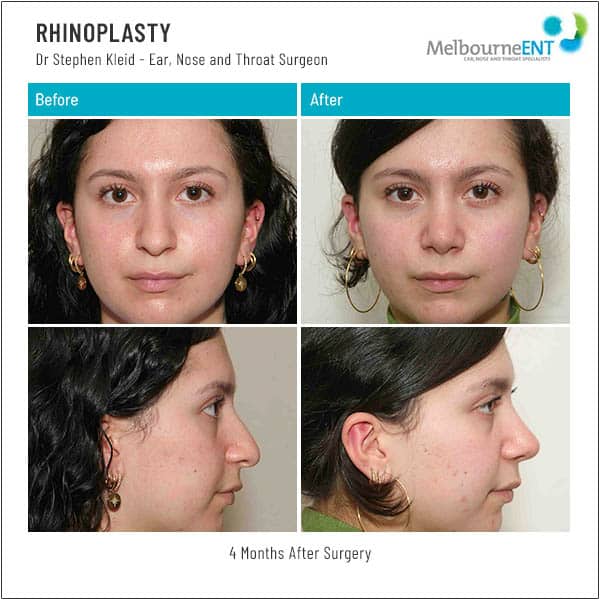
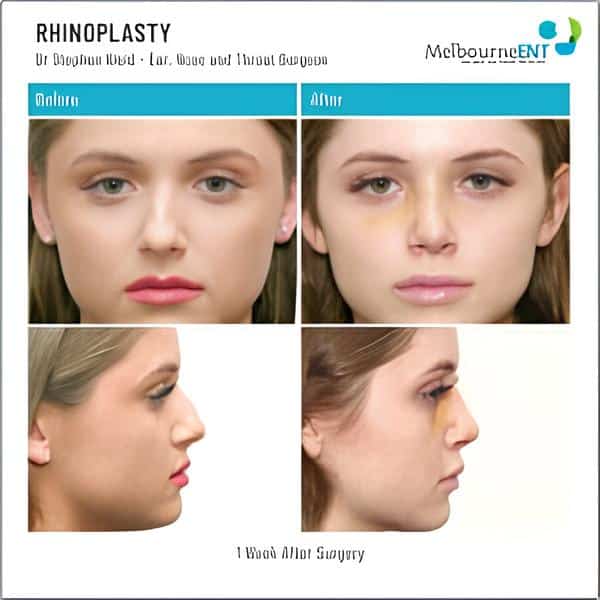
Before And After Photos
✓ Accessing Images Safely And Appropriately
Before and after photographs can be helpful in understanding the types of changes that may be possible with rhinoplasty for women. At Melbourne ENT, clinical images are treated with care and respect. Photographs are de-identified, and consent is obtained from patients who agree to their images being used for teaching or demonstration. Rather than selecting only the most dramatic examples, the focus is on realistic changes that reflect everyday outcomes.
✓ How To View Relevant Examples
If you would like to see examples of noses that have had similar concerns to yours, such as hump reduction or tip refinement, you can ask your surgeon during the consultation. When appropriate, they may show images that illustrate relevant techniques and typical healing patterns. These photographs are used as a guide for discussion and to explain the surgery, not as promises of a particular result. Every nose differs in structure, skin thickness, and healing, so results can vary even when the procedure is similar.
Consultation For Rhinoplasty For Women
✓ Referral And Preparation
Most patients start by seeing their general practitioner and obtaining a referral to Melbourne ENT, particularly if there are breathing difficulties or a history of nasal trauma. A referral allows the surgeons to consider any medically necessary components of your treatment in the context of Medicare guidelines. At your first visit, it is helpful to bring a list of your concerns, a summary of past nasal or sinus issues, details of your medications and allergies, and any relevant scans or reports. Some women find it useful to think in advance about specific things they would like to change, as well as features they definitely wish to keep.
✓ Assessment With Dr Stephen Kleid Or Dr Simon Braham
During your consultation, the surgeon will take a detailed medical history, including breathing patterns, allergy symptoms, sinus problems, past injuries, and prior nasal surgery. A careful examination is performed, looking at the nose from the front, side, and base views and assessing how the nose relates to your other facial features. Inside the nose, the septum, turbinates, and nasal valves are examined to identify any structural causes of obstruction. This assessment forms the foundation of a safe and realistic treatment plan.
✓ Discussion Of Goals And Options
Once the assessment is complete, you will have time to describe what bothers you most. This might be a particular angle in photos, a prominent hump, a droopy tip, or issues with breathing. Your surgeon will explain which changes are likely to be achievable, which might be unwise or unpredictable, and how those changes could affect both appearance and function. The aim is to align the surgical plan with your priorities while maintaining structural support and breathing.
✓ Planning And Informed Consent
Clinical photographs are usually taken to document your starting point and to assist in planning. In some cases, simple image morphing or sketching may be used to demonstrate possible profile changes, with clear explanation that these are not guarantees. You will receive detailed information about the nature of the operation, expected recovery, potential complications, and likely limitations. A written quote is provided so you can consider the plan in your own time, ask further questions, and discuss your options with family or your GP before deciding whether to proceed.
How Is It Performed (Surgery For Rhinoplasty For Women)
Anaesthesia And Hospital Setting
Rhinoplasty for women is usually performed under general anaesthesia in an accredited hospital or day surgery facility. A specialist anaesthetist cares for you throughout the operation, monitoring your breathing, heart rate, and comfort. The duration of surgery varies depending on the complexity of the planned changes and whether procedures such as septoplasty or turbinate surgery are performed at the same time. This will be discussed with you during the planning stage.
Surgical Approaches
Most Cosmetic Nose Surgery at Melbourne ENT uses an open approach. This involves a small incision across the columella, the strip of skin between the nostrils, along with incisions inside the nostrils. The skin is gently lifted, allowing the surgeon to see the underlying cartilage and bone clearly and to make precise adjustments. In carefully selected cases with more limited goals, an internal or endonasal approach, where all incisions are inside the nostrils, may be considered. The choice of approach depends on the changes required and the need for accuracy and support.
Reshaping The Nasal Framework
Once the framework is exposed, the surgeon reshapes the nasal bones and cartilage. If there is a hump, the excess bone and cartilage can be smoothly reduced. The nasal bones may be repositioned to narrow or straighten the bridge. The tip cartilages are refined using a combination of carefully placed sutures, selective trimming, and supporting grafts so that the tip can be softened, lifted, or de-projected as needed.
Addressing Breathing And Structural Issues
When structural problems contribute to nasal obstruction, septoplasty can be carried out during the same operation. The deviated portions of the septum are straightened or repositioned while keeping enough cartilage to support the bridge. Enlarged turbinates can be reduced or repositioned to open the airway while preserving their important role in warming and humidifying the air. If nasal valves are weak or collapse on inspiration, grafts may be used to reinforce these regions and maintain airflow.
Nostril Or Alar Base Surgery
If the nostrils or alar base appear wide or flared, your surgeon may suggest subtle reductions in these areas. Small wedges of tissue can be removed at the base of the nostrils or incisions placed just inside the nostril rim to narrow the area slightly. The aim is to refine shape without drawing attention to the nostrils themselves. Any external scars are placed in natural creases where they tend to be less noticeable after healing, although some degree of scarring is always possible.
Completion Of Surgery
When the reshaping is complete, the skin is redraped and the incisions are closed with fine sutures. An external splint is applied to protect the nose and help it maintain its new form in the early healing stages. Soft internal supports may be used if needed, although routine packing is often avoided to make breathing and recovery more comfortable. After a period in recovery, you will either go home later that day or stay overnight, depending on the procedure and your general health.
Recovery After Rhinoplasty For Women
Immediately After Surgery
In the first few days after surgery, it is common to experience swelling, a blocked or stuffy feeling in the nose, and some bruising around the eyes and cheeks. Discomfort is usually most noticeable in this period but is generally manageable with prescribed pain relief. You will be given clear instructions about head elevation, rest, and how to care for the splint and any dressings. It is important not to blow your nose and to avoid bending or lifting that can increase pressure in the face.
First Week
During the first week, bruising may look dramatic but should gradually start to fade. Swelling remains obvious, and the nose often appears larger and firmer than expected at first. The external splint normally stays in place for about a week to support the healing bones and protect the nose. At your first follow up appointment, the splint and any external sutures are usually removed and the early result becomes more visible, although still swollen.
Weeks Two To Four
Over the next few weeks, most patients feel progressively more comfortable. Many return to office based work or study within one to two weeks, provided they avoid strenuous activity. Swelling and discolouration continue to settle, and from a social distance the nose often looks reasonably presentable, although it will not yet have its final shape. You will be advised to avoid vigorous exercise, contact sports, and situations where the nose could be bumped. Special care is needed if you wear glasses so that pressure on the bridge is minimised while the bones are still healing.
Medium And Long Term Healing
Rhinoplasty healing continues quietly for many months. The majority of visible swelling resolves in the first few months, but the finer details, particularly in the tip, can take 12 months or sometimes longer to fully refine, especially in thicker skin. During this time, the nose may feel firm, slightly numb in places, or subtly different day to day as swelling changes. Regular follow up visits allow your surgeon to monitor progress and, where appropriate, consider small non surgical measures such as targeted injections to manage thickened scar tissue.
Risks And Complications Of Rhinoplasty For Women
General Surgical Risks
All surgery under general anaesthesia carries some general risks, including reactions to medications, bleeding, infection, blood clots, and complications related to existing medical conditions. Careful pre operative assessment and close monitoring during and after surgery help reduce these risks, but they cannot be completely eliminated.
Rhinoplasty Specific Risks
Rhinoplasty and Cosmetic Nose Surgery also involve specific risks. These can include prolonged swelling, prolonged bruising, numbness or altered sensation around the nose or upper teeth, visible or thickened scars, and persistent nasal obstruction or dryness. There is also the possibility that the cosmetic result may not fully meet your expectations, even when the operation has technically gone as planned, because healing and scarring vary between individuals.
Revision Surgery
In a small proportion of cases, further surgery may be considered to refine or correct aspects of the result. Revision rhinoplasty is often more complex than first time surgery because of scar tissue and altered anatomy. It is usually delayed until healing is complete, which can take a year or more. Your surgeon will discuss the likelihood of needing revision surgery in your situation and will help you weigh the potential benefits against the added risks.
Where To Learn More
Melbourne ENT provides written information that explains the risks and possible complications of rhinoplasty in more detail. You may be directed to a dedicated risks page on the clinic website or receive printed information to take home. Patients are strongly encouraged to read this material carefully and to raise any questions in consultation so they understand the potential downsides of surgery as well as the potential benefits.
Cost Of Rhinoplasty For Women
What Influences The Cost
The cost of rhinoplasty for women can vary, depending on the complexity of the cosmetic work, whether functional procedures are also required, and whether it is a first time or revision operation. Total fees usually include the surgeon’s fee, anaesthetist’s fee, and hospital or day surgery charges. Pre operative tests, imaging, and post operative visits may also contribute to the overall cost of care.
Quotes And Fee Information
After your assessment and once a tailored surgical plan is discussed, you will receive a written quote outlining the fees and any relevant item numbers. This gives you the opportunity to consider the information, speak with your GP, and contact your health fund to clarify potential rebates where applicable. Costs are not a guarantee of a particular outcome. The emphasis is on clear, transparent information so you can decide whether surgery is right for you from both a medical and financial perspective.
Medicare Coverage And Insurance
When Medicare May Apply
Medicare may provide rebates for procedures that meet defined medical criteria. In the context of rhinoplasty for women, this may include significant nasal obstruction due to a deviated septum, post traumatic deformity, or other structural problems that meet the requirements of relevant item numbers. Cosmetic changes made solely to alter the appearance of the nose are generally not covered. Your surgeon will explain if any part of your surgery appears to meet Medicare criteria and will include relevant item numbers in your quote where appropriate.
Private Health Insurance
If you have private health insurance, your level of cover, the presence of applicable Medicare item numbers, and the hospital where surgery is performed all influence what is covered. In general, if the functional aspect of surgery attracts an item number and your policy includes it, your health fund may contribute to hospital and theatre fees, while the cosmetic portion remains an out of pocket cost. It is important to contact your health fund with the item numbers from your quote so they can confirm what benefits may apply and what excess or co payments you may need to pay.
Out Of Pocket Costs
Even when Medicare and private health insurance contribute, there are usually out of pocket costs. These can include part of the surgeon’s or anaesthetist’s fee, non covered components of the operation, or charges that exceed the rebates paid. Melbourne ENT aims to provide clear written information about expected fees and encourages patients to seek clarification before making a final decision about surgery.
Why Choose Your Surgeon
Specialist Training And Qualifications
At Melbourne ENT, rhinoplasty for women is performed by specialist ear, nose and throat surgeons, Dr Stephen Kleid and Dr Simon Braham, both of whom hold FRACS qualifications. This indicates completion of accredited surgical training and ongoing adherence to professional standards. Their experience spans nasal and sinus surgery, head and neck surgery, and reconstructive work in both public and private hospital settings.
Focus On Structure, Function And Safety
The surgical philosophy at Melbourne ENT is to create a stable nasal framework that both looks balanced and supports good breathing. Rather than focusing solely on reducing size, the surgeons emphasise structural techniques that maintain or enhance strength and support. Breathing is considered at every stage to reduce the likelihood that Cosmetic Nose Surgery will compromise airflow. Pre-operative planning and careful operative technique are directed toward safety, predictability, and long term stability as far as possible.
Experience With Complex And Revision Cases
Some women present with noses that have been previously injured or operated on, or that show marked asymmetry. These cases often require careful analysis and sometimes more advanced grafting techniques. Dr Kleid and Dr Braham have experience managing complex and revision rhinoplasty and will provide an honest assessment of what is realistic in your situation. In some circumstances, the safest recommendation may be a conservative approach, staged treatment, or no surgery at all.
Patient First Communication
Good outcomes depend on good communication. At Melbourne ENT, time is allocated for you to discuss your aims, ask questions, and review information before you decide whether to proceed. The surgeons aim to present benefits and risks in a balanced way without exaggeration and to provide written materials that you can revisit. Follow up care is planned in advance, and you will know how to contact the clinic if concerns arise during your recovery.
FAQs About Rhinoplasty For Women And Cosmetic Nose Surgery
Can I still recognise my own nose after Cosmetic Nose Surgery, or will it look like a completely different person?
In most cases, the goal of rhinoplasty for women is refinement rather than total transformation. Your underlying facial structure, expressions, and personality remain the same, so you should still recognise yourself in the mirror, ideally with a nose that feels more in balance with your other features. Some people notice the change more than others in the early weeks, but as swelling settles, the result usually appears more natural and familiar. Before surgery, your surgeon will talk with you about whether you are seeking subtle change or a more noticeable difference so that the plan aligns with your comfort level.
How does thicker or oilier skin on my nose affect what can realistically be achieved with rhinoplasty for women?
Thicker or oilier skin tends to soften fine definition, particularly in the tip, and can hold swelling for longer. Structural work beneath the skin can still improve support, projection, and profile, but very sharp edges or ultra fine detail may not be realistic. During consultation, your surgeon will examine your skin and explain how it influences what is achievable, how long it may take to see the final result, and whether additional measures during recovery may help manage swelling and scar tissue.
If I already have allergies or sinus problems, will rhinoplasty make my nasal symptoms better, worse, or just different?
Rhinoplasty mainly addresses the structure of the nose, while allergies and sinus conditions relate to the lining and sinuses. If you have structural blockage from a deviated septum or enlarged turbinates, correction of these issues may make airflow feel easier, which can help some symptoms. However, surgery does not remove the underlying tendency to allergies, and you may still need sprays or other treatments. Your surgeon will usually work in conjunction with your GP or other specialists so that both the structural and inflammatory aspects of your nose are considered.
What happens if I am mostly bothered by how my nose looks in photos from one particular angle rather than from the front?
It is very common to dislike the nose from a specific angle, such as side on or when smiling, while feeling reasonably comfortable from other views. During consultation, your surgeon will look at your nose from multiple angles and review any photographs you bring to identify what is causing your concern. Sometimes a single feature, such as a small hump or a drooping tip, is most obvious from that one angle and can be addressed without creating an unnatural appearance from other views. It is also important to discuss how much visible change you are happy to see from all sides so that the final result feels balanced.
Can the shape of my nose after surgery change noticeably with ageing, weight changes, or hormonal shifts over the next few years?
The bone and cartilage structure adjusted during Cosmetic Nose Surgery is generally stable, but the overlying soft tissues and the rest of the face continue to age. Skin can become thinner or less elastic, and volume changes in the cheeks and lips can subtly alter how the nose looks in relation to other features. Weight changes and hormonal shifts may influence fluid retention and skin quality, which can make the nose appear slightly more or less puffy at times. These changes are usually gradual rather than dramatic, and your surgeon will aim to design a nose that ages in a natural way with your face.
If I have had a previous rhinoplasty elsewhere that left my nose feeling stiff or unnatural, is it sometimes safer not to operate again?
In revision cases, there is often significant scar tissue and less available cartilage, and the blood supply to the tissues may be altered. All of this makes further surgery more complex and outcomes less predictable. After careful assessment, your surgeon may occasionally advise that the potential risks of another operation, such as worsening breathing or further scarring, outweigh the likely cosmetic benefits. In other cases, targeted revision surgery may offer worthwhile improvement. A thorough and honest discussion about your priorities, the condition of your tissues, and the realistic range of outcomes is essential before deciding whether to operate again.
How might Cosmetic Nose Surgery affect subtle things like how my voice sounds, my sense of smell, or how I feel about people looking closely at my face?
Most women do not notice major long term changes in their voice or sense of smell after rhinoplasty. Temporary congestion in the early recovery period can make the voice sound a little nasal and can reduce the sense of smell, but these effects usually improve as swelling settles and airflow normalises. The emotional impact is more individual. Some patients feel more comfortable with close attention on their face, while others need time to adjust to seeing a different profile in the mirror. Discussing these concerns beforehand and having realistic expectations can help you prepare for both the physical and psychological aspects of recovery.
Booking A Consultation For Rhinoplasty For Women
Next Steps
If you are considering rhinoplasty for women and would like to know whether Cosmetic Nose Surgery is suitable for you, the next step is to arrange a consultation at Melbourne ENT in St Kilda East, Victoria. A referral from your general practitioner is recommended, especially if you have breathing difficulties or a history of nasal trauma, so that any medically necessary aspects of your care can be properly assessed.
During your appointment with Dr Stephen Kleid or Dr Simon Braham, you will have the opportunity to discuss your goals, undergo a detailed nasal examination, and receive a personalised explanation of possible options, risks, recovery, and likely outcomes. To learn more or to request a consultation, you can contact Melbourne ENT directly or visit the clinic. An in person consultation is essential before confirming whether surgery is appropriate in your case, what type of procedure is recommended, and what you can realistically expect from your rhinoplasty journey.
Further Reading
- Read more about Tip Plasty – Nasal Tip Reshaping in Melbourne
- Read more about Rhinoplasty For Men
- Read more about Airway Rhinoplasty Melbourne
- Read more about Alarplasty Melbourne – Alar Base Reduction
- Read more about Nostril Sill Reduction Melbourne