


Melbourne summers are busy and social. Long warm evenings, barbecues, later meals and school holidays can be a welcome change of pace. At the same time, many people notice a scratchy throat in the morning, a husky voice that will not warm up, or a nagging need to clear the throat, even though they do not feel classic heartburn.
For some adults and children, these symptoms can be linked to silent reflux. Silent reflux, also called laryngopharyngeal reflux, is a type of reflux where stomach contents reach the throat and voice box. It often causes throat and voice symptoms rather than the familiar burning discomfort in the chest.
It is important to remember that many conditions can cause similar symptoms, including infection, allergy, sinus problems, asthma and in rare cases more serious disease. A proper assessment is essential.
At Melbourne ENT in St Kilda East, Victoria, ENT and Head and Neck Surgeon Dr Stephen Kleid and ENT and Facial Plastic Surgeon Dr Simon Braham frequently see patients whose throat symptoms seem to flare in the warmer months. This article explains how heat, alcohol, late meals and summer routines can make silent reflux more troublesome, and outlines general steps that may help. It is general information only and does not replace advice from your own.
Understanding Silent Reflux
✓ What Is Silent Reflux
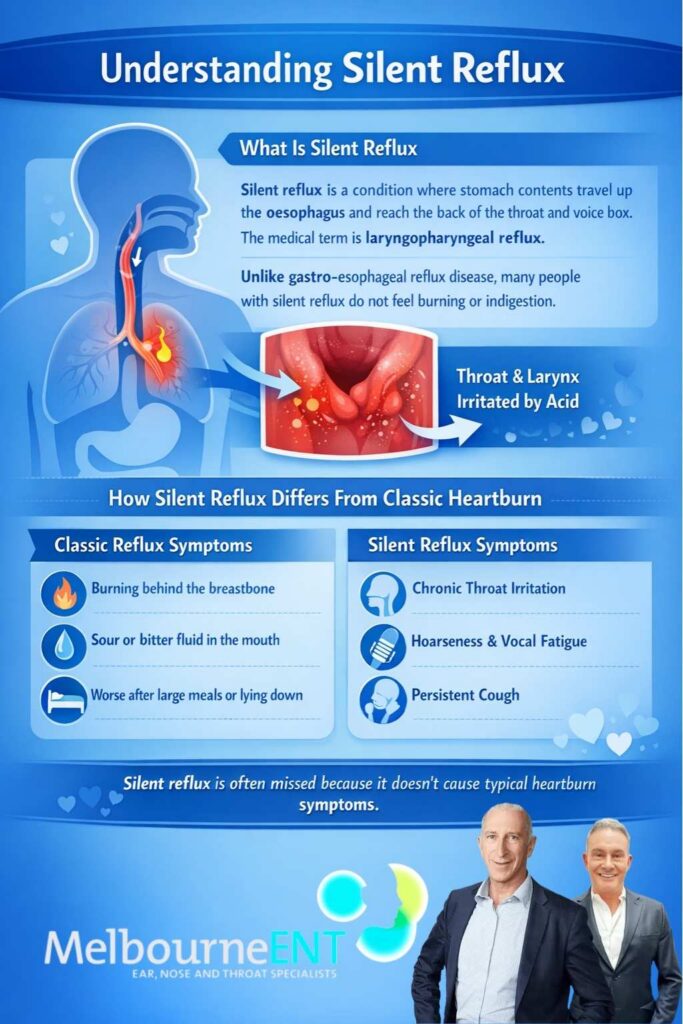
Silent reflux is a condition where stomach contents travel up the oesophagus and reach the back of the throat and the voice box. The medical term is laryngopharyngeal reflux. Unlike gastro oesophageal reflux disease, many people with silent reflux do not feel burning or indigestion.
Instead, the delicate tissues of the throat and larynx become irritated. These tissues are not designed to handle acid and digestive enzymes, so even small amounts of reflux can cause symptoms.
✓ How Silent Reflux Differs From Classic Heartburn
Classic reflux usually causes:
- Burning behind the breastbone
- Sour or bitter fluid rising into the mouth
- Discomfort that worsens after large meals or when lying flat
Silent reflux is more likely to cause:
- Throat symptoms such as chronic clearing or soreness
- Voice changes and vocal fatigue
- Cough that does not seem to come from the chest
This is why people can go for a long time without realising that reflux might be involved.
✓ Common Symptoms In Adults
Adults with silent reflux often describe a mixture of:
- Constant throat clearing that is hard to control
- Hoarse, husky or tired voice, especially after talking for a while
- Feeling of a lump or tight band in the throat
- Dry, sore or irritated throat, often worse in the morning
- Sensation of thick mucus or post nasal drip when there is little to spit out
- Cough that lingers for weeks without a clear chest infection
These symptoms are non specific. They can also be caused by allergies, sinus disease, smoking or vaping, vocal strain and other conditions.
✓ Silent Reflux In Children And Teenagers
Children and teenagers can show silent reflux differently from adults. Signs may include:
- Frequent throat clearing or coughing, particularly at night
- Hoarse or croaky voice that does not improve
- Irritability at mealtimes or avoiding certain foods
- Noisy breathing or disturbed sleep
- Complaints of a sore throat without obvious infection
As an ENT and Facial Plastic Surgeon with extensive paediatric ENT experience, Dr Simon Braham often assesses children with long term throat and airway symptoms. He will consider reflux as one possibility, but will also check for other causes such as enlarged adenoids, tonsil issues or airway problems.
Summer In Melbourne And Its Effect On Reflux
✓ Heat, Dehydration And Throat Irritation
Hot weather, sport and days outside around Melbourne can lead to mild dehydration. When you are dehydrated, you produce less saliva. Saliva helps wash away small amounts of reflux and neutralise acid.
Less saliva means that any reflux that reaches the throat and voice box may linger for longer and irritate more. Air conditioning, fans and bushfire smoke in some seasons can also make the mouth and throat feel dry and scratchy. For people who already have sensitive throat tissues, this combination may make symptoms more noticeable.
✓ Social Events, Alcohol And Late Nights
Summer often brings more social activities. Festive events, after work drinks, dinners out and gatherings at home are very common in Melbourne and across Victoria. Alcohol intake can creep up, even if it is only by a small amount.
Alcohol may:
- Relax the valve between the oesophagus and the stomach
- Increase acid exposure in the upper digestive tract
- Disrupt normal sleep patterns
If you also eat later at night and go to bed soon after, this raises the chance that reflux will reach the throat while you are lying down. Even a modest amount of alcohol, combined with a late meal, can leave you with a sorer throat and huskier voice in the morning.
✓ Large And Late Meals
Long summer evenings can push mealtimes later. Barbecued meats, rich sauces, dips, chips and desserts are enjoyable, but they are often high in fat and may delay emptying of the stomach.
Going to bed soon after a large meal makes it easier for stomach contents to move upwards. When you lie flat, gravity no longer helps keep food and acid in the stomach. This does not cause silent reflux in everyone, but in people who are already prone to reflux, it can increase symptoms.
✓ Acidic And Spicy Summer Foods
Many typical summer dishes contain ingredients that may irritate reflux sensitive throats:
- Tomato based sauces and marinades
- Citrus fruits and dressings
- Chilli and strong spices
- Chocolate and peppermint flavoured desserts
- Fried foods and rich barbecued meats
Not everyone is sensitive to these items. Some people notice no difference at all. For others, a pattern becomes clear, for example a raspy throat and cough the morning after certain meals.
✓ School Holidays And Children
During Victorian school holidays, children often stay up later, snack more and drink more soft drink and juice. They may lie on the couch soon after eating, or fall asleep in awkward positions.
In children who already have reflux or airway sensitivity, these habits can increase night time reflux episodes. A child may wake with a dry cough, a sore throat or a hoarse voice, even if there is no obvious cold or flu.
Throat And Voice Symptoms Linked With Summer Reflux
✓ Daytime Symptoms
Adults and teenagers who use their voice heavily at work or school may notice that:
- Their voice tires quickly when teaching, presenting or singing
- They need to clear their throat repeatedly during meetings
- Their throat feels as if it never quite settles between coughs
Heat and dry air add to vocal load. If silent reflux is present, the vocal cords may already be slightly swollen or irritated, so they cope less well with long days of talking.
✓ Night Time And Morning Symptoms
Night time reflux can irritate the throat without waking you fully. In the morning you may notice:
- Dry, sore or burning throat
- Need to clear the throat many times before speaking comfortably
- A cough that is worse on rising and improves later in the day
- A bitter taste or unpleasant coating in the mouth
Because these symptoms can overlap with snoring and sleep apnoea, it is important to mention them to your GP, especially if they are long term.
✓ Emotional And Practical Impact
Persistent throat symptoms can be frustrating. People may worry that their voice sounds unreliable or that others think they are constantly unwell. Teachers, fitness instructors, call centre workers, singers and public speakers in Melbourne may find their work more tiring.
Children may avoid reading aloud or talking in class if their throat is uncomfortable. Parents can become anxious when symptoms do not settle as quickly as expected.
Melbourne ENT, led by Dr Stephen Kleid and Dr Simon Braham, regularly sees patients whose everyday life is affected in these ways, especially during and after the summer period.
When To Seek Medical Advice
✓ Start With Your GP
If throat, cough or voice symptoms last more than a few weeks, or keep returning, it is sensible to talk with your GP. Your GP can:
- Review your medical history and current medications
- Examine your throat, chest and nose
- Consider conditions such as infection, allergy, asthma or sinus disease
- Advise whether an ENT referral would be useful
It is better to ask early than to worry silently for many months.
✓ Red Flag Symptoms That Need Prompt Review
Some symptoms need timely assessment. Contact your doctor or an emergency service promptly if you notice:
- Painful swallowing
- Difficulty swallowing food or tablets
- Unintentional weight loss
- Coughing up blood or blood in your saliva
- A persistent lump in the neck
- Voice change that lasts more than a few weeks without an obvious cause
These signs do not always mean something serious, but they should never be ignored. ENT and Head & Neck Surgeons in Melbourne, and in hospitals such as the Royal Melbourne Hospital, the Royal Victorian Eye and Ear Hospital and Peter MacCallum Cancer Centre, are experienced in assessing both common and more serious conditions.
✓ The Role Of An ENT And Head And Neck Surgeon
An ENT specialist can examine the nose, throat and neck in more detail. At Melbourne ENT, Dr Stephen Kleid and Dr Simon Braham may:
- Take a careful history of symptoms, lifestyle and medical conditions
- Examine the mouth, throat, ears and neck
- Use a fine flexible camera through the nose to view the voice box if needed
This can help distinguish between reflux related irritation, vocal strain, allergies, infection and other causes. The goal is to identify the underlying problem rather than assuming every symptom is due to reflux.
Treatment Options And Practical Measures
✓ General Lifestyle Measures
For many people with mild symptoms, lifestyle changes can make a real difference. Always discuss these with your GP or specialist before making major changes, especially for children or if you take regular medication.
Possible strategies include:
- Drinking water regularly through the day, particularly in hot weather
- Limiting very large or heavy evening meals
- Leaving at least two to three hours between eating and lying down
- Reducing alcohol, especially late at night
- Avoiding smoking and vaping, which can strongly irritate the throat
These measures may not remove symptoms completely, but they can reduce the background irritation and give your throat a chance to recover.
✓ Dietary Adjustments
Some people find that certain foods clearly worsen their symptoms. Keeping a simple symptom diary for a few weeks can help identify patterns. You may notice issues after:
- Highly acidic foods, such as citrus or tomato based dishes
- Very spicy meals
- Fried foods and fast food
- Chocolate, peppermint, strong coffee or fizzy drinks
If a pattern appears, you can trial reducing those items and see whether your throat feels more settled. It is important to maintain a balanced diet overall and not to restrict food groups without proper advice.
✓ Medication
In some cases, your GP or ENT specialist may recommend medication. Options may include:
- Acid suppressing medicines
- Alginates or other products that form a protective layer above stomach contents
These medicines are not suitable for everyone and should only be taken under medical guidance. The type and duration of treatment depend on your individual situation.
✓ Further Investigations
If symptoms are persistent, complex or do not respond to simple measures, further tests may be suggested. At Melbourne ENT, this might involve:
- Detailed visual assessment of the voice box
- Imaging of the neck in selected cases
- Referral to a gastroenterologist for additional testing if significant reflux is suspected
The aim is to build a complete picture before making long term treatment decisions.
✓ Surgery
Surgery is usually not the first choice for managing silent reflux. Dr Stephen Kleid and Dr Simon Braham focus on accurate diagnosis and conservative management. Surgery may be considered if there are other structural problems, such as severe nasal obstruction, tonsil disease or tumours, that need to be addressed in their own right. Any potential operation is discussed carefully, including benefits, alternatives and risks.
All medical and surgical treatments carry risks and recovery times that vary between individuals. These are always explained in detail during consultation.
How Melbourne ENT Supports Patients With Reflux Related Throat Symptoms
✓ Comprehensive, Personalised Assessment
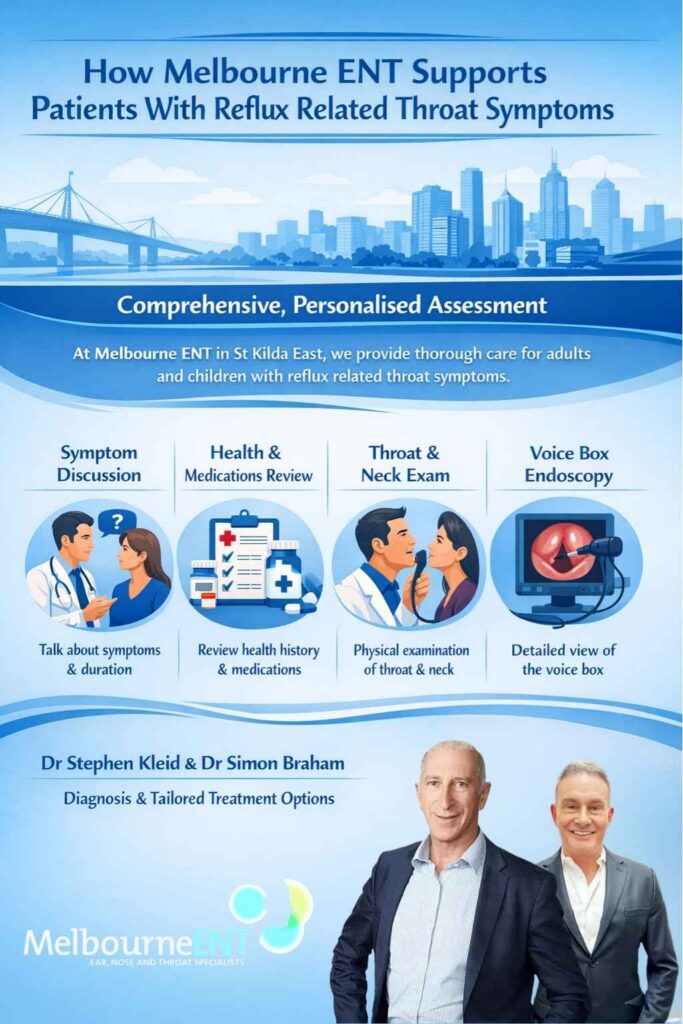
At Melbourne ENT in St Kilda East, adults and children with possible reflux related throat symptoms receive a thorough assessment. A consultation generally includes:
- Discussion of symptoms, how long they have been present and what affects them
- Review of general health and medications
- Physical examination of the ears, nose, throat and neck
- Endoscopic examination of the voice box when appropriate
This information helps Dr Stephen Kleid and Dr Simon Braham provide a diagnosis and discuss suitable treatment options tailored to your needs.
✓ Experience Across Melbourne Hospitals
Both surgeons have many years of experience in public and private hospitals across Melbourne and Victoria. This includes work at the Royal Melbourne Hospital, the Royal Victorian Eye and Ear Hospital and Peter MacCallum Cancer Centre.
This background is valuable when assessing patients with long standing throat symptoms. It helps ensure that important conditions are not missed and that patients with more complex problems can be guided to the right investigations and treatments.
✓ Patient Education And Shared Decisions
Melbourne ENT places strong emphasis on clear explanations and shared decision making. Patients and families are encouraged to ask questions and to understand the reasons behind each recommendation.
Where possible, conservative measures such as lifestyle change and medication are trialled before more invasive options are considered. If surgery is discussed, potential benefits and risks are explained in straightforward language.
✓ Follow Up And Long Term Care
Reflux related throat symptoms may improve slowly over time. Follow up appointments allow progress to be monitored and treatment plans to be adjusted.
If new symptoms appear, or if there is any concern about serious conditions, Dr Stephen Kleid and Dr Simon Braham will arrange further tests or hospital based care when needed.
Key Points For Getting Through Summer With A More Comfortable Throat
✓ Simple Reminders For Adults
- Stay well hydrated, especially on hot Melbourne days
- Notice how your throat feels after late meals, barbecues and alcohol
- Allow time between eating and lying down
- Avoid smoking and vaping
- Seek advice if symptoms last more than a few weeks
✓ Supporting Children And Teenagers
- Aim for earlier dinners when possible, even during school holidays
- Offer water regularly and limit sugary or fizzy drinks
- Encourage consistent sleep routines as the new school term approaches
- Watch for persistent cough, hoarseness or throat clearing
If you are concerned about your child, speak with your GP, who can consider a referral to Melbourne ENT for further assessment.

FAQs About Silent Reflux And Summer Throat Symptoms
Can silent reflux still be the problem if I never feel classic heartburn in my chest?
Yes, it can. Silent reflux often irritates the throat and voice box rather than causing the burning pain most people associate with reflux. Many patients seen at Melbourne ENT have hoarseness, throat clearing or a lump sensation without any chest discomfort at all. It is still important to be assessed so your doctor can rule out other causes of throat symptoms.
Why do my throat and voice feel worse after a night out in the Melbourne summer even if I do not drink very much?
Summer nights often combine several small factors. Warm weather, talking over music, a couple of drinks, eating later than usual and going to bed late can all add up. Even modest alcohol together with a late meal can increase reflux episodes while you sleep. At the same time, your voice may be strained from talking in noisy venues. Both reflux and voice strain can leave you croaky and clearing your throat the next morning.
Could my post nasal drip feeling in summer actually be related to silent reflux?
Some patients describe a constant feeling of mucus running down the back of the throat, yet the nose itself seems clear. In certain cases, this can be due to irritation of the throat from reflux rather than true nasal mucus. Allergies and sinus problems are also common in Melbourne, so an ENT specialist such as Dr Stephen Kleid or Dr Simon Braham will usually consider both possibilities during an examination.
Is it safe for my child to sleep on extra pillows if we are worried about reflux at night?
Propping a child up with several pillows can sometimes make them slide into an awkward position and is not always comfortable or helpful. If your GP or ENT believes reflux is affecting your child’s sleep, they can advise on safer options, such as adjusting the mattress angle or using other strategies. It is important to discuss changes with a doctor before altering a child’s sleep set up.
Can exercise in the summer heat make silent reflux symptoms worse?
For most people, gentle exercise is helpful for overall health, but very intense activity soon after a large meal may temporarily aggravate reflux. In hot Melbourne weather, dehydration and heavy breathing through a dry mouth can also irritate the throat. Planning meals and fluids around exercise, and seeking individual advice from your GP, can help you stay active while looking after your throat.
If I already have a history of throat or voice problems, should I be more cautious in summer?
People who have had previous voice strain, throat surgery or conditions affecting the larynx can be more aware of subtle changes. Hot, dry air, extra social events and late meals over summer may make mild reflux more noticeable in a sensitive voice box. Clinics like Melbourne ENT, based in St Kilda East, often work with patients to adjust habits and monitor symptoms through higher risk periods such as the festive season.
How do I know if my summer throat symptoms are from silent reflux or something more serious?
It can be difficult to tell on your own. Warning signs that should be checked promptly include persistent hoarseness, painful swallowing, difficulty swallowing, a neck lump, coughing up blood or unexplained weight loss. If you are unsure, start by seeing your GP. They can arrange a referral to an ENT and Head and Neck Surgeon at Melbourne ENT if a closer look at your throat and voice box is needed. For more information about the care provided by Dr Stephen Kleid and Dr Simon Braham, visit the website.
Medical References
- Treatment Of Lpr / PMC – NIH / https://pmc.ncbi.nlm.nih.gov/articles/PMC11056915/
- Laryngopharyngeal Reflux – StatPearls / NCBI – NIH / https://www.ncbi.nlm.nih.gov/books/NBK519548/
- Laryngopharyngeal Reflux (LPR) / Cleveland Clinic / https://my.clevelandclinic.org/health/diseases/15024-laryngopharyngeal-reflux-lpr
- Current Treatment of Laryngopharyngeal Reflux / SAGE Journals / https://journals.sagepub.com/doi/10.1177/01455613231180031
- Gastroesophageal reflux disease (GERD) / Mayo Clinic / https://www.mayoclinic.org/diseases-conditions/gerd/symptoms-causes/syc-20361940
- Silent Reflux (Laryngopharyngeal Reflux) / UT Southwestern Medical Center / https://utswmed.org/conditions-treatments/silent-reflux/
- Laryngopharyngeal Reflux Pathophysiology / PMC – NIH / https://pmc.ncbi.nlm.nih.gov/articles/PMC11412619/
Moving Forward And Seeking Help
Silent reflux can be a hidden contributor to throat and voice symptoms, particularly during Melbourne’s warm, social summer months. Heat, mild dehydration, extra alcohol, late meals and changing routines all play a part. Some simple lifestyle adjustments, along with medical guidance, can make a real difference for many people.
If you or your child are experiencing ongoing throat discomfort, frequent throat clearing, hoarseness or a cough that does not settle, do not ignore it or assume it is just part of getting older or being busy. Start by speaking with your GP.
When specialist assessment is needed, Dr Stephen Kleid and Dr Simon Braham at Melbourne ENT offer thorough, carefully considered care for adults and children with throat, voice and head and neck concerns.
To learn more about silent reflux, throat symptoms and the services available at Melbourne ENT in St Kilda East, you can contact the clinic or visit related pages on this website
Further Reading
- Read more about Voice and Larynx Disorders
- Read more about Throat Concerns and Conditions
- Read more about Snoring – Sleep Apnoea
- Read more about ENT Concerns
- Read Melbourne ENT’s Blog on Snoring Treatments – Causes, Risks and Options
- Read Melbourne ENT’s Blog on How to Care for your Professional Voice

Breathing Problems for Kids – Causes and Solutions
Breathing problems in children refer to any condition that makes it difficult for them to…

Using the STOP-BANG Questionnaire to assess Sleep Apnoea & OSA
Do You Have Sleep Apnoea or OSA? Find Out with the STOP-BANG Questionnaire If you…

Snoring Treatments – Causes, Risks and Options
Snoring is a real problem that can affect your sleep, your health, and your relationships….