

At Melbourne ENT in St Kilda East, Victoria, we are pleased to offer the advanced cold-ablative tonsillectomy also known as coblation tonsillectomy. Performed by highly experienced ENT Surgeon Dr Simon Braham, FRACS, this refined procedure addresses both medical necessities and comfort concerns without resorting to high-heat surgical techniques.
At Melbourne ENT, we prioritise patient-centred care, combining cutting-edge methods with gentle recovery, all delivered with the experience and reassurance you would expect from a leading ENT clinic in Australia.
About Coblation Tonsillectomy
Coblation tonsillectomy is a surgical procedure to remove tonsils using a specialized device that employs radiofrequency energy and a saline solution to precisely cut and remove tissue at lower temperatures than traditional methods. This technique can lead to less pain, faster recovery, and a quicker return to normal activities compared to traditional tonsillectomy.
What is Coblation?
Coblation, short for “controlled ablation,” is a technique that uses a wand-like device to create a plasma field around the tip. This field, generated by radiofrequency energy and a saline solution, gently breaks down and removes tissue without causing significant heat damage to surrounding areas.
How it works:
- Radiofrequency Energy:
The device uses a low-temperature radiofrequency current to create a plasma field. - Saline Solution:
A stream of saline solution is used to conduct the radiofrequency energy and help create the plasma field. - Precise Tissue Removal:
The plasma field breaks down the tissue at the tip of the wand, allowing for precise removal of tonsil tissue with minimal damage to surrounding areas.
Advantages of Coblation Tonsillectomy:
Reduced Pain:
Patients often experience less pain after surgery compared to traditional methods, according to ent4kids.nz, as the low-temperature technique minimises thermal damage to surrounding tissues.
Faster Recovery:
Coblation tonsillectomy may lead to a quicker recovery and faster return to normal activities, including eating and school or nursery, as reported by several medical sources.
Lower Risk of Bleeding:
The technique can help reduce the risk of bleeding, especially secondary bleeding, which is a potential complication of traditional tonsillectomy.
Intracapsular Technique:
Coblation can be performed using an intracapsular technique, where a thin layer of tonsil tissue is left behind to protect underlying structures, further minimising the risk of pain and bleeding.
Cold-ablative tonsillectomy is a specialised method of removing tonsil tissue using low-temperature energy (coblation) rather than traditional heat-based surgical tools. It is designed to treat chronic tonsillitis, enlarged tonsils, tonsil stones and sleep-related breathing disorders. Read here for Cold Ablation Techniques for Tonsils to learn more about this procedure
Unlike older techniques that can damage surrounding tissue with thermal injury, cold-ablative technology dissolves the target tissue precisely, reducing trauma to nearby nerves and blood vessels. This minimally invasive approach offers both functional benefits such as fewer infections and improved airway and cosmetic advantages including less swelling and quicker recovery.
Who Needs a Cold-Ablative Tonsillectomy?
Patients who may benefit from cold-ablative tonsillectomy include individuals suffering from recurrent throat infections, often defined as four or more episodes per year or chronic tonsillitis that impacts their quality of life. Children or adults with hypertrophic tonsils may experience obstructive sleep apnea, difficulty swallowing, tonsil stones, bad breath or chronic mouth breathing.
Those recovering from peritonsillar abscesses or persistent tonsillar pockets are also prime candidates. In all cases, when medical treatment fails or symptoms significantly disrupt daily life, this procedure can offer long-lasting relief.
Benefits of Cold-Ablative Tonsillectomy
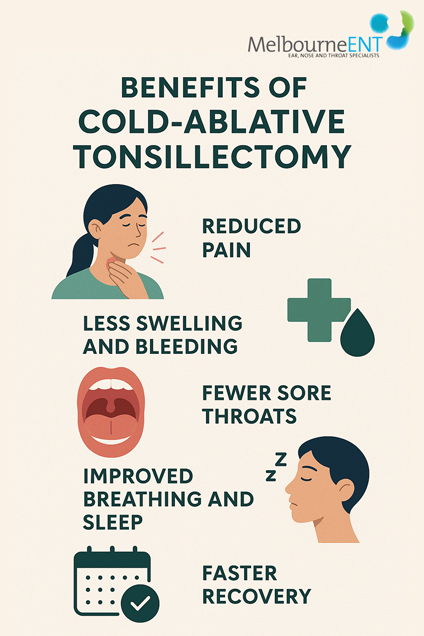
The primary advantage of cold-ablative tonsillectomy lies in its superior healing profile. Because the surrounding tissue remains largely intact, patients typically experience reduced post-operative pain swelling and bleeding, which peaks around day three and subsides noticeably by the end of the first week.
Functionally, patients often report fewer sore throats after surgery, and many notice improved breathing and sleep, especially when enlarged tonsils were contributing to sleep-disordered breathing. For children, reduced illness means fewer missed school days and less antibiotic exposure, while adults often appreciate increased productivity and reduced fatigue. The method’s gentle approach leaves the throat less inflamed, enabling a speedier return to normal eating and speaking.
INTRACAPUSLAR VS EXTRACAPSULAR TONSILLECTOMY
Extracapuslar tonsillectomy is the traditional technique of removing the whole tonsil, including the capsule. This is the gold standard technique, removing all the tonsil and results in a very low chance of regrowth or recurrence of symptoms. This is favoured in cases of infection and older children/adults
Intracapsular tonsillectomy is a subtotal removal of the tonsi,l preserving a rim of normal tonsil and the capsule. The advantages are less pain, swelling and bleeding with a faster recovery. The disadvantage is a longer operation and the chance of regrowth/ recurrence of symptoms. This occurs in about 5% of patients. This approach is favoured in small children with sleep apnoea or children who live remotely for its increased safety profile
Both procedures are done with the coablator at Masada and attract the benefits of coablation technology. Dr Braham will discuss which approach is better for your child at the consultation
Patient Consultation for Cold-Ablative Tonsillectomy
Your initial appointment with Dr Simon Braham will involve a careful review of your medical history, frequency of throat infections, sleep quality, and overall health. A physical examination of the throat includes assessing tonsil size and inspecting for infection or structural concerns. When needed, diagnostics such as flexible nasendoscopy or a sleep study may be arranged to clarify issues like airway obstruction.
This consultation also includes a discussion of patient goals, whether for reducing infections, enhancing sleep, or easing swallowing. This stage ensures patients are fully informed about cold-ablative tonsillectomy and any required pre-operative checks, such as blood tests or anaesthetic reviews, before moving ahead with surgery.
How is Cold-Ablative Tonsillectomy Performed?
Procedurally, cold-ablative tonsillectomy is performed under general anaesthetic at Masada. Public hospitals generally won’t pay for the technology. Dr Braham. Once you’re asleep, the surgical area is prepared and sterile. Using a coblation device, a tool that applies low radiofrequency to break down tissue at cool plasma temperatures, Dr Braham excises the tonsil tissue precisely. The technique helps preserve surrounding oral tissue and reduces the risk of scarring.
After removal, bleeding is managed with bipolar cautery, avoiding high-heat tools. The procedure typically takes between 30 and 60 minutes. Most patients return home the same day, though an overnight hospital stay may be advised for those with complex medical backgrounds, younger children, or additional procedures such as adenoidectomy.
Recovery After Cold-Ablative Tonsillectomy
Immediate Phase
After surgery, you’ll spend time in recovery as the effects of the anaesthetic wear off. It is normal to feel groggy or sore when waking. As much ice cream, icy poles and cold drinks are encouraged in the hours following surgery to try to reduce post operative swelling, and pain is managed with paracetamol, prescribed analgesics, or mild opioids if needed.
First Week
During the first week, throat pain is expected and most significant between day three and day five. Soft foods such as yoghurt, porridge, mashed potato, and ice-cream are ideal. It is normal to experience light throat bleeding or an unpleasant metallic taste as scabs form in the operative beds; this is part of the healing process. Boisterous activity, heavy lifting, or vigorous throat clearing are discouraged to minimize risk of bleeding. Patients should keep well-hydrated and avoid acidic, spicy or crunchy foods. We encourage the patient/ child not to leave the house if possible at this time to reduce the risk of bleeding.
Days 8 to 14
Scabs usually detach around the second week, and this may cause fresh, transient discomfort or minor bleeding. It is important to rest and continue gentle fluids, with gradual return to normal diet unless symptoms worsen. By the end of week two, many patients feel significantly better.
Follow-Up Care
A routine telereview with Dr Braham is scheduled about 7 days post-procedure to monitor healing, we advise not leaving the house before this. Any additional questions about gradual symptom improvement or throat sensations can be addressed at that time.
Risks and Complications
Modern cold-ablative tonsillectomy is very safe, yet as with all surgery some risks remain. Common occurrences include moderate pain, mild bleeding when scabs detach, and throat discomfort. Infection may occur despite sterile technique but is managed readily with antibiotics. More serious, though uncommon, outcomes include delayed haemorrhage beyond two weeks, reaction to anaesthesia, or very rarely, airway swelling. Voice quality temporary changes may occur but typically resolve quickly. Perfunctory adherence to risks and recovery care guidelines reduces these odds substantially. For an exhaustive breakdown of possible side effects, patients can visit our full Risks and Recovery page.
Cost of Cold-Ablative Tonsillectomy
The costs associated with cold-ablative tonsillectomy at Melbourne ENT reflect a comprehensive approach. Fees include pre-operative assessment, surgical procedure, anaesthetic service, and hospital facility costs plus follow-up visits. We have structured our pricing to be transparent and fair.
Many patients engage with our dedicated Costs and Fees page to better understand billing structures. Following the comprehensive consultation staff members can provide item numbers for your private health cover and Medicare eligibility. The coablator is a single use item and the cost of it is usually covered by your insurer. For uninsured patients the cost is approximately $400. We offer clear pathways to understand expected out-of-pocket expenses before proceeding with surgery.
Medicare Coverage and Insurance
In Australia, typical tonsillectomy procedures are eligible for Medicare item numbers and therefore attract rebates. Private health insurance often covers the majority of hospital costs.. The health insurance gaps will be communicated in advance and can be discussed with our administrative team for clarity. Private insurance generally covers the cost of the coablator which is a single use instrument. For fee-paying customers, the cost is an additional $400 approx.
FAQs About Cold-Ablative Tonsillectomy
Will removing my tonsils affect my immune system or make me more prone to illness?
Many patients wonder if tonsil removal will compromise their immunity. The tonsils are part of the lymphatic system, but their role in immune defence significantly decreases after early childhood. Studies have shown that patients do not become more susceptible to infections post-tonsillectomy. In fact, many experience fewer illnesses due to the elimination of recurrent tonsillar infections.
Can cold-ablative tonsillectomy improve my sleep if I snore but don’t have sleep apnoea?
Yes, in some cases, even without a formal diagnosis of obstructive sleep apnoea, enlarged tonsils can partially block airflow and cause vibration during sleep, leading to snoring. If the tonsils are contributing to the obstruction, their removal can noticeably improve airflow and reduce snoring intensity.
Is there any difference in taste or sensation in the mouth after surgery?
Some patients report a temporary change in taste perception or oral sensitivity following surgery. This is usually due to minor nerve involvement during tissue healing and tends to resolve on its own over several weeks. Permanent changes are rare but can be discussed further during your consultation.
How soon can I speak normally after a cold-ablative tonsillectomy?
Mild voice changes are common in the first few days after surgery due to swelling and throat discomfort. Most patients regain their normal speaking voice within a week or two. Because cold-ablative techniques minimise surrounding tissue damage, voice recovery tends to be faster compared to traditional methods.
Can cold-ablative tonsillectomy be done at the same time as other ENT procedures?
Yes, in many cases, especially in children or patients with complex ENT concerns, cold-ablative tonsillectomy can be safely combined with procedures like adenoidectomy, grommet insertion, or nasal surgery. Combining surgeries can reduce the need for multiple anaesthetics and recovery periods.
What makes cold-ablative tonsillectomy different in terms of bleeding risk compared to other techniques?
Cold-ablative methods use plasma energy at low temperatures, which significantly reduces collateral tissue damage. This results in a lower risk of post-operative bleeding both immediately and in the delayed healing phase. It is especially favoured for patients with higher sensitivity to traditional thermal methods.
Can cold-ablative tonsillectomy help with chronic bad breath or tonsil stones?
Absolutely. Many patients with chronic halitosis or tonsilloliths (tonsil stones) benefit from this procedure. By removing the crypt-filled tonsil tissue where debris accumulates, cold-ablative tonsillectomy often leads to a significant improvement in breath and oral hygiene over time.
Sources:
- Cold Dissection Tonsillectomy and Radiofrequency Tonsil Ablation – Dysphagia and Medical Journal
https://karger.com/dmj/article/1/1-4/6/106939/Cold-Dissection-Tonsillectomy-and-Radiofrequency - A Comparative Study of Conventional Cold Dissection and Coblation Tonsillectomy – International Journal of Advanced Medical and Health Research
https://journals.lww.com/iamr/fulltext/2023/10010/a_comparative_study_of_conventional_cold.4.aspx - Coblation versus Traditional Tonsillectomy: A Double Blind Randomized Controlled Trial – PMC (National Institutes of Health)
https://pmc.ncbi.nlm.nih.gov/articles/PMC3523437/ - Tonsillectomy by Cold Dissection and Coblation Techniques – PMC (National Institutes of Health)
https://pmc.ncbi.nlm.nih.gov/articles/PMC6848688/ - Thermal Welding versus Cold Knife Tonsillectomy: A Prospective Randomized Study – ScienceDirect
https://www.sciencedirect.com/science/article/pii/S1607551X11001434 - Tonsillectomy: Current Techniques and Considerations – ScienceDirect
https://www.sciencedirect.com/science/article/pii/S1043181005000667 - Tonsillectomy and Adenoidectomy – StatPearls, National Library of Medicine
https://www.ncbi.nlm.nih.gov/books/NBK536942/
Next Step
If chronic throat infections, enlarged tonsils, or disrupted sleep are affecting your everyday life, we encourage you to contact Melbourne ENT in St Kilda East to explore cold-ablative tonsillectomy. Comprehensive information, supportive care, and gentle recovery await you. You can call our dedicated office team or complete the online booking form on our website to arrange a consultation with Dr Simon Braham.
Your health and comfort matter. Reach out today and take the first step toward a throat that’s healthier, cooler, and ready to better serve you.
Why Choose Dr Simon Braham
Dr Simon Braham brings extensive ENT experience to the practice. Holding both MBBS (Hons) and FRACS credentials, he undertook advanced ENT training in Australia before extending his paediatric and nasal surgery skills overseas in New York and Boston. Since 2001, he has served both public patients at the Royal Victorian Eye and Ear and operates in a private hospital Masada.
Dr Braham demonstrates a compassionate and personalised approach, taking time to thoroughly explain treatment options and ensure patients feel supported every step of the way. One patient recently shared, “Dr Braham listened to all my concerns, explained how coblation works, and made me feel calm before surgery. My recovery was faster and easier than I expected.” Under his guidance, patients benefit from well-structured care plans, state-of-the-art surgical techniques, and excellent clinical outcomes.
Further Reading
- Read more about Adenotonsillectomy Melbourne
- Read more about Chronic Tonsillitis Surgery Melbourne
- Read more about Adult Tonsil Surgery Melbourne
- Read more about Using the NOSE Scale Score to assess Nasal Obstruction