


At Melbourne ENT, located in St Kilda East, Victoria, we offer comprehensive, compassionate, and highly specialised care for a wide range of ENT (ear, nose, and throat) conditions. Our clinic is led by two expert ENT surgeons – Dr Stephen Kleid and Dr Simon Braham – who bring decades of clinical and surgical experience to every patient case.
Whether you’re suffering from breathing difficulties, chronic sinus problems, or nasal congestion that doesn’t resolve, our team is equipped to diagnose and manage complex nasal conditions, including nasal polyps. With advanced diagnostic tools and modern treatment options, Melbourne ENT delivers expert care designed to improve function, comfort, and long-term health.
What Are Nasal Polyps?
Nasal polyps are benign, non-cancerous growths that develop in the lining of the nasal passages or the paranasal sinuses. These soft, pale, and often teardrop-shaped swellings arise as a result of chronic inflammation. Although they are not life-threatening, they can lead to significant obstruction of the nasal passages, recurring infections, sleep disturbances, and a reduction in quality of life. Polyps can form singly or in clusters and may increase in size over time, making breathing through the nose increasingly difficult.
The inflammation that causes polyps is typically linked to conditions like chronic rhinosinusitis, asthma, allergic rhinitis (hay fever), aspirin-exacerbated respiratory disease, or immune system dysfunction. In children, nasal polyps can be an indicator of underlying diseases such as cystic fibrosis, which warrants further evaluation. At Melbourne ENT, we focus not only on removing the polyps but also on understanding and managing the underlying causes to prevent recurrence and improve long-term outcomes.
Common Symptoms of Nasal Polyps
Patients with nasal polyps often report a persistent sensation of nasal blockage, as if they have a cold that never goes away. This congestion may affect one or both sides of the nose and is often accompanied by a runny nose or a postnasal drip. Breathing through the nose becomes progressively harder as polyps grow, and in many cases, the sense of smell and taste are diminished or lost entirely. This can occur gradually and may not be immediately recognised by the patient.
Other common symptoms include tiredness, facial pressure or pain, especially around the forehead, cheeks, and between the eyes. Many patients also report snoring, poor sleep, and waking with a dry mouth from habitual mouth breathing. In more advanced cases, nasal polyps can contribute to fatigue and cognitive fog due to disrupted oxygen intake and poor sleep quality.
Because the symptoms of nasal polyps can mimic those of other common conditions like allergies or a cold, it is important to have a proper ENT evaluation when symptoms are chronic or unresponsive to standard treatments. At Melbourne ENT, we provide detailed, evidence-based assessments to accurately diagnose nasal polyps and guide appropriate treatment.
Who Is Affected by Nasal Polyps?
Nasal polyps can occur in anyone, but they are most commonly diagnosed in adults over the age of 40. Men are slightly more likely to develop polyps than women, though both genders can be affected. People who suffer from chronic sinus inflammation, allergic rhinitis, or asthma are at greater risk. Those with aspirin sensitivity may also be predisposed, particularly individuals with Samter’s triad – a condition characterised by asthma, nasal polyps, and sensitivity to aspirin or other nonsteroidal anti-inflammatory drugs.
Children and adolescents can also develop nasal polyps, although this is less common. When present in younger individuals, polyps may signal the need for investigation into genetic or immune system disorders such as cystic fibrosis. Environmental factors, including long-term exposure to air pollutants, cigarette smoke, chemical irritants, and occupational dust, can also increase the risk of developing polyps.
At Melbourne ENT, we understand the diverse factors that contribute to nasal polyps and provide tailored assessments based on each patient’s medical history, lifestyle, and anatomical structure.
Diagnosis and Evaluation at Melbourne ENT
Accurate diagnosis is the foundation of effective treatment. At Melbourne ENT, our evaluation process begins with a comprehensive consultation, during which we take a detailed medical history, assess symptoms, and identify any contributing conditions. This includes discussing prior sinus infections, allergies, asthma, and medication use.
The next step in the diagnostic process involves nasal endoscopy. This is a minimally invasive procedure performed in the clinic using a thin, flexible instrument with a light and camera. It allows the surgeon to examine the nasal passages and sinus openings in real time, providing immediate visual confirmation of polyps, inflammation, and any structural abnormalities.
To plan surgery and help in the diagnosis we may recommend a CT scan of the sinuses. This imaging study provides high-resolution cross-sectional images of the sinus cavities and helps determine the location, size, and extent of the polyps. It also reveals other potential contributing factors, such as a deviated septum or narrow sinus drainage pathways.
In cases where allergies are suspected to be a driving force behind chronic inflammation, we may refer the patient for allergy testing. For patients with frequent infections or a suspected immune deficiency, blood tests may be ordered to evaluate immune function. This comprehensive and personalised diagnostic approach ensures that we identify all relevant issues and design a treatment plan that addresses both the symptoms and the underlying causes.
Treatment Options for Nasal Polyps
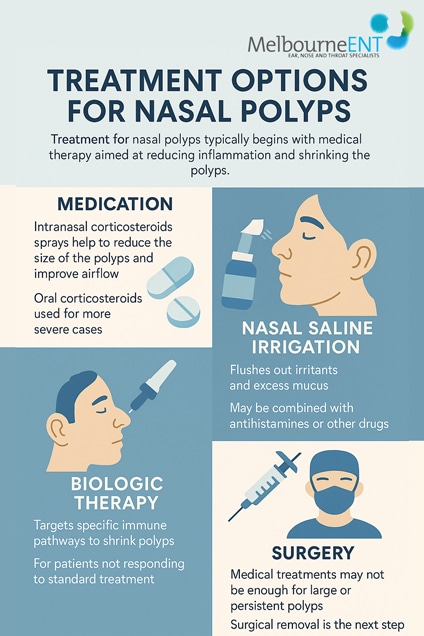
Treatment for nasal polyps typically begins with medical therapy aimed at reducing inflammation and shrinking the polyps. The most common medications used are intranasal corticosteroid sprays. These help to reduce the size of the polyps and improve airflow. For more severe cases or when rapid relief is needed, a short course of oral corticosteroids may be prescribed.
Nasal saline irrigation is often recommended to flush out irritants, allergens, and excess mucus. This simple but effective home treatment can help reduce symptoms and prevent infection. In patients with allergic rhinitis, antihistamines or leukotriene inhibitors may be added to control allergic triggers.
Some patients may benefit from newer biologic therapies, particularly if they have coexisting asthma or eosinophilic inflammation. These medications target specific pathways in the immune system and can reduce polyp growth without the need for surgery. However, these treatments are typically reserved for patients who do not respond to traditional medications.
Despite medical management, some polyps persist or recur, especially when they are large or associated with significant structural problems. In such cases, surgical intervention is the next step.
When Is Surgery Recommended?
Surgery is considered when nasal polyps do not respond adequately to medication or when they are causing significant symptoms such as complete nasal obstruction, chronic sinus infections, or loss of smell. It is also recommended when imaging reveals extensive sinus blockage or if the polyps interfere with the normal function of the sinus drainage system.
At Melbourne ENT, we perform Functional Endoscopic Sinus Surgery (FESS) – a minimally invasive technique that allows for the precise removal of nasal polyps and the opening of blocked sinus passages. This procedure is performed using an endoscope and specialised instruments inserted through the nostrils, meaning there are no external incisions or visible scarring.
FESS is highly effective in restoring nasal airflow and sinus drainage and is often combined with procedures to correct structural issues such as a deviated nasal septum or enlarged turbinates. Our surgeons use advanced image-guided technology when necessary to ensure safety and accuracy, particularly in complex or revision cases.
Our goal is not only to relieve symptoms but to create an environment in which inflammation is reduced and recurrence is less likely. Patients are carefully monitored after surgery and provided with a tailored post-operative care plan, including the use of nasal sprays and saline rinses to maintain results. FESS surgery often makes the medical treatment of sinusitis more effective.
Recovery and Prognosis
Most patients recover quickly after endoscopic sinus surgery. It is common to experience mild congestion, nasal discharge, or a sensation of fullness in the days following the procedure. These symptoms are usually short-lived and can be managed with recommended aftercare measures.
Patients typically return to normal activities within one to two weeks, although we advise avoiding heavy lifting, strenuous exercise, or exposure to irritants during the initial recovery phase. Regular follow-up appointments are scheduled to assess healing and remove any crusting or debris from the nasal cavity.
With proper care, the long-term prognosis following FESS is excellent. Most patients report significant improvement in their ability to breathe through the nose, sleep quality, and overall quality of life. Loss of smell often improves once the inflammation resolves, although this may take several weeks or months. Ongoing use of nasal sprays and avoidance of known triggers is important to minimise the risk of recurrence.
Risks or Complications If Left Untreated
Leaving nasal polyps untreated can lead to several complications. The most common consequence is chronic or recurrent sinus infections due to blocked sinus drainage. This can cause ongoing facial pain, pressure, and fatigue. In some cases, untreated polyps can result in a complete loss of smell or taste, which can become permanent if the olfactory nerves are compressed for too long.
Breathing problems may worsen over time, contributing to poor sleep, snoring, and even obstructive sleep apnoea in severe cases. For individuals with asthma, untreated nasal polyps can trigger more frequent and severe flare-ups, making respiratory symptoms harder to control.
There is also a small risk of complications such as the development of mucoceles – cyst-like growths filled with mucus that can expand and damage nearby bone structures. Prompt diagnosis and treatment of nasal polyps can prevent these outcomes and significantly improve overall health and comfort.
Why Choose Your Surgeon
At Melbourne ENT, patients benefit from the combined expertise of two of Melbourne’s most experienced and trusted ENT surgeons. Dr Stephen Kleid brings more than four decades of ENT surgical experience to the practice. He is recognised as a leading figure in the field of head and neck surgery and has held senior roles at the Royal Melbourne Hospital and Peter MacCallum Cancer Centre. He is known for his technical skill, attention to detail, and commitment to delivering safe and effective care.
Dr Simon Braham is also a highly respected ENT surgeon with advanced training in nasal, sinus, and voice surgery. He has completed prestigious fellowships in New York and Boston and currently holds public appointments at the Royal Victorian Eye and Ear Hospital and Kyneton Hospital. Dr Braham is known for his approachable manner, thorough evaluations, and personalised treatment plans tailored to each patient’s individual needs and goals.
Together, they offer a complete spectrum of ENT care with a focus on long-term outcomes, functional improvement, and surgical excellence. Patients can be assured that they are receiving high standards of care in a supportive and professional environment.
FAQs About Nasal Polyps
Can nasal polyps come and go on their own, or do they always need treatment?
Nasal polyps typically do not disappear on their own. While their size and symptoms can fluctuate, especially during allergy seasons or infections, they generally persist unless treated. Medications can sometimes shrink them, but long-term relief often requires a structured treatment plan.
Is it possible to have nasal polyps without ever feeling congested?
Yes, in some cases small polyps may not cause noticeable congestion or discomfort. These are often found during exams for unrelated issues. However, as polyps grow or multiply, they are more likely to cause symptoms like blockage, reduced smell, or postnasal drip.
How do nasal polyps affect my sense of taste, and will it come back after treatment?
Nasal polyps can impair your sense of smell, which directly affects how you perceive taste. Many patients notice food tastes bland. After treatment, especially if the sense of smell returns, most people experience a significant improvement in taste perception.
What makes nasal polyps come back after they’ve been removed or treated?
Nasal polyps can recur if the underlying inflammation isn’t well controlled. Conditions like asthma, allergies, or immune issues can continue to fuel polyp growth. Regular follow-up, consistent use of nasal sprays, and addressing root causes help reduce recurrence.
Could my snoring be caused by nasal polyps even if I don’t have sinus infections?
Yes, nasal polyps can narrow the nasal airway and increase resistance to airflow during sleep. This can lead to snoring or mouth breathing even without sinus infections. Removing polyps or reducing inflammation can help improve sleep quality and reduce snoring.
Can nasal polyps affect children the same way they do adults, or do symptoms present differently?
While less common in children, nasal polyps can still occur and may present with similar symptoms such as nasal obstruction or chronic congestion. In children, their presence can also signal underlying conditions like cystic fibrosis, so evaluation by a specialist is important.
Are nasal polyps linked to fatigue or brain fog, or is that just a side effect of poor sleep?
Yes, the fatigue and mental fog associated with nasal polyps are often the result of disrupted sleep and chronic inflammation. When you’re not breathing properly at night, your sleep quality suffers. Treating polyps can improve airflow, restore restful sleep, and boost overall energy and focus.
Sources:
- The advance on pathophysiological mechanisms of type 2 chronic rhinosinusitis with nasal polyps (CRSwNP)
https://www.frontiersin.org/journals/allergy/articles/10.3389/falgy.2025.1599797/full - Nasal Polyps – StatPearls – NCBI Bookshelf
https://www.ncbi.nlm.nih.gov/books/NBK560746/ - ARIA-Italy multidisciplinary consensus on nasal polyposis and biological therapies
https://www.sciencedirect.com/science/article/pii/S193945512500033X - Effectiveness of dupilumab in chronic rhinosinusitis with nasal polyps
https://smj.org.sa/content/46/7/781 - Biologics for Chronic Sinusitis with Nasal Polyps – Journal Watch
https://www.jwatch.org/na58550/2025/03/13/biologics-chronic-sinusitis-with-nasal-polyps - Vitamin D and Chronic Rhinosinusitis with Nasal Polyps – MDPI
https://www.mdpi.com/2077-0383/14/7/2467 - Development of the Nasal Polyp Patient Assessment Scoring Sheet
https://pmc.ncbi.nlm.nih.gov/articles/PMC12102657/
Concerned About Nasal Polyps?
If you are experiencing ongoing nasal congestion, difficulty breathing through your nose, frequent sinus infections, or a loss of smell, you may be dealing with nasal polyps. These symptoms can have a significant impact on your comfort, energy, and overall quality of life. Early diagnosis and effective treatment are key to preventing complications and restoring normal breathing and sinus function. At Melbourne ENT, our dedicated team offers expert, evidence-based care designed to address your specific needs and provide long-term relief.
To book a consultation, contact Dr Stephen Kleid by calling (03) 9038 1630 or alternatively, you can reach Dr Simon Braham at (03) 9038 1311. Feel free to explore other pages most relevant to you.
Further Reading
- Read about Melbourne ENT’s Nose Concerns and Conditions
- Read about Melbourne ENT’s Sinus Surgery Melbourne
- Read about Melbourne ENT’s Septal Hematoma Melbourne
- Read about Melbourne ENT’s Nasal Congestion