


At Melbourne ENT, based in St Kilda East, Victoria, our highly experienced ENT surgeons, Dr Stephen Kleid and Dr Simon Braham, provide trusted care for a wide range of ear, nose, and throat conditions. With decades of clinical expertise and a reputation for thorough, patient-focused treatment, we help adults and children achieve long-term relief from ENT-related concerns.
One common condition we treat is Swimmer’s Ear, also known as Otitis Externa. Although it may sound like a minor issue, this painful condition can affect quality of life, interfere with hearing, and lead to more serious infections if left untreated. At Melbourne ENT, we offer precise diagnosis, tailored treatment, and ongoing support to help patients recover fully and prevent recurrence.
What is a Swimmer’s Ear?
Swimmer’s Ear is an infection or inflammation of the external auditory canal, the passage between the outer ear and the eardrum. The condition occurs when water becomes trapped in the ear canal, creating a warm, moist environment that allows bacteria or fungi to multiply. This is especially common in swimmers but can also affect anyone who experiences prolonged moisture exposure in the ears.
The name Swimmer’s Ear comes from its frequent association with swimming, especially in warm or humid climates. However, the condition is not exclusive to swimmers. It can also develop from showering, excessive sweating, or inserting objects into the ear canal, such as cotton buds, fingernails, or earbuds. These actions can damage the sensitive skin lining of the canal and provide an entry point for infection.
There are several variations of Otitis Externa, including acute, chronic, and fungal forms. Acute Swimmer’s Ear usually has a sudden onset and is most often caused by bacterial infection. Fungal Swimmer’s Ear, also known as otomycosis, is less common but may occur after prolonged antibiotic drop use or in humid environments. Chronic Otitis Externa involves ongoing inflammation and may be linked to underlying skin conditions or anatomical narrowing of the canal.
Regardless of the cause, prompt diagnosis and treatment are essential to control symptoms, relieve discomfort, and prevent complications.
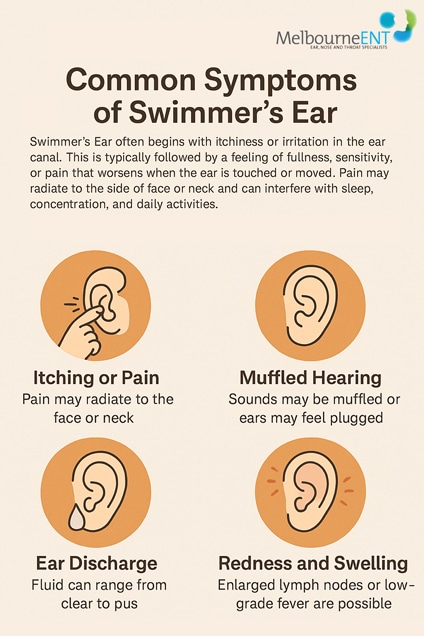
Common Symptoms of Swimmer’s Ear
Swimmer’s Ear often begins with itchiness or irritation in the ear canal. This is typically followed by a feeling of fullness, sensitivity, or pain that worsens when the ear is touched or moved. Pain may radiate to the side of the face or neck and can interfere with sleep, concentration, and daily activities.
Hearing is often affected. Patients may describe sounds as muffled or notice a sense of blockage in the affected ear. Discharge from the ear is common and can range from watery or clear fluid to yellow, green, or even bloody pus in more advanced cases.
Redness and swelling of the outer ear may be visible, and the skin near the canal may appear scaly or peeling. In more serious infections, swelling can spread to surrounding tissues, leading to enlarged lymph nodes or low-grade fever. For individuals with diabetes, immune compromise, or chronic skin issues, the infection can become severe and may spread to nearby structures.
The intensity of symptoms can vary depending on the type and extent of infection. Regardless of severity, any signs of ear pain, discharge, or hearing changes should prompt medical evaluation to avoid long-term consequences.
Who is Affected by Swimmer’s Ear?
Swimmer’s Ear can affect people of all ages and backgrounds. It is particularly common in children and teenagers who swim regularly, especially during summer or on holidays. Pools, lakes, oceans, and even prolonged bath time can expose the ear canal to water and increase the risk of infection.
Adults who use hearing aids or earphones frequently may also be more prone to Swimmer’s Ear. These devices can trap moisture, block airflow, and cause irritation or friction inside the canal. Individuals who habitually clean their ears with cotton buds or fingernails also face increased risk, as these habits often damage the canal lining and push wax and debris deeper into the ear.
Patients with underlying conditions such as eczema, psoriasis, or seborrheic dermatitis often have more fragile skin that is prone to cracking and infection. People with narrow or irregularly shaped ear canals may find it more difficult for water to drain effectively, allowing moisture to linger.
The elderly and those with diabetes or reduced immune function are at greater risk of developing more serious infections. In these populations, early intervention is critical to avoid progression to deeper tissue infections or bone involvement.
Diagnosis and Evaluation at Melbourne ENT
Accurate diagnosis is the first step in treating Swimmer’s Ear. At Melbourne ENT, our ENT surgeons conduct a comprehensive medical history and clinical examination during your initial visit. We ask about recent swimming or bathing habits, hearing aid use, previous episodes, and other risk factors such as allergies or dermatological conditions.
Using a high-resolution otoscope or surgical microscope, we examine the ear canal and eardrum. This allows us to assess the degree of inflammation, detect the presence of discharge, and check for foreign material or wax blockage. If the view is obscured by debris, we perform in-office microsuction, a safe and gentle procedure that removes fluid, wax, and infection.
For cases involving discharge or recurrent infections, we may take a sample for microbiological testing to identify whether bacteria or fungi are responsible. This enables us to select the most effective medication. Hearing assessment may be included if symptoms affect auditory function.
In chronic or complex cases, we may recommend further evaluation, including imaging studies such as a CT scan, to check for anatomical issues or deeper infections. Every step of the process is tailored to ensure accurate diagnosis and effective treatment planning.
Treatment Options for Swimmer’s Ear
Treatment for Swimmer’s Ear depends on the type and severity of the infection. In most cases, medical management is sufficient to resolve symptoms. The foundation of treatment begins with thorough cleaning of the ear canal. At Melbourne ENT, we perform this using microsuction, which is precise and comfortable for patients of all ages.
After cleaning, we typically prescribe ear drops containing antibiotics or antifungal agents, often combined with a mild corticosteroid to reduce inflammation and itching. These drops are applied directly into the ear canal, usually over a period of 5 to 10 days. In more severe cases, we may insert an absorbent wick into the canal to allow the drops to reach deeper areas.
Oral antibiotics are rarely needed but may be considered when the infection has spread beyond the ear canal or if there are systemic symptoms like fever. Pain is managed with over-the-counter medications such as paracetamol or ibuprofen.
Prevention is an important part of treatment. We advise patients to keep their ears dry, avoid using cotton buds or inserting objects into the ear, and use drying drops or a hair dryer on low heat after water exposure. Custom-moulded swimming plugs are recommended for frequent swimmers, and we offer advice on long-term ear care for patients prone to recurrence.
When is Surgery Recommended?
Surgical intervention for Swimmer’s Ear is uncommon but may be necessary in chronic or structurally complicated cases. When the infection becomes recurrent, or when anatomical narrowing of the ear canal prevents effective drainage and ventilation, surgery may offer long-term relief.
One of the most effective procedures is canalplasty, which involves widening the ear canal to improve airflow and reduce moisture buildup. This procedure is particularly useful in patients with bony overgrowths called exostoses, often seen in individuals who swim in cold water. In some cases, scar tissue from repeated infections can also be removed to restore a normal canal shape.
Surgical treatment may also be considered when there is damage to the canal lining, persistent discharge that does not respond to medication, or involvement of deeper tissue. All surgical decisions are made after thorough evaluation and discussion with the patient. Our goal is to resolve the condition while preserving hearing and preventing recurrence.
Recovery and Prognosis
Most patients experience rapid improvement in symptoms within a few days of starting treatment. Pain and swelling usually subside within 48 to 72 hours, and hearing begins to return as inflammation decreases. Full recovery typically occurs within one to two weeks, provided patients follow the prescribed treatment and avoid water exposure during healing.
After surgical procedures, the recovery period is longer. Healing from canalplasty may take several weeks, during which time patients are monitored through follow-up appointments to ensure proper recovery. Our team provides detailed instructions for wound care, medication use, and activity limitations to support healing.
The long-term prognosis is excellent when the condition is treated early and thoroughly. For patients who have experienced repeated episodes, we provide ongoing support and preventive strategies to minimise the risk of recurrence. This may include regular ear cleaning, earplug use, and careful skin care.
Risks or Complications if Left Untreated
When left untreated, Swimmer’s Ear can progress from a mild discomfort to a serious medical issue. The infection may spread to nearby tissues, causing cellulitis or abscesses that require urgent treatment. In rare cases, particularly in people with diabetes or suppressed immunity, the infection can spread to the bones of the skull base, a condition known as malignant otitis externa. This is a life-threatening condition that requires hospitalisation and intravenous antibiotics.
Chronic untreated infections can lead to thickening of the ear canal walls, scarring, and permanent narrowing. This may result in long-term hearing loss, persistent discomfort, or the need for surgical correction. The risk of complications increases significantly with delayed treatment, inadequate cleaning, or improper use of ear drops.
Prompt medical care not only resolves current symptoms but also prevents these potentially serious complications. Our team is trained to recognise warning signs early and provide the appropriate intervention for every patient.
Why Choose Your Surgeon
Melbourne ENT is led by two distinguished ENT surgeons with extensive experience and a reputation for excellence. Dr Stephen Kleid has been a practicing ENT and Head & Neck Surgeon for over 30 years. He has held senior positions at leading institutions, including the Peter MacCallum Cancer Centre, and has contributed to medical research, education, and advanced surgical care across Australia.
Dr Simon Braham brings a depth of expertise in ENT surgery, having trained both in Australia and internationally. His special interests include paediatric ENT care, sinus surgery, and airway procedures. Known for his approachable manner and clear communication, Dr Braham works closely with each patient to ensure they understand their condition and treatment options.
Both surgeons are Fellows of the Royal Australasian College of Surgeons (FRACS) and adhere to the highest standards of surgical ethics, safety, and patient care. At Melbourne ENT, we believe in treating every patient as an individual, offering care that is comprehensive, compassionate, and grounded in the latest medical evidence.
FAQs About Swimmer’s Ear (Otitis Externa)
How can I tell the difference between water trapped in my ear and an actual infection?
Water trapped in the ear usually feels like a muffled sensation or slight pressure and often resolves within a few hours. If discomfort persists, becomes painful, or is accompanied by itching, discharge, or hearing loss, it may be a sign of Swimmer’s Ear. A proper examination by an ENT specialist can confirm the diagnosis.
Is it safe to use over-the-counter ear drops if I’m not sure what kind of infection I have?
Using ear drops without knowing whether the issue is bacterial, fungal, or due to wax buildup can make the condition worse. Some drops are not suitable for ears with a perforated eardrum or certain skin conditions. It’s best to have your ear examined before starting any treatment.
Why does my ear feel blocked even after the pain goes away?
A blocked feeling may linger after pain resolves due to residual swelling, fluid, or skin debris in the ear canal. In some cases, the canal remains slightly narrowed or the eardrum may still be recovering. Follow-up cleaning or a reassessment may be needed if symptoms persist.
Can using earbuds or headphones make Swimmer’s Ear worse or delay healing?
Yes. Inserting anything into the ear during an active infection can trap moisture, prevent air circulation, and irritate healing skin. Earbuds and headphones can also introduce bacteria or worsen inflammation. It’s best to avoid them until the infection has fully resolved.
Are there long-term effects if I keep getting Swimmer’s Ear every summer?
Repeated infections can cause thickening of the ear canal skin, scarring, or narrowing, which may increase the risk of further infections and impact hearing. Preventive strategies such as ear plugs, drying drops, and professional advice can help reduce recurrence.
What’s the safest way to dry my ears after swimming or showering to avoid future infections?
Tipping your head to drain water, gently drying the outer ear with a towel, or using a hair dryer on a low, cool setting at a safe distance can help. Avoid inserting anything into the ear canal. In high-risk cases, your ENT specialist may recommend drying drops or custom ear plugs.
Can Swimmer’s Ear cause permanent hearing loss if it’s left untreated for too long?
While temporary hearing loss is common during infection, untreated or severe cases can lead to chronic inflammation, canal narrowing, or damage to ear structures that may affect hearing long term. Early diagnosis and proper treatment greatly reduce this risk.
Sources:
- Acute Otitis Externa: Rapid Evidence Review – American Academy of Family Physicians
https://www.aafp.org/pubs/afp/issues/2023/0200/acute-otitis-externa.html - Necrotizing (Malignant) Otitis Externa – StatPearls, NCBI Bookshelf
https://www.ncbi.nlm.nih.gov/books/NBK556138/ - Expanding the diagnostic spectrum of malignant otitis externa – Frontiers in Medicine, 2025
https://www.frontiersin.org/journals/medicine/articles/10.3389/fmed.2025.1577525/full - Otitis Externa – StatPearls, NCBI Bookshelf
https://www.ncbi.nlm.nih.gov/books/NBK556055/ - Otitis Externa: Practice Essentials, Background, Anatomy – Medscape, 2025
https://emedicine.medscape.com/article/994550-overview - Otitis externa – Symptoms, diagnosis and treatment – BMJ Best Practice, 2025
https://bestpractice.bmj.com/topics/en-gb/40 - Otitis Externa | Quick Medical Diagnosis & Treatment 2025 – AccessMedicine
https://accessmedicine.mhmedical.com/content.aspx?bookid=3516§ionid=289639330
Concerned About Swimmer’s Ear?
If you or your child is experiencing ear pain, discharge, or hearing problems after water exposure, it is important not to ignore the symptoms. Swimmer’s Ear is a highly treatable condition, and early intervention can help avoid complications and restore comfort and hearing more quickly. At Melbourne ENT, our experienced ENT specialists provide thorough diagnosis, effective treatment, and supportive follow-up care to ensure the best possible outcome.
To arrange a consultation, contact Melbourne ENT in St Kilda East, Victoria. For appointments with Dr Stephen Kleid, please call (03) 9038 1630. To see Dr Simon Braham, call (03) 9038 1311.
Further Reading
- Read about Melbourne ENT’s Ear Concerns
- Read about Melbourne ENT’s Otitis Media With Effusion (OME) Melbourne
- Read about Melbourne ENT’s Otoplasty Melbourne – Ear Surgery
- Read about Melbourne ENT’s Middle Ear Infection (AOM) Melbourne
Why Choose Dr Kleid ?

Dr Stephen Kleid,
Melbourne ENT Surgeon
MED0001052799
Dr Stephen Kleid is an experienced ENT Surgeon (Otolaryngologist) based in Melbourne with a passion for Septo-rhinoplasty, Septoplasty and a strong interest in Rhinoplasty Revision.
Qualifications
- AHPRA (Medical Board)
- MB, BS; FRACS (Fellow of the Royal Australasian College of Surgeons)
- AAFPS – Member of the Australasian Academy of Facial Plastic Surgery
- AAFPRS – (International Member of the American Academy of Facial Plastic and Reconstructive Surgeons)
Dr Kleid’s Procedures
Why Choose Dr Braham ?

Dr Simon Braham,
Melbourne ENT Surgeon
MED0001144757
Dr Simon Braham MBBS (Hons) FRACS is an experienced Ear, Nose and Throat ENT Surgeon (Otolaryngologist) based in Melbourne, performing tonsil, grommet and sinus surgery for children & adults. He helps patients with breathing issues, snoring concerns and sleep disturbances.
Dr Braham’s Procedures
How can we help?
The Melbourne ENT Team takes pleasure in assisting you with any questions when considering a plastic surgery procedure. Please call the St Kilda East clinic in Melbourne between 9am – 5 pm on Weekdays.
What Next?

Want more information about your Procedure?
- Please read our website and blogs to find out more about your procedure and concerns
- For more information about pricing and payment methods, please visit our page on Surgery Payment Options.
- Talk to our Patient Care Team from 9 am to 5 pm Monday to Friday

What to Bring to Your Consultation
- We encourage you to bring a friend or family member to accompany you, as they can provide an extra perspective and support throughout the process.
- It is important to take thorough notes and carefully review all the documents provided to you.

How to Book a Consultation
- A referral from your GP or Specialist is necessary to see a surgeon for a consultation.
- Check the guide to consultation fees and payment for Melbourne ENT plastic surgeons.
- Please contact us to book your consultation.