
Hearing that you have a thyroid lump, thyroid nodule, or thyroid tumour can be confronting. Many people feel perfectly well and then, after a scan or routine check, are suddenly faced with unfamiliar terms, biopsy results and discussions about possible cancer. It is completely normal to feel worried or unsure at this stage. Clear information and the opportunity to talk everything through with an experienced surgeon can make a big difference.
Melbourne ENT is a specialist ear, nose, throat, head and neck clinic located in St Kilda East, Victoria. The practice is led by Dr Stephen Kleid, ENT and Head & Neck Surgeon (MBBS, FRACS), and Dr Simon Braham, ENT Surgeon (MBBS (Hons), FRACS). Assessment and surgery for thyroid tumours and thyroid cancer are managed primarily by Dr Stephen Kleid, who has decades of experience in head and neck tumour surgery in both public and private hospitals.
Thyroid Cancer Surgery is a medical and oncological procedure. While every effort is made to place the neck incision in a natural skin crease and support good scar healing, the main aims are to diagnose or treat cancer, relieve pressure on the airway and oesophagus, and protect important structures such as the nerves to the vocal cords and the parathyroid glands.
This page is written for patients in Australia who are considering, or have been referred for, thyroid Cancer Surgery at Melbourne ENT. It provides general information and should not replace advice from your GP, endocrinologist or specialist team who know your individual medical history.
What Is Thyroid Cancer Surgery?
Thyroid Cancer Surgery, often called thyroidectomy, is an operation to remove part or all of the thyroid gland, and sometimes lymph nodes in the neck. It is usually recommended when:
- Thyroid cancer has been confirmed on biopsy
- There is a strong suspicion of cancer based on test results and clinical features
- A thyroid tumour is large, growing, or causing significant symptoms
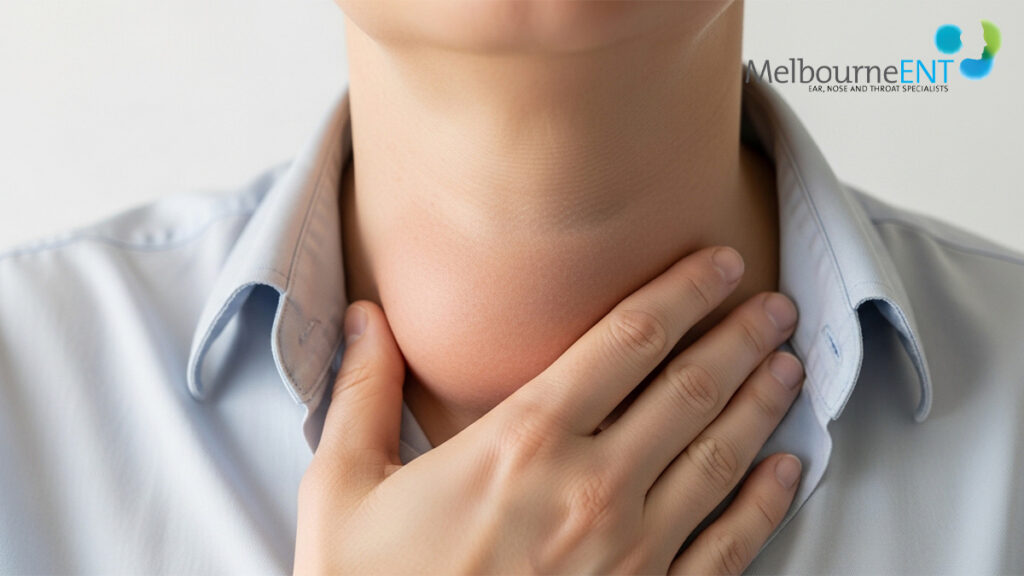
The thyroid gland is a small, butterfly-shaped organ that sits low at the front of the neck, wrapped around the windpipe. It produces hormones that help regulate metabolism, energy levels, heart rate, and body temperature.
Thyroid lumps (nodules) are common. Many are benign (non-cancerous) and never cause problems. Others are part of a multinodular goitre (many nodules) that enlarge the gland over time. A smaller proportion of nodules are malignant (cancerous), such as papillary or follicular thyroid carcinoma, and require more active treatment.
Thyroid Cancer Surgery can take several forms:
- Hemithyroidectomy (Lobectomy) – removal of one lobe (half) of the thyroid, often with the central bridge of tissue (isthmus). This may be suitable for selected smaller or lower-risk cancers, or when an indeterminate nodule is confined to one side.
- Total Thyroidectomy – removal of the entire thyroid gland. This is often recommended when cancers are larger, there is disease in both lobes, or there are particular risk factors.
- Thyroidectomy With Neck Dissection – removal of the thyroid plus selected lymph nodes in the neck when cancer has spread beyond the gland.
For many types of thyroid cancer, surgery is the central part of treatment. It may be followed by other therapies such as radioactive iodine and long-term thyroid hormone tablets, depending on the final pathology report and recommendations from your multidisciplinary team.
Who Needs It (Candidates For Thyroid Cancer Surgery)
Not every thyroid nodule needs to be removed. Many can be monitored with ultrasound and medical review. Thyroid Cancer Surgery is more likely to be recommended when particular findings or symptoms are present.
✓ Biopsy Suggesting Cancer Or High Suspicion
A fine-needle aspiration (FNA) biopsy is often used to assess thyroid nodules. A thin needle collects cells from the lump, and a pathologist examines them under a microscope. Surgery may be recommended if the biopsy shows:
- Definite cancer cells, indicating a malignant tumour
- Strongly suspicious changes, where there is a significant risk of cancer
- Indeterminate or atypical findings, particularly when combined with ultrasound features or other risk factors that raise concern
In these situations, thyroidectomy is both a treatment and a way to obtain a definitive diagnosis by examining the entire nodule or gland.
✓ Large Or Enlarging Thyroid Tumours
Even when biopsy results are not clearly malignant, surgery may be advised if:
- The thyroid nodule is large or continues to grow on serial ultrasound scans
- There is a multinodular goitre, where multiple nodules have enlarged the gland over time
- The thyroid extends down into the chest (substernal goitre), where further growth may create more complex problems later
Removing the affected lobe or the entire gland can help prevent further progression and clarify the diagnosis.
✓ Compressive Symptoms
An enlarged thyroid can press on surrounding structures in the neck. This may lead to symptoms such as:
- A feeling of tightness or fullness in the neck
- Difficulty swallowing or a sensation that food “sticks”
- Shortness of breath, especially when lying flat
- A change in breathing sounds, or a feeling that breathing is more effortful
- Discomfort wearing higher collars, ties or scarves
When these symptoms are significant or worsening, surgery may be recommended to relieve pressure and protect the airway.
✓ Confirmed Thyroid Cancer
For many patients with papillary, follicular or other types of thyroid cancer, surgery is a key component of management. The choice between hemithyroidectomy and total thyroidectomy depends on:
- The size and number of tumours
- Whether there is disease in one or both lobes
- Any extension outside the thyroid
- Age, general health, and personal circumstances
- Specialist guidelines and multidisciplinary team recommendations
Certain thyroid cancers, such as medullary carcinoma or more aggressive variants, are often approached more proactively, with formal thyroidectomy and appropriate lymph node surgery advised as standard.
✓ Spread To Neck Lymph Nodes
Thyroid cancer can spread to lymph nodes in the neck. This may be seen on ultrasound or other scans, or confirmed by biopsy of a suspicious lymph node. If nodal spread is present or strongly suspected, a thyroidectomy with central or lateral neck dissection may be recommended. This enables the primary tumour and involved lymph nodes to be removed as part of one planned operation.
✓ High-Risk Background Or Other Factors
Thyroid Cancer Surgery may also be considered if you have additional risk factors, including:
- A strong family history of thyroid cancer or certain endocrine syndromes
- Known genetic conditions linked to thyroid malignancy
- Previous significant radiotherapy to the neck, particularly in childhood or early adult life
Ultimately, the decision to proceed with surgery is made on a case-by-case basis. Your surgeon, endocrinologist and GP work together with you to balance potential benefits and risks in your specific situation.
Benefits Of Thyroid Cancer Surgery
When recommended appropriately, thyroid Cancer Surgery can offer several important potential benefits. Outcomes can vary between individuals, and no surgery can guarantee a particular result, but common advantages include:
✓ Removal Of Cancer Or Suspicious Tissue
Removing all or part of the thyroid gland allows:
- Direct removal of the known or suspected tumour
- Detailed microscopic examination of the thyroid and any lymph nodes
- Clarification of the exact cancer type, tumour size, margins and spread
- Accurate staging, which is essential for planning any further treatment
Having the tumour removed and properly analysed can bring some patients peace of mind, even when ongoing follow-up is still needed.
✓ Relief Of Mechanical And Pressure Symptoms
For patients whose thyroid enlargement is causing physical discomfort, thyroidectomy can reduce or remove the source of pressure. This may:
- Make swallowing more comfortable and effortless
- Reduce or eliminate a feeling of tightness in the neck
- Improve breathing when lying flat or during exertion if the windpipe was compressed
- Decrease the visible prominence of a very enlarged goitre, which some people find both uncomfortable and socially awkward
While not every symptom disappears completely, many patients report a noticeable improvement in day-to-day comfort.
✓ Support For Long-Term Monitoring
After partial or total thyroidectomy, long-term monitoring of thyroid cancer often becomes more precise. For some cancer types, blood tests such as thyroglobulin levels are used as markers of disease activity. These tend to be more informative when most or all thyroid tissue has been removed.
Regular reviews with your specialist team, along with periodic scans, create a structured framework for follow-up. For many people, this structured surveillance helps them feel more confident that any concerning changes will be detected early.
✓ Clarification Of Uncertain Diagnoses
In some cases, biopsy results are not clearly benign or malignant. Surgery can resolve that uncertainty by allowing the entire nodule or lobe to be examined under the microscope. A definitive diagnosis, even if it turns out to be benign, can be valuable in planning future care and reducing prolonged anxiety about “what it might be“.
Before And After Photos (For Cosmetic Procedures Only)
Thyroid Cancer Surgery is carried out for medical and cancer-related reasons, not as a cosmetic procedure. The primary goals are to treat disease, relieve symptoms and safeguard important structures in the neck.
Because of this, traditional cosmetic “before and after” image galleries are not generally applicable to thyroidectomy. Scar appearance and neck contour vary substantially between individuals and depend on many factors that cannot be precisely predicted.
During your consultation, Dr Stephen Kleid can:
- Show diagrams or educational illustrations to explain the surgical approach
- Indicate where the incision is likely to be placed in your case
- Discuss typical patterns of scar healing over time and measures that may assist this process
Any images shown are for education only and are not intended as a guarantee of how any particular patient’s scar or result will look.
Consultation For Thyroid Cancer Surgery
A consultation at Melbourne ENT is designed to help you understand your diagnosis, explore your options and decide whether thyroid Cancer Surgery is right for you. It is also a chance to ask questions and involve a support person if you wish.
✓ History And Symptoms
At the start of the appointment, Dr Kleid will ask about:
- When and how your thyroid lump was first discovered
- Any changes you have noticed in size, discomfort or appearance
- Difficulties with swallowing, voice changes, or breathing issues
- Your overall health, past medical conditions and regular medications
- Any history of radiation exposure, previous neck operations, or family history of thyroid or endocrine problems
This information helps tailor the advice and surgical plan to your individual circumstances.
✓ Examination
A thorough examination of your neck and upper airway is performed. This includes:
- Assessing the size, shape and consistency of the thyroid gland
- Feeling for any enlarged lymph nodes in the neck
- Examining the mouth and throat as needed
The aim is to correlate physical findings with your symptoms and with any imaging or test results.
✓ Review Of Investigations
Any investigations already performed, such as blood tests, neck ultrasound, CT or MRI scans, and FNA biopsy reports, are reviewed carefully. If imaging is available, it may be discussed with you so you can see the size and location of your thyroid and nodules.
If any important information is missing, additional tests may be requested. This could include updated imaging, repeat biopsy or other specialist assessments before a final surgical recommendation is made.
✓ Vocal Cord Assessment
Because the nerves to the vocal cords run very close to the thyroid, a laryngoscopy (a small camera examination of the voice box) may be recommended before or after surgery. This provides:
- A record of how your vocal cords are moving at baseline
- Information that can assist with surgical planning and risk assessment
- A useful comparison point if any voice changes develop after the procedure
The examination is usually quick and well-tolerated, and can often be done in the rooms.
✓ Discussion And Planning
Once your history, examination and test results have been reviewed, Dr Kleid will explain:
- Whether surgery is recommended, optional, or not indicated at this time
- The type of operation that would be most appropriate (hemithyroidectomy, total thyroidectomy, and whether neck dissection is required)
- The expected benefits and realistic limitations of surgery
- Potential risks and complications, including those that apply specifically to your situation
- Alternatives such as active surveillance or different timing for surgery, where appropriate
You are encouraged to ask questions and to take time to think things through. A referral from your GP or other specialist helps ensure Medicare rebates apply and that all relevant test results are available.
How Is It Performed (Surgery For Thyroid Cancer Surgery)
Although the exact details are tailored to each patient, thyroid Cancer Surgery generally follows a series of well-defined steps.
Anaesthetic
The procedure is performed under general anaesthetic. You will be fully asleep and unaware during the operation. Before surgery, you will meet the anaesthetist, who will:
- Review your medical history, medications and any previous anaesthetic issues
- Discuss pain relief, nausea prevention and other concerns
- Explain what to expect immediately before and after the operation
Throughout the procedure, your breathing, heart rate, blood pressure and other vital signs are closely monitored.
Incision And Exposure
A curved incision is usually made low in the front of the neck, positioned in a natural skin crease where possible. This helps the scar blend into normal neck lines over time. The skin and underlying tissue are gently lifted to expose the thyroid gland, which lies beneath the thin strap muscles of the neck.
The muscles are typically separated rather than cut and are preserved so that they can return to their normal position after the gland is removed. This approach helps support normal neck function and movement once healing is complete.
Identification And Protection Of Key Structures
One of the most important aspects of thyroid Cancer Surgery is careful identification and preservation of crucial structures. These include:
- The recurrent laryngeal nerves, which run close to the thyroid and control movement of the vocal cords
- The superior laryngeal nerves, which are important for voice strength and higher-pitched sounds
- The parathyroid glands, four small glands located near or behind the thyroid that regulate calcium levels
The surgical technique is designed to gently mobilise the thyroid gland while keeping these nerves and glands intact and maintaining their blood supply as much as possible. In some cases, if a parathyroid gland is at risk, it may be re-implanted into nearby muscle to preserve its function.
In selected cases, nerve monitoring technology may be used as an additional tool. This involves specialised equipment that can help identify the recurrent laryngeal nerves and assess their function during surgery. While it does not remove all risk, it can provide useful information to assist nerve preservation.
Removal Of Thyroid Tissue
Once the important structures have been identified and safeguarded, the thyroid gland itself is removed according to the agreed surgical plan:
- In a hemithyroidectomy, one lobe and usually the isthmus are removed, leaving the other lobe in place.
- In a total thyroidectomy, both lobes and the isthmus are removed.
- If lymph nodes are involved, a central and/or lateral neck dissection may be carried out, removing selected nodal groups while preserving major blood vessels, nerves and other vital structures.
All removed tissue is carefully labelled and sent to a pathology laboratory for detailed microscopic analysis. The final report is central to staging the cancer and planning any further treatment if needed.
Haemostasis And Wound Closure
After the thyroid and any necessary lymph nodes have been removed, the area is checked thoroughly for bleeding. Good haemostasis is important to reduce the risk of post-operative neck haematoma. In some cases, a small drain is placed to collect any fluid or blood that might accumulate in the early post-operative period. This is usually removed within a day or two.
The neck muscles are gently returned to their normal position, and the skin is closed, often with fine sutures. A dressing is applied to protect the wound. The length of the operation varies according to the extent of surgery and individual anatomy.
Recovery After Thyroid Cancer Surgery
Recovery is a gradual process and varies from one person to another. Knowing what is typical can help you prepare and recognise what is normal versus what should prompt a call to your treating team.
Immediately After Surgery
Following the operation, you will be taken to the recovery area where nursing and anaesthetic staff monitor you as you wake. It is common to feel drowsy, have a sore throat from the breathing tube, and notice some discomfort in the neck. Pain relief is given and adjusted as needed.
Once you are fully awake and stable, you will be transferred to the ward. Many patients can sip water and have a light snack later that day or evening, depending on how they feel.
Hospital Stay
Most people stay one night in hospital after thyroidectomy, though this can vary if the surgery is more complex or if there are pre-existing medical conditions. While in hospital:
- Nurses will check your wound, neck swelling, breathing and comfort levels regularly
- Pain relief is provided on a regular schedule and as required
- If a drain is present, its output is monitored and it is removed when appropriate
- Blood tests may be done to check calcium levels and other markers
You will usually receive written instructions about caring for your wound, what medications to take at home, and when to seek urgent help.
First Days At Home
Over the first few days at home, common experiences include:
- Mild to moderate neck discomfort, often eased with simple pain relief
- A sense of tightness or stiffness when turning the head
- Temporary difficulty with wide mouthfuls or very dry foods, improving as swelling settles
- Tiredness or reduced energy, especially if you are also adjusting to new medications
Planning a relatively quiet period with help for heavier tasks can make this stage more manageable. Gentle walking and light activities are encouraged as you feel up to it.
Activity, Work And Exercise
You can usually carry out light household tasks and short walks soon after discharge. Activities that involve heavy lifting, vigorous exercise or direct strain on the neck should be avoided for a short period as advised by your surgeon.
Return to work depends on the nature of your job and how your recovery progresses. Many people with office-based roles feel ready within one to two weeks, sometimes starting with reduced hours. Those whose work is physically demanding or heavily voice-based may need additional time and more tailored advice.
Scar Healing And Neck Sensation
Initially, the scar may appear pink, slightly raised and firm. Over several months, it generally fades and softens. Protecting the scar from the sun and following any recommended scar care, such as silicone tape or gel once the wound has healed, can support a better cosmetic outcome.
It is also common to notice some numbness, tingling or altered sensation in the skin around the incision and upper chest. This usually improves gradually as nerves recover. If you have ongoing concerns about the appearance or feel of the scar, this can be discussed at follow-up.
Thyroid Hormone And Calcium Management
If your entire thyroid has been removed, you will need lifelong thyroid hormone replacement tablets, usually taken once a day. These tablets are adjusted over time using blood tests and clinical review, aiming to maintain hormone levels in a range appropriate for your general health and, if relevant, your specific type of thyroid cancer.
If your parathyroid glands are temporarily affected, calcium and possibly vitamin D supplements may be prescribed. Regular blood tests help ensure levels are safe and stable. Symptoms such as tingling, pins and needles around the mouth or fingertips, or muscle cramps should be reported promptly, as they may indicate low calcium levels that need attention.
Follow-Up And Long-Term Care
A follow-up appointment is typically arranged within a few weeks of surgery. At this visit, Dr Kleid will:
- Check your wound and overall recovery
- Go through the final pathology report in detail
- Discuss whether additional treatment, such as radioactive iodine, is recommended
- Outline a plan for ongoing follow-up with an endocrinologist, oncologist or GP as appropriate
Long-term care usually involves periodic blood tests and occasional imaging, tailored to your particular diagnosis and risk profile. Many patients are followed for several years to ensure any recurrence or new issues are detected early.
Risks And Complications Of Thyroid Cancer Surgery
All operations carry risks. Thyroidectomy is commonly performed and generally safe in experienced hands, but complications can occur. It is important to understand these possibilities so you can make an informed decision. Your individual risk depends on factors such as age, general health, anatomy, the extent of surgery and any previous neck surgery or radiotherapy.
Bleeding And Neck Haematoma
Bleeding can happen during or after surgery. In most cases, it is controlled at the time of the operation. Occasionally, bleeding into the neck after surgery can cause a haematoma (a collection of blood), which may lead to swelling and tightness and, in rare cases, affect breathing. If this occurs, urgent assessment and sometimes a return to theatre are needed to relieve pressure and stop the bleeding.
Infection
Infection after thyroid surgery is uncommon but remains a possibility. Signs might include increasing redness, warmth, swelling, pain or discharge at the wound site, or fever. Most infections respond to antibiotics; rarely, drainage may be required.
Voice Changes And Nerve Injury
The nerves that control the vocal cords lie very close to the thyroid gland. Despite careful surgical technique, these nerves can be bruised, stretched, or in rare situations, damaged. This can lead to:
- Temporary voice changes, such as hoarseness, reduced volume or vocal fatigue
- Difficulty reaching higher notes, which can be particularly noticeable for singers
- Infrequently, permanent voice changes if a nerve is significantly injured or has to be removed to completely clear more advanced tumour
In very rare situations, if both recurrent laryngeal nerves are affected, breathing difficulties can occur and may require urgent treatment. If voice changes persist, assessment by a speech pathologist and targeted voice therapy may be recommended to help you achieve the best possible function.
Low Calcium Levels (Hypocalcaemia)
The parathyroid glands, which control calcium levels, can be temporarily or permanently affected by thyroid surgery, particularly when the entire thyroid is removed. Low calcium levels can cause:
- Tingling around the lips, fingers or toes
- Muscle cramps or spasms
- More serious symptoms if not promptly recognised and treated
If blood tests show low calcium, supplements and sometimes vitamin D are prescribed. For many patients, this is a temporary issue; a smaller group require longer-term supplementation and monitoring.
Scarring And Cosmetic Outcome
All surgery leaves a scar. While the incision is placed in a natural neck crease when possible and most scars fade with time, individual healing varies. Some people develop thicker, more raised or more obvious scars (hypertrophic or keloid scarring), which can be itchy or firm.
If scarring is a concern, there may be options such as silicone products, injections or other treatments, which can be discussed after surgery. However, no surgeon can guarantee the exact appearance of a scar.
Other Possible Complications
Less common issues can include:
- Fluid collections (seroma)
- Numbness or altered sensation in the skin
- Rare complications related to major blood vessels or other structures in the neck
- Unexpected reactions to anaesthetic medications
Your surgeon will provide more detailed information about risks at your consultation and may provide written material so you can review these at home.
Cost Of Thyroid Cancer Surgery
The cost of thyroid Cancer Surgery varies from person to person. Factors that influence overall cost include:
- The type of operation performed (hemithyroidectomy, total thyroidectomy, with or without neck dissection)
- The hospital where the procedure is carried out and the length of stay
- Surgeon, anaesthetist and surgical assistant fees
- Pre-operative consultations and investigations
- Post-operative appointments, tests and any additional treatments required
Some patients will also require treatments such as radioactive iodine or long-term endocrinology care, which may have their own costs.
Because each case is different, specific fee amounts are not listed here. Before you decide whether to proceed with surgery, you will usually be provided with:
- An outline of expected professional fees
- Information on possible out-of-pocket costs (gaps) after Medicare and any health fund rebates
- Guidance on contacting your health fund and the hospital to confirm cover, excesses and co-payments
The administrative staff at Melbourne ENT can help you understand which costs relate to the surgeon, which to the hospital, and which to other providers, so you can make an informed decision from both a medical and financial perspective.
Medicare Coverage And Insurance
Thyroid Cancer Surgery is usually classified as medically necessary rather than cosmetic. As such, it generally qualifies for one or more Medicare item numbers, which provide rebates for eligible patients in Australia. The specific item numbers used depend on the procedure performed, for example whether one lobe or the entire gland is removed, and whether lymph node surgery is included.
If you have private hospital insurance, your health fund may contribute to hospital and theatre costs associated with those item numbers, depending on your level of cover and any waiting periods or exclusions. The amount you pay out-of-pocket will depend on:
- Your Medicare eligibility
- The Medicare item numbers applicable to your procedure
- Your health fund policy, including excesses and any co-payments or restrictions
The Melbourne ENT team can usually provide the item numbers that are likely to apply to your surgery. You can then contact your health fund to ask:
- Whether the procedure is covered
- Whether any waiting periods apply
- What hospital excess or other costs you may need to pay
Discussing these details ahead of time helps avoid unexpected financial surprises and allows you to consider both the medical and practical aspects of treatment.
Why Choose Your Surgeon
Choosing who to trust with your care is an important decision.
Dr Stephen Kleid is an ENT and Head & Neck Surgeon (MBBS, FRACS) with extensive experience in the assessment and surgical management of thyroid tumours and other head and neck conditions. He completed his medical training at Melbourne University and undertook advanced surgical training across major Melbourne teaching hospitals before obtaining Fellowship of the Royal Australasian College of Surgeons in Otolaryngology – Head & Neck Surgery.
In the context of thyroid Cancer Surgery, Dr Kleid’s approach focuses on:
- Thorough Assessment – taking time to review your history, examine you carefully, and consider all available tests and imaging
- Evidence-Based Surgery – planning operations in line with current best practice and multidisciplinary input, where appropriate
- Protection Of Vital Structures – careful identification and preservation of the nerves to the vocal cords and the parathyroid glands, wherever possible
- Clear Communication – explaining diagnoses, options, risks and expected outcomes in understandable terms, so that you can make informed decisions
- Coordinated Care – working with endocrinologists, oncologists, radiologists, pathologists and your GP to ensure your ongoing treatment and follow-up are well organised
Patients are encouraged to ask questions, bring a support person, and take time to think through their options. There is no obligation to proceed with surgery after a consultation, and seeking a second opinion is always acceptable if you feel it would help you decide.
FAQs About Thyroid Cancer Surgery
Will I feel any different once part or all of my thyroid is removed?
Many people feel surprisingly normal after surgery once their thyroid hormone tablets are adjusted to the right dose. Some notice temporary changes in energy, temperature sensitivity or mood while levels are being fine-tuned. These usually settle over several weeks with help from blood tests and your endocrinologist or GP. Any new or persistent symptoms should always be discussed at follow up.
If my voice changes after surgery, how long should I wait before worrying?
It is common to feel stiffness, tightness or a pulling sensation when opening your mouth wide or chewing, early after parotidectomy. This usually reflects tissue healing and scar formation around the jaw and neck muscles, rather than a problem with the jaw joint itself. Many patients find this improves steadily over several weeks. Gentle jaw stretching and avoiding very hard or chewy foods early on can help.
Can I still sing or do public speaking after thyroid surgery?
Many people return to singing and public speaking after thyroid Cancer Surgery. In the short term, your voice may tire more quickly or feel less reliable, so it is sensible to ease back gradually. Professional voice users, such as singers, teachers or presenters, may benefit from early assessment and guidance from a speech pathologist. If permanent nerve injury occurs, the voice may be different, but therapy and, in some cases, further procedures can often improve function.
What happens if my final pathology result is very different from my biopsy result?
This does occur. Biopsy samples are tiny, whereas the removed gland and any lymph nodes provide a complete picture. Sometimes a nodule that looked reassuring on biopsy turns out to have a small cancer focus, and sometimes a suspicious biopsy proves to be benign on full examination. In either situation, your surgeon will go through the final report with you and, if needed, involve your endocrinologist or oncologist to adjust your follow up and any further treatment.
Will I always need more treatment after thyroid Cancer Surgery, such as radioactive iodine?
Not necessarily. Some people are treated with surgery alone and then followed with regular blood tests and ultrasound. Others may be advised to have radioactive iodine, particularly for certain types or stages of thyroid cancer. The decision is based on your final pathology, your risk profile and current guidelines, and is usually made in conjunction with your endocrinologist and a multidisciplinary team.
How long after surgery will it take before I know my long term plan?
Even when basic nerve function has recovered well, some patients notice that their smile or facial symmetry changes a little when they are tired, stressed or talking for long periods. This can be due to subtle nerve weakness, muscle fatigue or tightness in the scarred tissues around the cheek. These effects are often mild and may be more noticeable to you than to others. Targeted facial exercises, good sleep, stress management and, in some cases, referral to a therapist experienced in facial rehabilitation can help improve control and balance.
What can I do to prepare myself physically and mentally before thyroid Cancer Surgery?
It can help to focus on general health in the weeks before surgery, for example by not smoking, keeping active within your limits, eating a balanced diet and managing any existing conditions such as blood pressure or diabetes with your GP. Many people also find it useful to write down questions, bring a support person to appointments, and plan practical things such as time off work, help at home and transport. Understanding the operation and recovery, and knowing who to contact if you are worried, often makes the whole experience less stressful.
Book an appointment
If you have a thyroid nodule, thyroid tumour, or a confirmed diagnosis of thyroid cancer, you do not have to navigate the next steps on your own. A detailed consultation can help clarify your options and give you a clearer sense of what to expect.
To arrange an appointment with Dr Stephen Kleid at Melbourne ENT in St Kilda East:
- Speak with your GP or endocrinologist about a referral, so that Medicare rebates can apply and your test results can be forwarded
- Call Dr Kleid’s rooms on (03) 9038 1630 to book a consultation or ask about practical details
- Visit the Melbourne ENT website at melbourne-ent.com.au for further information about the practice and other ENT, head and neck services
This information offers a general overview of thyroid tumours and Cancer Surgery in the Australian setting. Your circumstances are unique, and decisions about investigation and treatment should always be made in partnership with your own doctors and specialist team.