
A parotidectomy is an operation to remove part or all of the parotid gland, which is the largest salivary gland in the face. This gland sits just in front of and below the ear and plays an important role in saliva production, helping with chewing, swallowing and maintaining oral health. The surgery is most often performed to remove a lump or tumour within the gland, which may be benign (non-cancerous) or malignant (cancerous), or to treat other significant disease affecting the region.
At Melbourne ENT in St Kilda East, Victoria, parotid gland surgery is a key part of the head and neck practice of Dr Stephen Kleid, an ENT and Head & Neck Surgeon (MBBS, FRACS). Dr Kleid is Australia’s most experienced parotidectomy surgeon, managing parotid and other salivary gland tumours, with a strong focus on safe tumour removal, protection of the facial nerve, prevention of recurrence, and clear prre-operative communication with patients.
The information on this page is designed to help you understand what a parotidectomy involves, why it may be recommended and what you can expect before and after surgery with Dr Kleid. It is general in nature and is not a substitute for advice from your own doctor or surgeon.
What Is Parotidectomy?
The parotid glands are a pair of salivary glands located on either side of the face. Each gland sits just in front of the ear and extends down towards the angle of the jaw. They produce saliva that is released into the mouth through a small duct, helping to lubricate food, aid digestion and protect the teeth and oral tissues.
A key feature of the parotid gland is that the facial nerve runs directly through it. The facial nerve controls the muscles responsible for facial expression. These muscles allow you to smile, frown, raise your eyebrows, close your eyes, purse your lips and move the corners of your mouth. After leaving the skull, the facial nerve passes through the parotid gland and divides into multiple branches that spread across the face. Because of this, any surgery on the parotid gland must be performed gently and precisely to identify and protect the nerve wherever possible.
A parotidectomy is the name given to surgery where part or all of this gland is removed. When only the outer portion of the gland is taken out, the procedure is called a superficial parotidectomy, although nowadays, we tend to perform “Parotidectomy with a margin”, which often extends into the deep lobe. This is frequently used for benign or superficial lumps in the outer part of the gland. When both the superficial and deep portions of the gland are removed, the procedure is known as a total parotidectomy. Total parotidectomy is more likely to be required for deeper tumours, malignant disease or complex conditions involving a larger volume of the gland.
In some cases, especially when cancer has spread to nearby lymph nodes, parotidectomy is combined with removal of lymph nodes in the neck, known as a neck dissection. The exact approach is tailored to the position, size and behaviour of the tumour, the involvement of lymph nodes and your general health and goals. While the main aim of surgery is to treat the underlying disease, thoughtful incision planning and nerve-preserving techniques are used to support function and appearance where possible.
Who Needs It (Candidates For Parotidectomy)
Not all parotid problems require surgery, but there are certain situations where parotidectomy is often recommended. Dr Stephen Kleid will consider your symptoms, examination findings, imaging and biopsy results, as well as your overall health.
Many patients are referred after noticing a lump or swelling in front of the ear or just below it, near the angle of the jaw. Sometimes this lump has been present for months or years and has grown slowly. In other cases, it may have appeared more quickly or become painful. Benign parotid tumours, such as pleomorphic adenoma and Warthin’s tumour, are common reasons for surgery. Although these tumours are not cancerous, they often continue to enlarge and can become more difficult to remove if left untreated. Some benign tumours also carry a small risk of malignant change over time, which is why removal is often advised once they are identified.
Parotidectomy is also a key part of treatment for malignant tumours. These cancers can arise from the salivary tissue within the parotid or can represent spread from other sites. Skin cancers from the scalp, ear or face, for example, may spread to lymph nodes located in or near the parotid region. When malignancy is suspected or confirmed, surgery usually aims to remove the tumour with a margin of normal tissue and to address any associated lymph node disease, often in combination with radiotherapy or other treatments later.
Other reasons for considering parotidectomy include recurrent infections or abscesses within the gland that do not settle with antibiotic treatment and other non-surgical measures. Some patients have long-standing cysts or congenital abnormalities in the parotid region that are enlarging, causing discomfort or affecting daily activities. In these situations, surgery can both provide a diagnosis and relieve symptoms.
You may be referred to Dr Kleid if you notice a persistent lump near the ear or jawline, a change in size or texture of a known lump, pain or pressure in the area, or new weakness, twitching or asymmetry in your facial movements. Changes in the overlying skin, such as thickening, dimpling, ulceration or redness, can also prompt concern. While these signs do not automatically mean that cancer is present, they are reasons to have a careful and thorough assessment.
There are also situations where parotidectomy may not be the most appropriate choice. People with significant underlying health conditions may face higher risks from general anaesthesia and major surgery. For some elderly or medically fragile patients with very slow-growing benign tumours that cause minimal symptoms, observation with regular clinical and imaging follow-up may be a reasonable alternative to surgery. The balance between the potential benefits of surgery and the risks has to be considered carefully, and this discussion is best carried out in consultation with a surgeon who understands your overall health and priorities. However, parotidectomy is a delicate but not high-risk operation.
Ultimately, whether you are a candidate for parotidectomy is determined individually by Dr Kleid, based on examination, imaging, biopsy results, your broader medical history and your values and preferences once you have received clear and balanced information.
Benefits Of Parotidectomy With Dr Stephen Kleid
Parotidectomy with Dr Stephen Kleid is undertaken primarily to manage disease of the parotid gland safely and effectively. For many patients, one of the main benefits is the removal of a tumour or suspicious lesion that has been a source of worry or physical discomfort. Having the lesion completely removed allows it to be examined in detail by a pathologist under the microscope. This provides the most accurate information about its type, grade and behaviour, confirming whether the lump is benign or malignant and whether the edges of the removed tissue are clear of disease. These details are crucial in planning any further treatment and in understanding your long-term outlook.
From a medical standpoint, removing a benign tumour can prevent ongoing growth, which might otherwise eventually cause visible facial asymmetry, pressure on nearby structures or more complex surgery in the future. In the context of malignant disease, parotidectomy can play a central role in achieving local control of the cancer. When combined with appropriate additional treatments, such as radiotherapy, surgery can be an important part of aiming for long-term control or cure.
Many patients also experience quality-of-life improvements. Living with a lump in a prominent area of the face, especially when its nature is uncertain, can be a significant source of anxiety. Undergoing surgery and receiving a clear diagnosis often brings relief. For those who experience recurrent infections or episodes of swelling within the gland, removal of the diseased tissue can reduce the frequency of painful episodes and improve comfort in daily life.
While parotidectomy is not performed for cosmetic purposes, Dr Kleid takes appearance and facial harmony into account when planning surgery. Incisions are usually designed to follow the natural curves and creases around the ear and upper neck so that, as healing progresses, the scar has the potential to blend in with normal skin folds. The facial nerve is carefully identified and followed through the gland, and nerve monitoring may be used to support its protection. In some cases, additional techniques may be employed to support soft tissue contour if larger volumes of tissue have been removed.
It is important to remember that individual results vary. Healing, scarring, facial nerve function and contour depend on many factors, including the extent of surgery, the nature of the tumour, your own anatomy and your general health. Dr Kleid will discuss these aspects with you honestly and will avoid making promises that cannot be guaranteed.
Before And After Photos (For Cosmetic Procedures Only)
Because parotidectomy is a medically indicated operation rather than a cosmetic procedure, conventional before and after photo galleries are not usually a focus for this type of surgery. The primary objectives are to remove disease, to establish a clear diagnosis and to protect important structures, particularly the facial nerve, rather than to achieve a cosmetic change.
Clinical photographs may however form part of your medical record with Dr Kleid. Photographs are often used to document the appearance of the region before surgery, to plan the incision and to monitor healing and longer-term results. In some cases, with appropriate consent and careful attention to privacy, de-identified images may be shown in rooms to help explain where the incision is typically placed and how scars may mature over time.
Any images that are used in this way are intended to be educational. They cannot predict your individual result, as scarring and contour changes can differ significantly between people. Factors such as skin type, age, healing characteristics, previous scarring and the extent of surgery all influence how a scar ultimately looks. If you are specifically concerned about appearance after surgery, these concerns should be openly discussed at your consultation so that Dr Kleid can provide realistic information and address your questions directly.
Consultation For Parotidectomy With Dr Stephen Kleid
The consultation is your chance to gain a clear understanding of your condition and to explore whether parotidectomy is the right option for you. It is also an opportunity for Dr Kleid to gather the information needed to plan safe and appropriate care.
Your appointment at Melbourne ENT will begin with a detailed medical history. You will usually be asked when you first noticed a lump or swelling, whether it has changed in size or consistency, and whether it is painful or tender. Dr Kleid may ask whether the lump fluctuates with meals, which might suggest salivary obstruction, or whether you have had episodes of infection in the area. Questions about facial movement, such as trouble closing your eye tightly, drooping of the mouth, or a feeling that your smile is uneven, are important to assess the function of the facial nerve. You will also be asked about previous skin cancers on the scalp, ear or face, any radiotherapy to the head and neck, previous surgery in the region and your broader medical history, including medications and allergies.
A careful examination follows. Dr Kleid will gently feel the parotid region and neck to assess the size, consistency and mobility of any lump and to feel for enlarged lymph nodes. The symmetry and strength of facial movements will be observed, often by asking you to perform simple tasks such as closing your eyes, raising your eyebrows, smiling and showing your teeth. The mouth, tongue, throat, ears and nose may also be examined to look for other sources of disease.
Investigation results are then reviewed. Dr Kleid’s staff will often arrange an Ultrasound-guided fine needle biopsy (which he prefers to a core biopsy), and he prefers MRI to CT for Parotid tumours – while you are waiting for your appointment. Dr Kleid will usually look at ultrasound reports, CT or MRI scans and any fine needle aspiration or core biopsy results that have already been performed. If more information is needed to clarify the nature of the lesion or its relationship to the facial nerve, additional imaging or repeat biopsy may be recommended. Good imaging is particularly important when planning more extensive operations or when cancer is suspected.
Once enough information is available, Dr Kleid will explain the most likely diagnosis, including areas of uncertainty if they exist. You will hear why surgery is or is not recommended in your case, what type of parotidectomy is being proposed, and whether additional procedures such as a neck dissection might be necessary. The potential benefits will be discussed alongside the possible risks and complications, including facial nerve weakness, numbness, Frey syndrome, scarring and the possibility of further treatment after surgery. You will be encouraged to ask questions and to take the time you need to understand the information.
If surgery is planned, the practical aspects will also be covered. You will be told where and when the operation would take place, how long you are likely to stay in hospital, what you need to do in the days before surgery, and how regular medications such as blood thinners should be managed. Written information may be provided to help you remember what has been discussed. Many patients find it useful to bring a family member or trusted friend to the consultation to provide support and help recall details afterwards.
How Is It Performed (Surgery For Parotidectomy)
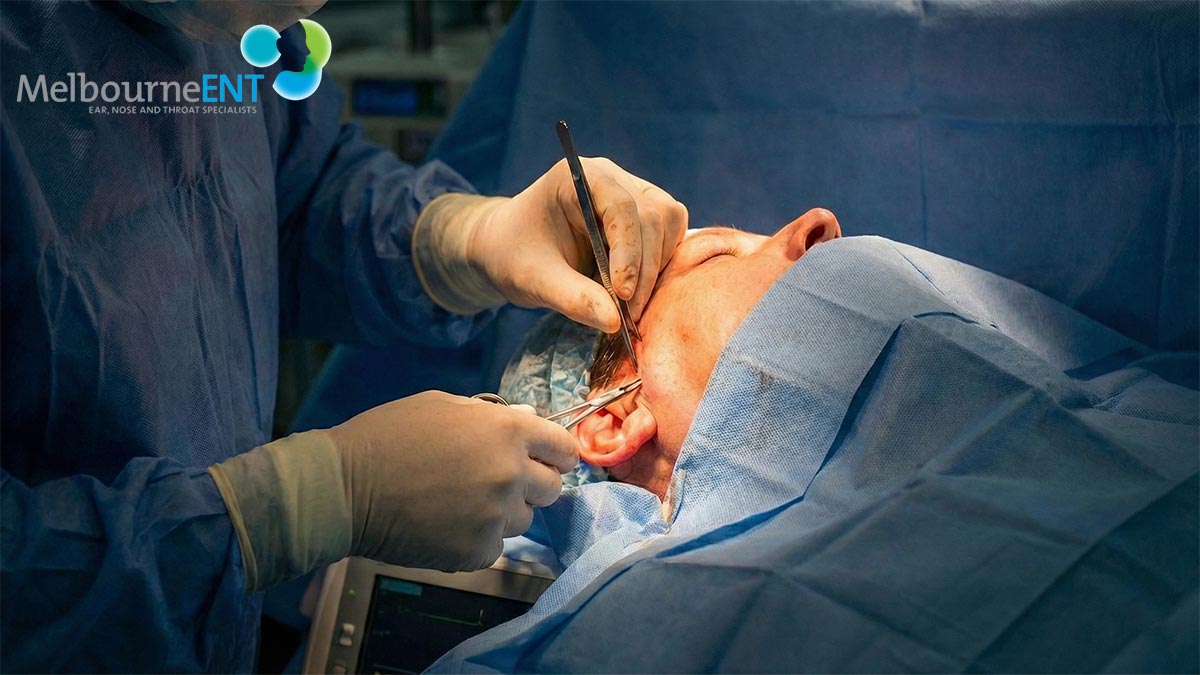
Parotidectomy with Dr Stephen Kleid is performed in a hospital setting under general anaesthesia. You will be asleep and unaware of the procedure, and your anaesthetist will monitor your breathing, heart rate, blood pressure and comfort throughout the operation. Before you go to the operating theatre, the surgical team will check your identity, the planned procedure, the side of the surgery, and other safety details as part of standard hospital protocols.
Once you are positioned, Dr Kleid will mark the planned incision, which commonly starts in front of the ear, curves around the earlobe and then extends into a natural crease in the upper neck, as an S-shaped incision. This pattern allows good access to the gland while placing the scar in a location where it can often be concealed by natural folds or, in some patients, by hair.
The skin and underlying tissue are gently elevated to expose the parotid gland. Dr Kleid then identifies important anatomical landmarks that help locate the main trunk of the facial nerve. There are several well-established techniques for finding this nerve safely, and facial nerve monitoring may also be used. This involves placing small electrodes into the facial muscles, which can detect nerve activity during the procedure and provide real-time feedback when the nerve is stimulated. While nerve monitoring does not eliminate all risk, it can be a helpful adjunct to careful surgical technique.
After the main trunk of the facial nerve is identified, its branches are traced through the gland. Dr Kleid then removes the portion of the gland that contains the tumour or diseased tissue. In a superficial parotidectomy, only the outer part of the gland is removed, while the deeper part is left untouched. In a total parotidectomy, both superficial and deep lobes are removed. When there is lymph node involvement in the neck, a neck dissection may be performed through an extended incision. This allows removal of lymph nodes and surrounding fatty tissue in specific regions of the neck to manage or assess cancer spread.
Throughout the operation, Dr Kleid is constantly balancing the need to remove all relevant disease with the desire to preserve the facial nerve and other important structures. In most benign cases, the facial nerve can be preserved in its entirety. In certain malignant cases, where the tumour is closely attached to or invading the nerve, it may be necessary to sacrifice a segment of the nerve to achieve adequate cancer clearance. If this is a possibility in your case, it will have been discussed with you in detail beforehand, including what that might mean for facial movement and what reconstructive or rehabilitative strategies might be available.
Once the necessary tissue has been removed, Dr Kleid carefully controls any bleeding and places a small suction drain tube under the skin to collect blood and tissue fluid. This drain helps reduce the risk of haematoma or fluid collection after surgery. It is left in for about 3 days. The wound is then closed in layers with buried dissolvable sutures, and usually no dressing is required. The removed tissue is sent to the pathology laboratory for detailed examination.
The duration of surgery varies depending on the complexity of the case and whether additional procedures such as neck dissection or reconstruction are performed. After the operation, you will be transferred to the recovery area where nurses will monitor your vital signs and assess your comfort. Initial facial movements may be assessed quite early by asking you to gently move parts of your face as you wake. Once you are stable and awake, you will return to the ward for further monitoring and early recovery.
Recovery After Parotidectomy
Recovery after parotidectomy is quite quick. Immediately after surgery, you may feel drowsy as the effects of the anaesthetic wear off. Nursing staff will monitor your blood pressure, pulse, oxygen levels and pain. The drain on the operated side of your face and neck will be checked daily, and the amount of fluid draining will be recorded.
It is normal to experience some swelling and bruising in the region of the incision, ear and upper neck. Many people describe a sensation of tightness or fullness in the area, and skin numbness. Pain is usually mild, and managed with a combination of regular and as-needed analgesic medications. You will be encouraged to sit up in bed soon after surgery and, even on the first day to stand and walk to the bathroom. These early movements help reduce the risk of blood clots and support lung function.
The drain placed during surgery remains in place until the output has fallen to an acceptable level. For many patients, this occurs within the first few days after surgery, but the exact timing varies. Once the drain is removed (by cutting one suture) you are ready to go home.
You will notice numbness or altered sensation around the ear lobe, cheek or side of the neck, because small skin nerves must be cut to get to the parotid gland. Sensation often improves over time, but it may not return completely to how it was before surgery. If there is temporary facial weakness, this may become more noticeable as swelling settles. You might see slight drooping of the mouth, difficulty fully closing one eye, or some asymmetry when you smile or raise your eyebrows. In most cases, these changes improve over weeks to months, as the nerve recovers.
Dr Kleid will give you detailed instructions on wound care, including when you may shower and how to keep the area clean and dry. The follow-up appointment is usually after 1 week. The buried dissolvable sutures do not need to be removed. You will be advised to avoid heavy lifting, strenuous exercise, and contact sports until you are told these activities are safe to resume (1-2 weeks). Walking and light daily tasks are usually encouraged as you feel able.
Over the longer term, the scar will continue to evolve. Initially, it may look pink and feel firm or raised. Over several months, it often softens and fades, although the final appearance can vary widely between individuals. If you have a tendency towards keloid or hypertrophic scarring, this may influence the final look of the scar, and Dr Kleid may recommend specific scar care strategies.
Persistent facial weakness, if present, can sometimes be improved with targeted facial physiotherapy and exercises to support muscle tone and symmetry. In more significant or long-standing cases, additional supportive or reconstructive measures may occasionally be considered. Dr Kleid will discuss these options if they are relevant to your situation.
You will be instructed to seek prompt medical review if you notice rapidly increasing swelling, severe uncontrolled pain, fever, redness or discharge from the wound, or sudden changes in facial movement or eye closure. Written discharge instructions and contact details are usually provided so that you know whom to call and when.
Risks And Complications Of Parotidectomy
Every operation has potential risks, and it is important to understand them when deciding whether to proceed with surgery. Your own risk profile depends on many factors, including the nature of the tumour, the extent of surgery required and your overall health.
One of the key risks associated with parotidectomy is facial nerve weakness. Because the nerve runs through the gland and its branches lie very close to many tumours, they often need to be carefully dissected away from the lesion. Stretching or bruising of the delicate nerve branches, , even when performed meticulously, can sometimes lead to temporary reduction in nerve function. You might notice difficulty closing your eye tightly, drooping of the corner of the mouth or a difference in your smile. In many cases, this weakness gradually improves over weeks to months as swelling settles and the nerve recovers. However, permanent weakness can occur, particularly in operations for large or malignant tumours, in repeat surgery or in cases where part of the nerve needs to be removed to clear cancer. When permanent weakness does occur, additional measures such as eye lubricants, eyelid taping or further procedures may be needed to protect the eye and improve function.
Altered sensation is another common outcome. The earlobe and surrounding skin often feel numb or “strange” after surgery. Some patients describe tingling, burning or electric shock-like sensations as nerves heal. These changes can improve over time but may not completely resolve.
Frey syndrome, also called gustatory sweating, is a recognised complication. This occurs when nerve fibres that previously stimulated the salivary gland regenerate incorrectly and connect to sweat glands in the overlying skin. As a result, the skin in front of the ear or on the cheek may become warm, flushed or sweaty when you eat or even think about food. In many patients, this is mild and does not significantly affect daily life. If it is more noticeable or bothersome, treatments such as topical agents or injections may be considered.
Bleeding during or after surgery is possible. A haematoma is a collection of blood under the skin that can cause swelling, pain and tightness. It may require urgent attention and, in some cases, a return to the operating theatre. A collection of saliva under the skin, called a sialocele, can also occur. This may appear as a swelling that fluctuates in size, particularly around meal times. Most sialoceles are managed conservatively with pressure dressings, repeated drainage with a needle or other simple measures, and they often resolve with time.
Infection is less common but can occur, particularly if there is a fluid collection or other risk factors. Signs include increasing redness, warmth, pain, or pus-like discharge from the wound, sometimes accompanied by fever. Most infections can be treated with antibiotics and local wound care, though occasionally surgical drainage is required.
A skin scar is inevitable. The incision is designed to follow natural lines to help the scar blend in, but its final appearance will differ between individuals. Some people develop thicker or more visible scars, particularly if they have a history of problematic scarring elsewhere. In addition to the scar itself, there may be a subtle change in contour in the region where the gland has been removed, especially after larger resections.
Another consideration is the possibility of needing additional treatment. Some benign tumours have a tendency to recur and may require further surgery in the future. Malignant tumours often require post-operative radiotherapy, further surgery or other treatments depending on the type of cancer, its stage and the pathology findings from the operation. This would be discussed with the Peter MacCallum Cancer Centre Multi-Disciplinary Team. Dr Kleid will review your pathology results with you once they are available and outline any further recommended treatment or follow-up plan.
Cost Of Parotidectomy
The cost of parotidectomy can vary between patients and is influenced by several factors. The complexity of the operation is an important consideration. For instance, a superficial parotidectomy for a small benign lump generally involves less operative time and a shorter hospital stay than a total parotidectomy with neck dissection for an advanced malignancy.
There are professional fees for the surgeon and the anaesthetist, as well as hospital charges that include theatre fees, nursing care and accommodation for each night spent in hospital. Additional expenses may arise from pre-operative tests such as blood tests and imaging, as well as post-operative medications, dressings and follow-up appointments. If additional treatment such as radiotherapy is recommended after surgery, it is free.
Because of these variables, it is not possible to provide a single figure that applies to everyone. After your consultation and once a treatment plan has been agreed upon, the secretary at Melbourne ENT will provide a written estimate of fees. This estimate helps you understand the likely components of your costs and can be used when discussing rebates and coverage with Medicare and your health fund.
If you have questions or concerns about cost, you are encouraged to discuss them with the practice staff. They can explain the billing process, outline which costs are under the control of the practice and which are hospital or third-party charges, and help ensure you have the information you need to make an informed decision.
Medicare Coverage And Insurance
In Australia, parotidectomy is associated with Medicare item numbers. These item numbers describe the type of operation carried out and are used to calculate the Medicare rebate. The specific item number for your surgery depends on details such as whether the operation involves superficial or total parotidectomy and whether neck dissection is also performed.
Medicare rebates cover part of the surgeon’s and anaesthetist’s fees according to the Medicare schedule. In most cases, there is a difference between the rebate and the total fee charged, which becomes an out-of-pocket cost (also called “the gap”). Medicare does not pay hospital accommodation or theatre fees for patients treated in private hospitals.
If you hold private hospital insurance, your health fund should cover a significant portion of your hospital costs, including accommodation and theatre fees, subject to the terms of your policy. Many funds also contribute towards the surgeon’s and anaesthetist’s fees, although there is often a gap that remains the responsibility of the patient. The level of cover provided by your fund depends on factors such as the type of policy you hold, whether waiting periods have been served and whether any exclusions or restrictions apply.
Once Dr Kleid has confirmed the proposed procedure and the relevant Medicare item numbers, you can contact your health fund to ask specific questions about what will be covered and what your approximate out-of-pocket costs might be. Patients without private health insurance can still have surgery in the private system, but they usually pay a larger share of the hospital and medical costs. The practice staff at Melbourne ENT will assist by providing item numbers and fee estimates, so that you can obtain clear advice from your fund.
Why Choose Dr Stephen Kleid For Parotidectomy
Selecting a surgeon and clinic for parotidectomy is an important step. At Melbourne ENT, parotidectomy is performed within a specialised ENT and head and neck surgery practice that focuses on conditions of the ear, nose, throat, salivary glands and neck.
Dr Stephen Kleid is an ENT and Head & Neck Surgeon, and a Fellow of the Royal Australasian College of Surgeons (FRACS). His training has included extensive experience in major teaching hospitals in Melbourne, followed by further fellowship work in such tumours in Florida. Over many years, he has managed a wide range of parotid and other salivary gland tumours, thyroid conditions and head and neck cancers, and has probably performed more parotidectomies than any other surgeon in Australia. He has never caused a severe, permanent, accidental facial nerve palsy for standard tumours. This experience supports careful decision-making about when surgery is appropriate, how best to balance tumour clearance with nerve preservation and how to coordinate care when additional treatments such as radiotherapy are needed.
The practice philosophy at Melbourne ENT emphasises patient-centred care, clear communication and evidence-based treatment. Consultations with Dr Kleid are structured to allow time for questions and to ensure that risks, benefits and alternatives are explained in a balanced way. Where appropriate, care is shared with other specialists such as radiologists, pathologists, radiation oncologists and medical oncologists, particularly in the management of malignant disease. This multidisciplinary approach helps ensure that each patient’s treatment plan is well coordinated.
Continuity of care is also an important feature of Dr Kleid’s practice. The surgeon who assesses you in the rooms is the same surgeon who plans and performs your operation and reviews you afterwards. This continuity can be reassuring and allows adjustments to be made smoothly if new information arises or if your circumstances change.
FAQs About Parotidectomy With Dr Stephen Kleid
Will My Taste Change After Parotidectomy?
Rarely does taste change, and if so, only mildly, and gradually returns to normal as healing progresses.
Can Parotid Surgery Affect My Jaw Movement Or Chewing?
It is common to feel stiffness, tightness or a pulling sensation when opening your mouth wide or chewing, early after parotidectomy. This usually reflects tissue healing and scar formation around the jaw and neck muscles, rather than a problem with the jaw joint itself. Many patients find this improves steadily over several weeks. Gentle jaw stretching and avoiding very hard or chewy foods early on can help.
What Does Frey Syndrome Actually Feel Like In Everyday Life?
Frey syndrome usually feels like warmth, flushing, tingling or light sweating over the cheek on the operated side when you eat or sometimes when you think about food. Some patients describe it as a mild damp or prickly patch of skin rather than heavy sweating. For a lot of people it is more noticeable in hot weather or with spicy foods and is more of an odd sensation than a serious problem. If it is troublesome, there are treatments that can reduce the symptoms, and Dr Kleid can discuss these if needed.
Will I Still Have Enough Saliva After One Parotid Gland Is Removed?
You will still produce enough saliva after removal of one parotid gland because the remaining salivary glands continue to work. You also have another parotid gland on the opposite side of the face, as well as submandibular glands and many minor salivary glands in the mouth. Some patients notice mild dryness in the early weeks, particularly if they are taking medications that dry the mouth or are not drinking as much. Persistent significant dry mouth is uncommon after parotidectomy alone, but is more likely for cancers when post-operative radiotherapy is given.
Is It Normal To Feel Hard Areas, Ridges Or Cords Around The Scar Months Later?
Yes, many people feel firm areas, small lumps, ridges or tight cords of tissue around the scar during the healing phase. This usually reflects scar tissue and normal healing rather than recurrence of a tumour. Scars often go through a stage where they are thick, pink and slightly raised before they flatten and soften. Gentle massage, as advised by Dr Kleid, and waiting, are often all that is needed. Any new or enlarging lump, particularly if it feels separate from the scar or appears much later, should be checked, so it is important to mention any changes at follow up.
Can Parotidectomy Affect My Smile Or Facial Expressions When I Am Tired Or Stressed?
Even when basic nerve function has recovered well, some patients notice that their smile or facial symmetry changes a little when they are tired, stressed or talking for long periods. This can be due to subtle nerve weakness, muscle fatigue or tightness in the scarred tissues around the cheek. These effects are often mild and may be more noticeable to you than to others. Targeted facial exercises, good sleep, stress management and, in some cases, referral to a therapist experienced in facial rehabilitation can help improve control and balance.
How Soon After Parotid Surgery Can I Travel Or Return To My Usual Routine?
Recovery from parotidectomy is quite quick. Driving is allowed once you are comfortable, not taking strong sedating pain relief and can move your head safely. Air travel is allowed after you have had at least one post-operative review. Many people return to work or study in a light capacity within a few days, depending on the nature of their job and how they are feeling. More vigorous activities, contact sports and heavy lifting generally need to wait longer and should be timed in consultation with Dr Kleid.
Medical References
- Ten-year experience on the surgical approach of parotid pleomorphic adenoma
https://www.theajo.com/article/view/4965/html - Single-surgeon parotidectomy outcomes in an academic center over 15 years
https://onlinelibrary.wiley.com/doi/full/10.1002/lio2.480 - Endoscopic and Robotic Parotidectomy for the Treatment of Parotid Tumors
https://www.frontiersin.org/journals/oncology/articles/10.3389/fonc.2021.748885/full - Parotidectomy overview – NCBI Bookshelf
https://www.ncbi.nlm.nih.gov/books/NBK557651/ - Patient safety and quality improvements in parotid surgery
https://pmc.ncbi.nlm.nih.gov/articles/PMC9242422/ - The Educational Quality and Reliability of Parotidectomy Videos
https://www.b-ent.be/Content/files/sayilar/92/B-ENT%20AOP%201608.pdf - Evaluation of effectiveness of superficial parotidectomy and partial superficial parotidectomy for benign tumors
https://pmc.ncbi.nlm.nih.gov/articles/PMC10740346/
Schedule A Consultation
If you have a parotid or salivary gland lump, or if you have noticed a persistent swelling near your ear or jawline and would like specialist advice, a consultation with Dr Stephen Kleid at Melbourne ENT can help clarify your diagnosis and treatment options.
To learn more about parotidectomy in Melbourne with Dr Stephen Kleid, or to arrange an appointment at Melbourne ENT in St Kilda East, please contact the practice using the details provided on this Melbourne ENT website or call 039038-1630.
The information on this page is intended as a general guide only. It does not replace personal medical advice. Decisions about parotidectomy or any other surgery should always be made in discussion with a qualified medical practitioner who has examined you in person, reviewed your investigations and understands your full medical history and individual circumstances.
Furter Reading
- Head And Neck Cancer Surgery
- Read more about Palatoplasty Melbourne
- Read more about Microlaryngoscopy Melbourne
- Read more about FESS Surgery Melbourne