

Ear health is often something people do not think about until there is a problem. When ears are working well, they go unnoticed, but when blocked with wax or infection, the impact on hearing, comfort and even balance can be significant. At Melbourne ENT in St Kilda East, Victoria, our specialists – Dr Stephen Kleid, ENT and Head & Neck Surgeon, and Dr Simon Braham, ENT Surgeon – frequently help adults and children manage problems related to earwax, infections, and blocked ears. One of the simplest tools for managing excess earwax at home is hydrogen peroxide ear drops. This guide explains what hydrogen peroxide ear drops are, how to use them safely, and when to see an ENT specialist in Melbourne.
Understanding Earwax and Ear Health
Earwax, also known as cerumen, is often misunderstood. Many patients arrive at our clinic believing it is simply dirt or something that must be removed regularly. In reality, earwax is a protective substance created by glands in the ear canal. Its slightly acidic composition helps to reduce the growth of bacteria and fungi, acting as the ear’s natural defence mechanism. It also lubricates the canal, preventing dryness and itching, while trapping small particles of dust, debris and even microorganisms before they can reach the delicate eardrum.
For most people, earwax moves naturally outward and falls away without any intervention. Chewing, talking and other jaw movements assist this process. However, some individuals produce excess wax, or the natural clearance mechanism may not work efficiently. This is especially common in people who wear hearing aids, those with narrow ear canals, or older adults where the wax tends to be harder and drier. When this happens, wax can accumulate, causing a sensation of fullness, muffled hearing, discomfort and sometimes dizziness or tinnitus.
At Melbourne ENT we often meet patients who have tried to manage this problem themselves by inserting cotton buds or other objects into the ear canal. Unfortunately, these methods are more harmful than helpful. Rather than removing wax, they tend to push it deeper toward the eardrum, creating an even more stubborn blockage and sometimes causing damage to the canal wall. Ear candling is another practice we strongly discourage. Not only is it ineffective, but it also carries a risk of burns or injury. Understanding that the ear is designed to be largely self-cleaning is important, and when extra help is needed, ear drops such as hydrogen peroxide are far safer.
What Are Hydrogen Peroxide Ear Drops?
Hydrogen peroxide is a familiar household substance often used as a mild antiseptic. When diluted to a 3% solution, it becomes suitable for medical uses such as earwax removal. Within the ear canal, hydrogen peroxide works through a simple but effective chemical reaction. As it comes into contact with the wax, it releases oxygen, producing a bubbling or fizzing sensation. This action softens the wax, breaks it apart and helps it to move toward the outside of the ear.
Patients are often surprised when they first hear the fizzing sound inside the ear. This is entirely normal and is the result of oxygen bubbles forming. It is this bubbling that lifts and disperses wax, making it easier to clear. In contrast to oil-based drops, which primarily soften wax and make it slippery, hydrogen peroxide actively breaks down the material.
Hydrogen peroxide is just one of several substances used for earwax management. Carbamide peroxide, which is available in Australian pharmacies under brands such as EarClear, works in a similar way but with a slower release of oxygen bubbles. Saline and water-based solutions are another alternative. Each option has benefits, but hydrogen peroxide remains one of the most widely used because it is effective, affordable and readily available. At Melbourne ENT, both Dr Stephen Kleid and Dr Simon Braham often recommend hydrogen peroxide drops to patients with stubborn or recurrent earwax.
Step-by-Step Guide to Using Hydrogen Peroxide Ear Drops
To ensure hydrogen peroxide ear drops are both safe and effective, they should be used carefully. The process is straightforward but benefits from preparation. Begin by washing your hands thoroughly. Holding the bottle in your hands for a few minutes allows the solution to warm to body temperature, which reduces the risk of dizziness when it enters the ear canal. Many people find that cold drops cause an unpleasant spinning sensation, so this small step can make the process more comfortable.
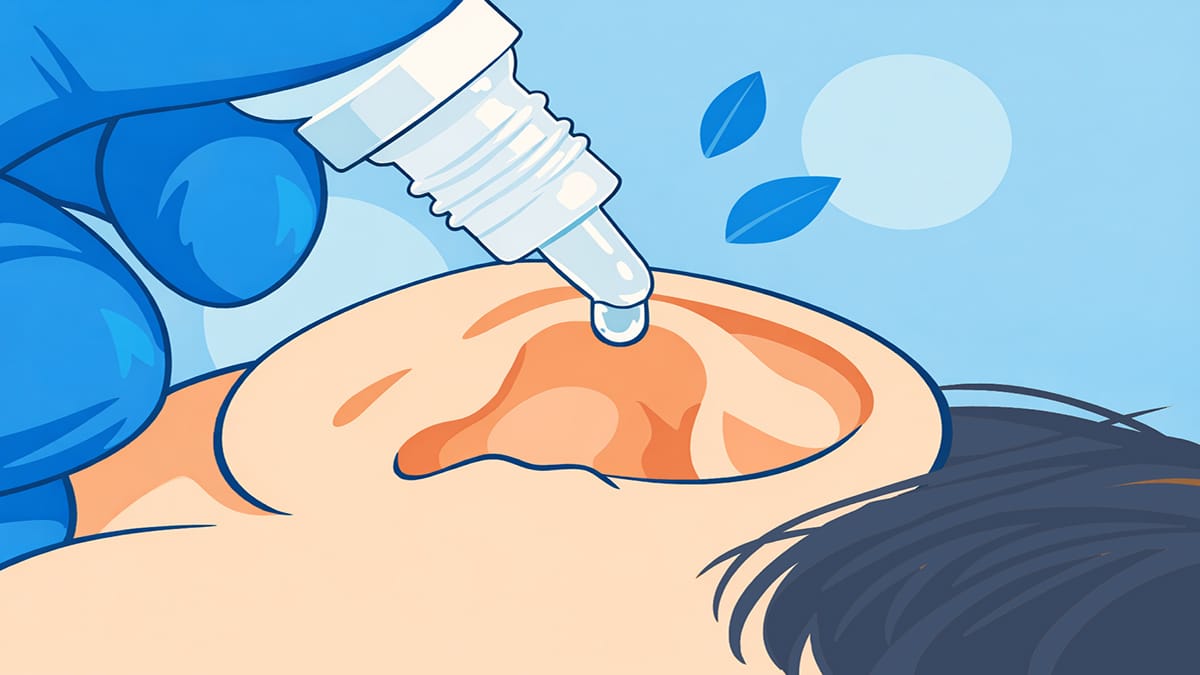
Next, position yourself lying on your side with the affected ear facing upward. A soft pillow can make it easier to remain still. Using a clean dropper or syringe, gently place several drops, usually between one and three millilitres, into the ear canal. As the solution makes contact with the wax you will hear a fizzing or crackling sound. This is the oxygen reacting with the earwax. The sound can be surprising but should not be painful.
Allow the drops to remain in the ear for about one minute. During this time, the bubbling action works to soften and loosen the wax. When ready, sit up and tilt your head so that the liquid drains out onto a tissue. Wipe the outer ear carefully, but avoid inserting anything into the canal. If both ears are affected, repeat the same steps on the opposite side.
Hydrogen peroxide drops are usually applied once or twice daily for three to five days. In many cases, this is sufficient to clear the blockage. For children, extra care is required. Drops should only be used under medical advice, especially if the child has ear pain or a history of ear infections or grommets. In older adults, wax may be harder and more compacted, requiring a longer course of drops or professional intervention.
YOUR PHARMASIST WILL BE ABLE TO DISPENSE THE DROPS AND GO THROUGH THE TECHNIQUE WITH YOU IN DETAIL AND HELP YOU PUT THE DROPS IN. We recommend spending time with your pharmacist and getting them to help you.
Safety Considerations and When to Avoid Use
Although hydrogen peroxide is safe for many patients, there are important exceptions. It must not be used if there is a known or suspected perforation of the eardrum, or if the patient has undergone recent ear surgery. In these situations, fluid entering the middle ear can cause significant pain and increase the risk of infection. Similarly, if there is discharge, bleeding or severe pain, the drops should not be used until the underlying cause has been assessed by a doctor.
Patients with chronic skin conditions such as eczema or psoriasis may also find that hydrogen peroxide irritates the ear canal. Mild stinging can be normal, but if the sensation is severe or prolonged, use should be stopped immediately. In rare cases, people may feel dizzy after installation, but this usually resolves quickly once the solution has drained away. If any concerning symptoms such as sudden hearing loss or persistent pain occur, prompt medical review is essential.
Alternatives to Hydrogen Peroxide Ear Drops
Not every patient is suited to hydrogen peroxide, and at Melbourne ENT we frequently discuss alternative methods. Oil-based drops often block the ear more so we recommend against these. For patients seeking an alternative active agent, carbamide peroxide is popular and works in a similar way to hydrogen peroxide but with a slower bubbling action. Your pharmacist can dispense these.
Audiology and Nurse led wax suctioning clinics are widely available
Hydrogen Peroxide and Ear Infections
There is sometimes confusion about whether hydrogen peroxide can treat ear infections. While it can help remove debris from the ear canal, it is not an antibiotic and should never replace prescribed treatment. In certain cases of outer ear infection, also known as otitis externa, doctors may recommend hydrogen peroxide as a cleaning aid before applying antibiotic drops. This must always be done under supervision.
It is particularly important to understand that if you are using prescribed ear drops, hydrogen peroxide should never be applied at the same time. A thirty minute gap must be left between products to ensure the prescription medicine is not diluted or rendered ineffective. Patients experiencing ear pain, fever, swelling or discharge should seek medical review without delay.
Ear Care Do’s and Don’ts
There are a few key principles to safe ear care that apply to everyone. Drops should always be used according to instructions, and the ear should be kept dry for several hours after treatment. The outer ear may be gently wiped but nothing should ever be inserted into the ear canal. Cotton buds, hairpins and other objects risk damaging the delicate skin and pushing wax deeper.
Hydrogen peroxide should not be used continuously or without guidance. If symptoms persist after a short course, it is a sign that further assessment is needed. Seeking advice from a specialist is always the safest option.
When to See an ENT Specialist
While many cases of earwax can be managed with drops, some require specialist intervention. At Melbourne ENT, we recommend professional assessment if wax does not clear after several days of treatment, if blockages are recurrent, or if there are additional symptoms such as persistent pain, tinnitus or hearing loss. Patients who use hearing aids often require regular ear cleaning to keep their devices functioning properly.
In our St Kilda East clinic, Dr Stephen Kleid and Dr Simon Braham use advanced tools to examine the ear canal, diagnose the cause of symptoms and provide safe removal techniques such as microsuction. For complex cases, or when earwax is associated with infections, eczema or structural abnormalities, specialist care ensures long-term relief and protects against further complications. It’s important to get a detailed referral from your GP covering all the treatment you or your child has had so we can claim a medicare rebate for you, Medicare is very strict and does not cover microsuction by ENT surgeons for simple wax removal.
Melbourne ENT – Trusted Care for Ear Health
Melbourne ENT is led by two highly experienced surgeons with extensive backgrounds in ear, nose and throat medicine. Dr Stephen Kleid, MBBS, FRACS, is an ENT and Head & Neck Surgeon who trained at the Royal Melbourne Hospital, the Royal Children’s Hospital and the Royal Victorian Eye and Ear Hospital. He later completed an international fellowship in the United States and has decades of experience in ear surgery, head and neck conditions and airway disorders.
Dr Simon Braham, MBBS (Hons), FRACS, is an ENT Surgeon with advanced training in New York and Boston. His areas of expertise include paediatric ENT surgery, sinus and nasal surgery, and management of snoring and voice disorders. He consults in both the public and private sector, with appointments at the Royal Victorian Eye and Ear Hospital and Kyneton Hospital, as well as private practice in St Kilda East.
Together, they provide comprehensive ENT care for patients across Melbourne and Victoria. Their approach combines evidence-based treatment, patient-centred care and a commitment to long-term outcomes. With close links to major hospitals, patients benefit from the reassurance that their ear health is managed by surgeons of the highest calibre.
Medicare Coverage for ENT Surgery
Many patients in Melbourne wonder whether ear, nose and throat surgery, including procedures related to earwax, infections, or nasal surgery, is covered by Medicare. In Australia, Medicare does provide rebates for medically necessary ENT procedures, such as septoplasty for a deviated septum, functional rhinoplasty when breathing is affected, ear surgery for chronic infections, and removal of head and neck tumours. For procedures that are considered purely cosmetic, such as cosmetic rhinoplasty without a functional breathing component, Medicare rebates do not apply. At Melbourne ENT, both Dr Stephen Kleid and Dr Simon Braham ensure that patients are fully informed about the likely out-of-pocket costs before proceeding. Our staff can also help clarify whether your planned procedure is eligible for a Medicare rebate, and advise if private health insurance may provide additional cover.
FAQs About Hydrogen Peroxide Ear Drops
Can hydrogen peroxide ear drops make the blockage feel worse before it gets better?
Some patients notice a temporary feeling of fullness or increased bubbling when the drops begin working. This usually settles as the softened wax moves outward, but if the sensation is persistent or painful it is best to stop and arrange an ENT review.
Is it safe to use hydrogen peroxide ear drops if I swim regularly?
Frequent swimmers often have more delicate ear canals and are prone to infections. Drops can still be used, but the ears should be kept dry afterwards and professional assessment may be needed if there are signs of swimmer’s ear or repeated infections.
Why do I sometimes hear crackling or fizzing sounds long after using the drops?
The bubbling reaction usually finishes within a few minutes, but some patients notice a faint crackling for a short time afterwards as small air pockets release. This is not harmful, though any ongoing pain or ringing should be assessed by a specialist.
Can children use hydrogen peroxide ear drops in the same way as adults?
Children can use them safely in some cases, but extra caution is required. If a child has ear pain, grommets, or a history of recurrent infections, drops should only be used after advice from a doctor or ENT surgeon.
What should I do if hydrogen peroxide runs down my throat after using the drops?
A small amount may occasionally pass through the eustachian tube if the head is not kept still. This is harmless but can taste unpleasant. Keeping still with the ear upward for at least a minute helps prevent this.
Do hydrogen peroxide ear drops affect hearing aids?
The drops themselves do not harm hearing aids, but softened wax can sometimes block the device microphone or tubing. Many hearing aid users benefit from routine ear cleaning at an ENT clinic to keep their devices working effectively.
Is there a difference between using hydrogen peroxide bought at a pharmacy and specialised earwax remover products?
Both contain similar active ingredients, though pharmacy earwax removers may also include carbamide peroxide for a slower release. ENT specialists generally recommend using only 3% hydrogen peroxide or approved earwax removal drops, never stronger solutions designed for other household uses.
Medical References
- Using Hydrogen Peroxide for Earwax Removal: Does It Work? – Healthline
https://www.healthline.com/health/ear-wax-removal-hydrogen-peroxide - Is hydrogen peroxide safe to put in your ears? – Medical News Today
https://www.medicalnewstoday.com/articles/too-much-hydrogen-peroxide-in-ear - How does hydrogen peroxide remove ear wax? – Medical News Today
https://www.medicalnewstoday.com/articles/322725 - Ear drops for the removal of ear wax – PMC – PubMed Central
https://pmc.ncbi.nlm.nih.gov/articles/PMC6492540/ - The effectiveness of topical preparations for the treatment of earwax – PMC – PubMed Central
https://pmc.ncbi.nlm.nih.gov/articles/PMC1324923/ - An ex vivo comparison of over-the-counter cerumenolytics for ear wax – The Australian Journal of Otolaryngology
https://www.theajo.com/article/view/4339/html - How to clean your ears safely: Tips to avoid harm – MD Anderson Cancer Center
https://www.mdanderson.org/cancerwise/how-to-clean-your-ears-safely–tips-to-avoid-harm.h00-159774867.html
Take the Next Step
Blocked ears and wax build-up are common problems that can affect anyone, from young children to older adults. Hydrogen peroxide ear drops are often an effective solution, but they are not suitable for everyone and are not a cure for all ear problems. At Melbourne ENT, our team provides guidance on safe home treatments and offers professional options such as microsuction when needed.
If you or your child are experiencing blocked ears, discomfort or hearing problems, the first step is to seek professional advice. At our St Kilda East clinic, Dr Stephen Kleid and Dr Simon Braham are ready to help with safe, effective and personalised care. To learn more or arrange an appointment, simply visit the website or contact our friendly team today.
Further Reading
- Read more about Sudden Hearing Loss – An Otologic Emergency
- Read more about Middle Ear Infection (AOM)
- Read more about Ear Concerns In Children Melbourne
- Read more about Glue Ear (Grommets)